


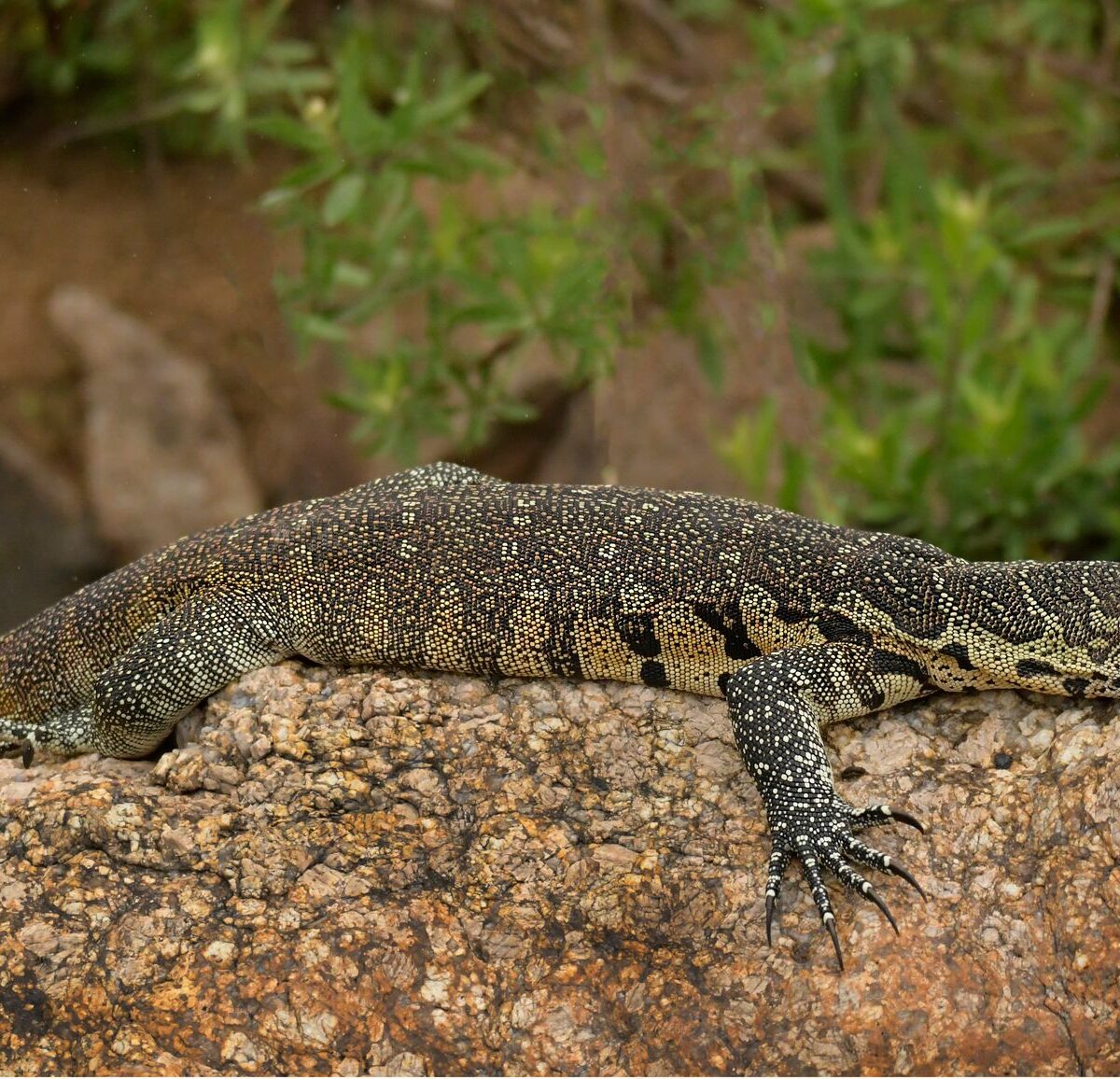
NILE MONITOR
Varanus niloticus
DESCRIPTION
Nile Monitor (Varanus niloticus) is a large lizard known for its robust body and long tail, which can reach lengths of up to 2.5 meters. It has a distinctive coloration, typically featuring a dark brown or olive background with yellow or cream spots and bands. This species is highly adaptable, often found near water bodies, and is known for its strong swimming abilities and semi-aquatic lifestyle.
FUN FACTS
- Nile Monitors are excellent swimmers and can hold their breath underwater for up to 30 minutes while hunting for prey
- They are also known to climb trees and can often be seen basking in the sun on branches overhanging water bodies
QUICK INFO
Lifespan10-15 years in the wild, up to 20 years in captivi
Average Weight5-10 kg
Average Length1.8-2.5 m
Diet TypeCarnivore
Social Structuresolitary, occasionally seen in pairs or small groups
Activity PatternDiurnal
Breeding SeasonSpring (March-May)
- Habitat
- Nile Monitors inhabit a range of environments, including savannas, wetlands, and riverbanks. They prefer areas with abundant water sources, which provide both food and shelter.
- Biomes
- Savanna, Wetland, Riverine
- Native Range
- The species is native to sub-Saharan Africa, primarily found along the Nile River and in various freshwater habitats across the continent.
- Continent
- Africa
- Countries
- Egypt, Sudan, Kenya, Tanzania, Uganda, South Africa
- Diet
- Nile Monitors are carnivorous and primarily feed on a variety of prey, including fish, amphibians, small mammals, and birds. They are opportunistic hunters and will scavenge when necessary.
- Diet Type
- Carnivore
- Favorite Food
- fish, small mammals, birds
- Social Structure
- solitary, occasionally seen in pairs or small groups
- Activity Pattern
- Diurnal
- Group Size
- 1-5
- Territorial
- 1
 VU
VU
 VU
VU
5-10 kg
Weight
1.8-2.5 m
Length
- Coloration
- dark brown or olive with yellow or cream spots and bands
- Sexual Dimorphism
- males are generally larger than females
- Lifespan
- 10-15 years in the wild, up to 20 years in captivi
- Offspring per Birth
- 15-30
- Sexual Maturity
- 2-3 years
- Breeding Season
- Spring (March-May)
LC
Least Concern
IUCN Red List Status
- Population Status
- The population is currently stable, but local declines may occur due to habitat loss.
- Wild Population Estimate
- unknown
- Population Trend
- Stable
- Endangered
- 0
- Threats
- Main threats include habitat destruction due to agriculture and urbanization, as well as hunting for their skin. Pollution in water bodies also poses a risk to their health and food sources.
- Predators
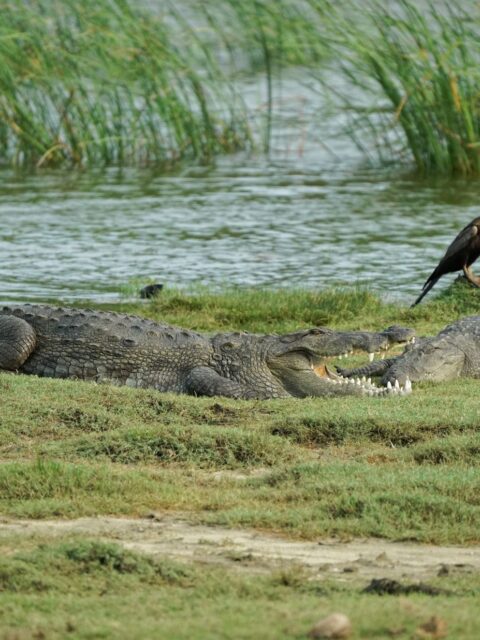
- large birds of prey, crocodiles, and larger carnivorous mammals
- Defense Mechanisms
- Nile Monitors can defend themselves by using their strong jaws and sharp claws. They may also escape into water when threatened.
- Found in Zoos
- Common