


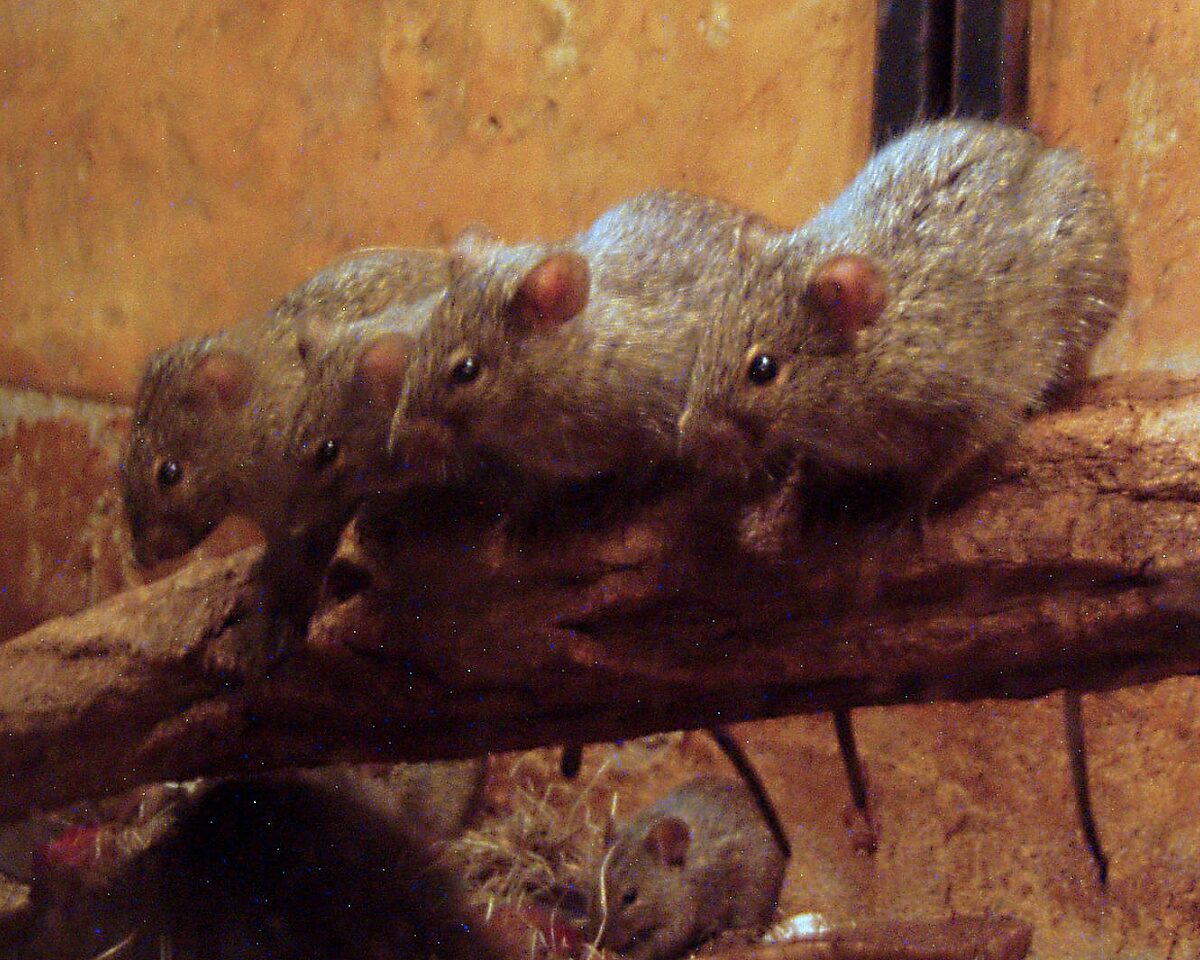
NILE RAT
Arvicanthis niloticus niloticus
DESCRIPTION
Nile rat (Arvicanthis niloticus niloticus) is a medium-sized rodent characterized by its long tail and large ears. It has a soft, dense fur that is typically brown or grayish in color, providing excellent camouflage in its natural habitat. These rats are primarily found in wetland areas and are known for their semi-aquatic lifestyle, often seen swimming or foraging in water.
FUN FACTS
- Nile rats are excellent swimmers and can hold their breath for several minutes while submerged, allowing them to evade predators
- They also have a unique social structure, often engaging in grooming behaviors that strengthen bonds within their groups
QUICK INFO
Lifespan2-3 years in the wild, up to 5 years in captivity
Average Weight150-300 g
Average Length20-30 cm
Diet TypeHerbivore
Social Structuregroup — they often live in small colonies, which can enhance their foraging efficiency and provide safety in numbers.
Activity PatternNocturnal
Breeding SeasonYear-round, with peaks during wet seasons
- Habitat
- Nile rats inhabit wetlands, marshes, and riverbanks, where they can easily access water and abundant vegetation. They build nests in dense vegetation near water sources.
- Biomes
- Wetlands, Freshwater
- Native Range
- The native range of the Nile rat includes parts of Africa, particularly in regions near the Nile River and other freshwater bodies.
- Continent
- Africa
- Countries
- Egypt, Sudan, Uganda, Kenya, Tanzania
- Diet
- Nile rats are herbivorous, primarily feeding on grasses, seeds, and aquatic plants. They are known to consume a variety of plant materials, which they find in their wetland habitats.
- Diet Type
- Herbivore
- Favorite Food
- grasses, seeds, aquatic plants
- Social Structure
- group — they often live in small colonies, which can enhance their foraging efficiency and provide safety in numbers.
- Activity Pattern
- Nocturnal
- Group Size
- 5-15
- Territorial
- 0
 VU
VU
 LC
LC
 LC
LC
150-300 g
Weight
20-30 cm
Length
- Coloration
- brown or grayish fur with a lighter underbelly
- Lifespan
- 2-3 years in the wild, up to 5 years in captivity
- Gestation Period
- 21-25 days
- Offspring per Birth
- 3-8
- Sexual Maturity
- 2-3 months
- Breeding Season
- Year-round, with peaks during wet seasons
LC
Least Concern
IUCN Red List Status
- Population Status
- The population of Nile rats is currently stable, although local declines may occur due to habitat destruction.
- Wild Population Estimate
- Unknown
- Population Trend
- Stable
- Endangered
- 0
- Threats
- Main threats include habitat loss due to agricultural expansion and wetland drainage. Pollution of water bodies can also impact their food sources and habitat quality.
- Predators
- Birds of prey, snakes, and larger mammals such as foxes and domestic cats.
- Defense Mechanisms
- Nile rats use their agility and swimming ability to escape predators, often diving into water to evade capture.
- Found in Zoos
- Uncommon