


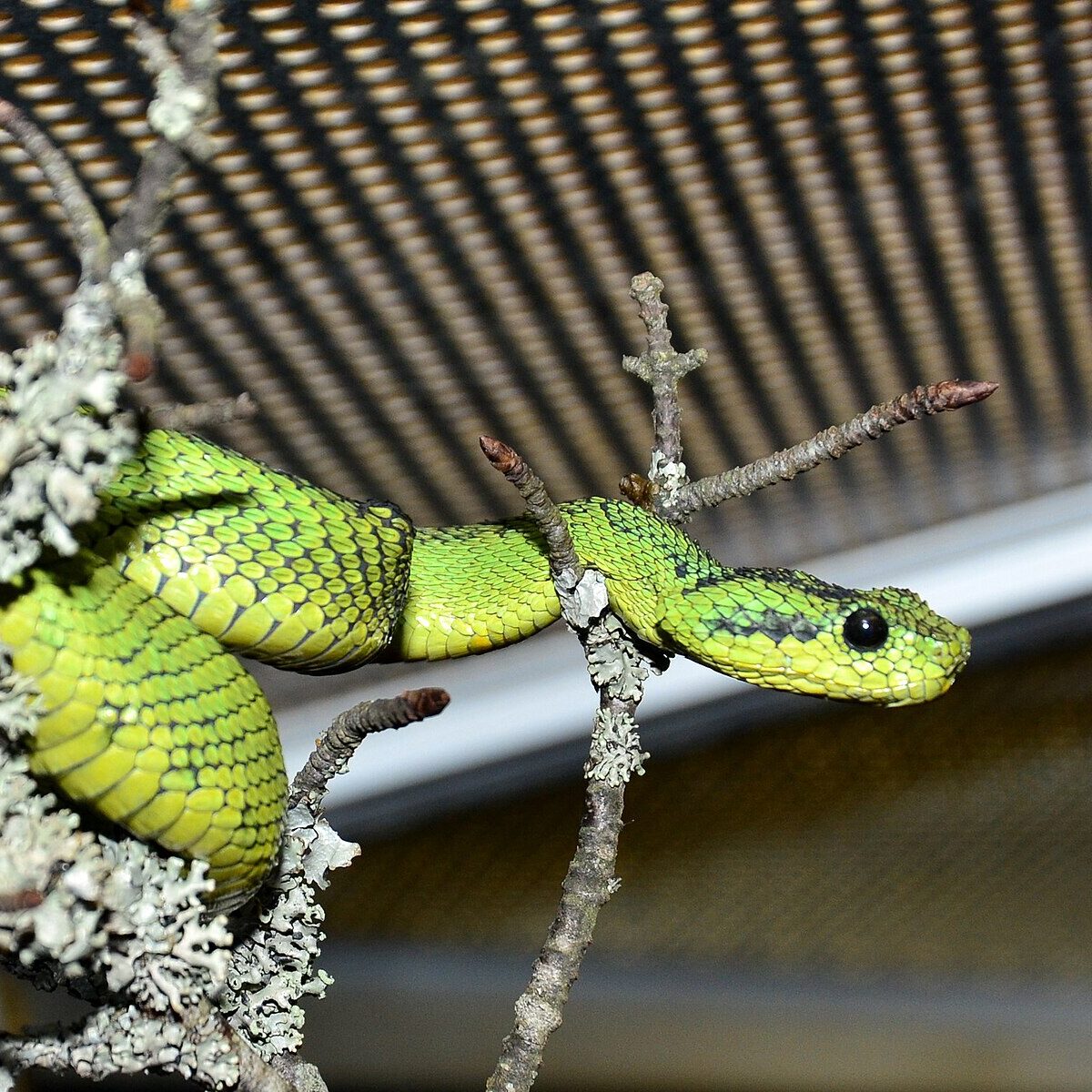
NITSCHE'S BUSH VIPER
Atheris nitschei
DESCRIPTION
Nitsche's Bush Viper (Atheris nitschei) is also known as Nitsche's Viper, a strikingly beautiful snake native to the rainforests of Central Africa. This species is characterized by its vibrant green coloration, which helps it blend into the foliage of its arboreal habitat. Nitsche's Bush Viper is primarily nocturnal, exhibiting a behavior of ambush predation, where it waits motionless for unsuspecting prey to come within striking distance.
FUN FACTS
- Nitsche's Bush Viper has a unique method of hunting; it often remains motionless for long periods, waiting for the right moment to strike
- This species is also known for its striking coloration, which can vary significantly among individuals, making each one unique in appearance
QUICK INFO
Lifespan10-15 years in the wild
Average Length0.6-1.2 m
Diet TypeCarnivore
Social Structuresolitary
Activity PatternNocturnal
Breeding SeasonSpring (March-May)
- Habitat
- Nitsche's Bush Viper inhabits dense tropical rainforests, often found in trees where it can easily camouflage among the leaves. This arboreal lifestyle allows it to hunt effectively and avoid many ground-based predators.
- Biomes
- Tropical Rainforest
- Native Range
- This species is found in the rainforests of the Democratic Republic of the Congo and surrounding regions.
- Continent
- Africa
- Countries
- Democratic Republic of the Congo
- Diet
- It primarily feeds on small mammals and birds, using its venom to immobilize its prey before consumption.
- Diet Type
- Carnivore
- Favorite Food
- small mammals, birds
- Social Structure
- solitary
- Activity Pattern
- Nocturnal
- Group Size
- 1
- Territorial
- 0
 VU
VU
0.6-1.2 m
Length
- Coloration
- vibrant green with yellow or white markings
- Sexual Dimorphism
- females are generally larger than males
- Lifespan
- 10-15 years in the wild
- Offspring per Birth
- 2-10
- Sexual Maturity
- 2-3 years
- Breeding Season
- Spring (March-May)
VU
Vulnerable
IUCN Red List Status
- Population Status
- The population status is currently not well-documented, but habitat loss poses a significant threat.
- Population Trend
- Decreasing
- Endangered
- 1
- Threats
- Main threats include habitat destruction due to logging and agricultural expansion, which reduces their natural habitat. Additionally, they are sometimes targeted for the pet trade.
- Predators
- Birds of prey, larger snakes, and mammals such as mongooses may prey on Nitsche's Bush Viper.
- Defense Mechanisms
- Its primary defense mechanism is its excellent camouflage, which allows it to blend into its surroundings and avoid detection.
- Found in Zoos
- Uncommon