


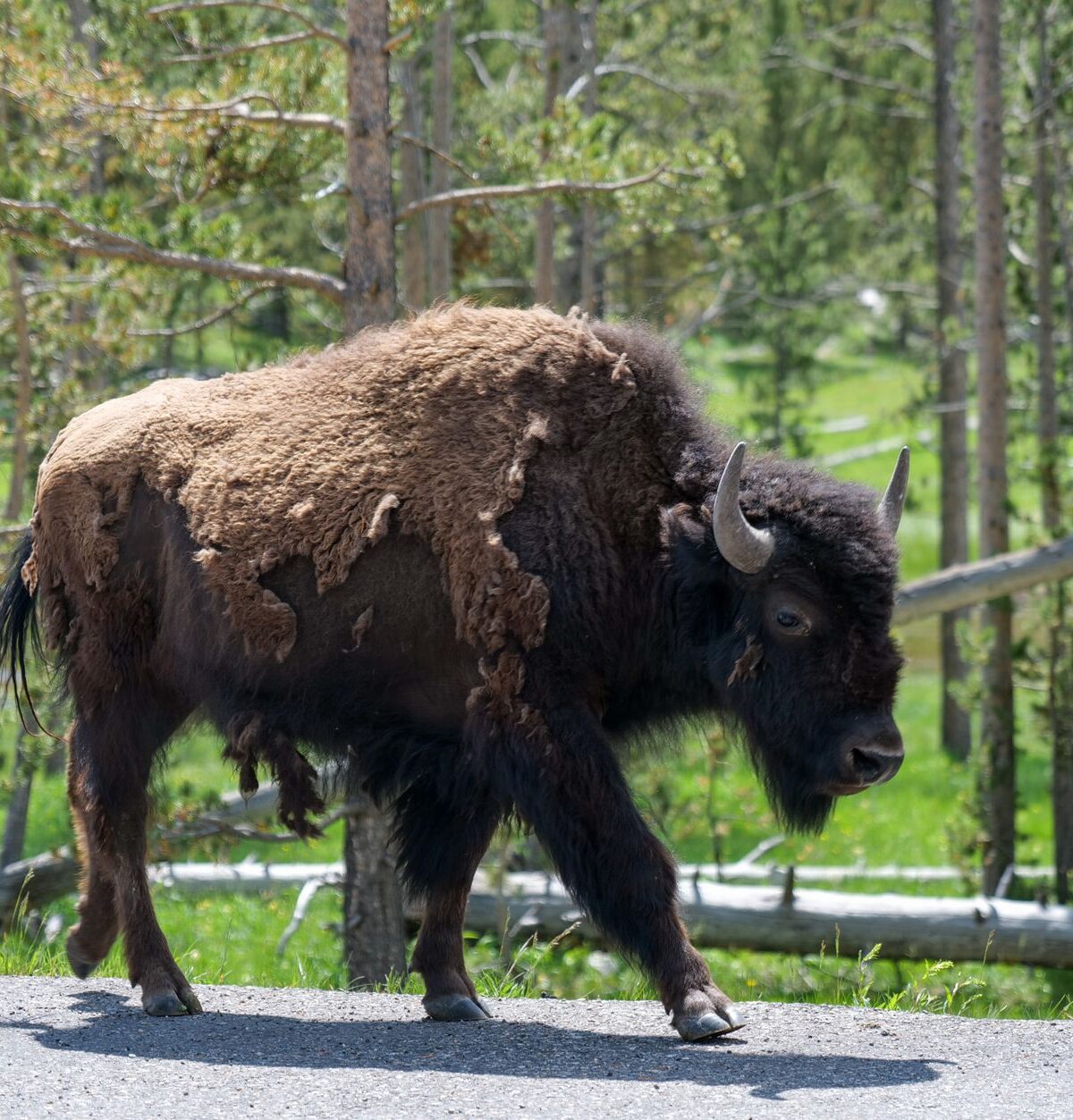
NORTH AMERICAN BISON
Bison bison
DESCRIPTION
North American Bison (Bison bison), also known as American Bison and Buffalo, is a large mammal characterized by its massive head, humped shoulders, and thick fur. They exhibit a robust build with males typically larger than females, and their coloration ranges from dark brown to lighter shades in summer. These animals are social creatures, often found in herds, and play a crucial role in their ecosystem by grazing on grasses, which helps maintain the health of grasslands.
FUN FACTS
- Bison are the largest land mammals in North America, with males weighing up to 1,000 kg
- They can run at speeds of up to 35 miles per hour, making them surprisingly fast despite their size.|Bison have a unique digestive system that allows them to efficiently process tough grasses
- They have a four-chambered stomach, similar to cattle, which helps them break down fibrous plant material
QUICK INFO
Lifespan15-25 years in the wild, up to 30 years in captivi
Average Weight400-1,000 kg
Average Length2.4-3.4 m
Diet TypeHerbivore
Social Structuregroup — Bison typically live in herds that can vary in size, often led by a dominant female.
Activity PatternDiurnal
Breeding SeasonSummer (July-August)
- Habitat
- Bison inhabit a variety of habitats, including plains, grasslands, and open forests. They prefer areas with abundant grasses and access to water sources.
- Biomes
- Grassland, Temperate Forest
- Native Range
- Historically, North American Bison roamed across much of North America, from Canada to Mexico, but their range has significantly decreased due to human activities.
- Continent
- North America
- Countries
- United States, Canada, Mexico
- Diet
- North American Bison primarily feeds on grasses, sedges, and other herbaceous plants. They are known to graze extensively, which influences the structure of their habitat.
- Diet Type
- Herbivore
- Favorite Food
- grasses
- Social Structure
- group — Bison typically live in herds that can vary in size, often led by a dominant female.
- Activity Pattern
- Diurnal
- Group Size
- 10-30
- Territorial
- 0
 LC
LC
 LC
LC
400-1,000 kg
Weight
2.4-3.4 m
Length
1.5 m at shoulder
Height (Shoulder)
- Coloration
- dark brown to light brown, with a shaggy coat
- Sexual Dimorphism
- males are larger and have a more pronounced hump
- Lifespan
- 15-25 years in the wild, up to 30 years in captivi
- Gestation Period
- 285 days
- Offspring per Birth
- 1
- Sexual Maturity
- 2-3 years
- Breeding Season
- Summer (July-August)
LC
Least Concern
IUCN Red List Status
- Population Status
- The population of North American Bison has rebounded from near extinction, but they are still considered near threatened in some areas.
- Wild Population Estimate
- 500,000
- Population Trend
- Increasing
- Endangered
- 0
- Threats
- Main threats include habitat loss, disease, and competition with livestock. Conservation efforts are ongoing to protect their habitats and manage populations.
- Conservation Program
- National Bison Range, Yellowstone National Park Bison Conservation
- Predators
- Wolves, Grizzly Bears, and humans are the primary predators of North American Bison.
- Defense Mechanisms
- Bison use their size and strength to defend against predators, often charging at threats. They can also form a protective circle around calves when threatened.
- Compatible Animals
- none
- Found in Zoos
- Common