


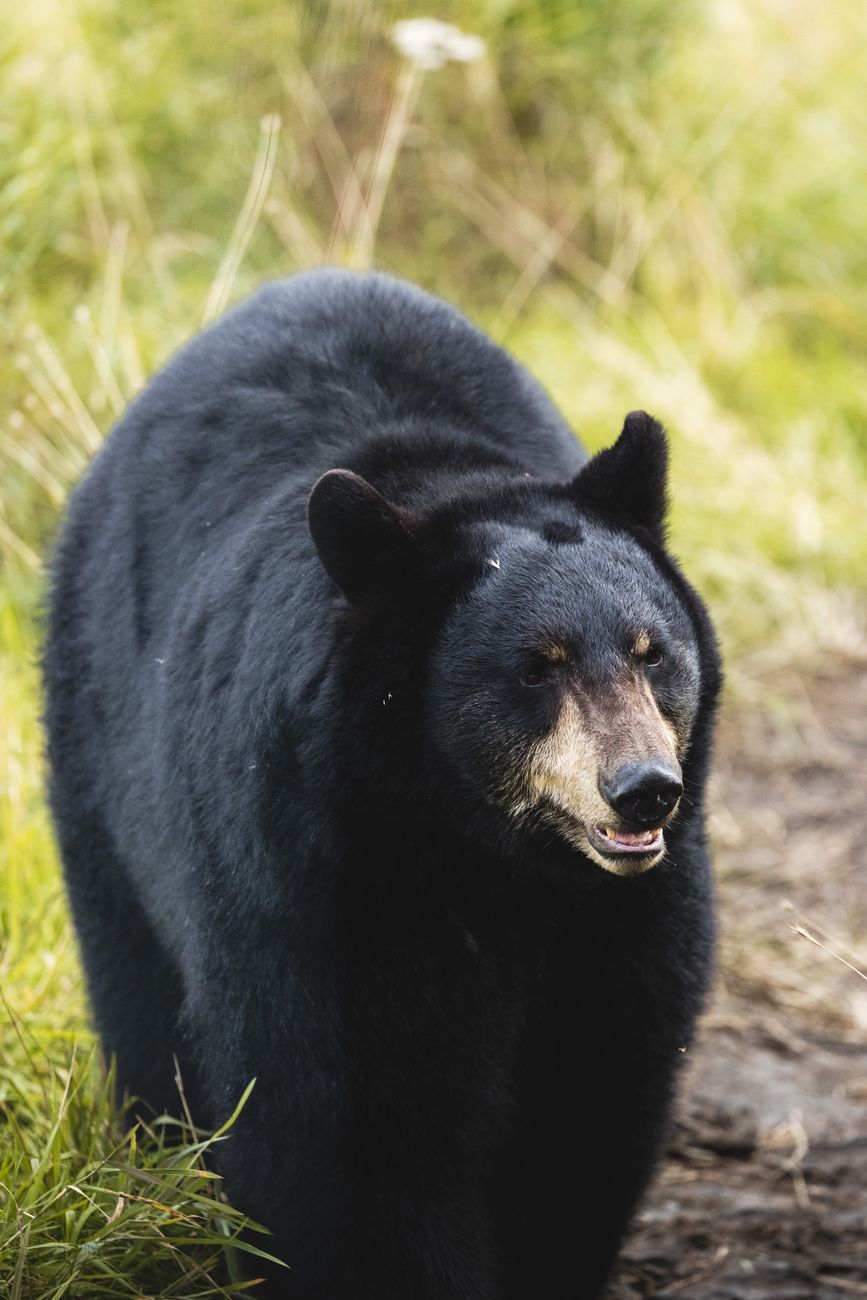
NORTH AMERICAN BLACK BEAR
Ursus americanus
DESCRIPTION
North American Black Bear (Ursus americanus) is a medium-sized bear species characterized by its short, curved claws and a broad, rounded face. They typically have a black coat, although some individuals may exhibit brown, cinnamon, or even blonde coloration. These bears are generally solitary and are known for their adaptability to various habitats, ranging from forests to swamps, and they play a crucial role in their ecosystems as both predators and scavengers.
FUN FACTS
- North American Black Bears have an excellent sense of smell, which is seven times better than that of a bloodhound
- This keen sense allows them to locate food from great distances
- | They are also known for their impressive climbing skills, often climbing trees to escape predators or to find food
- Young bears are particularly adept at climbing, and they can climb as high as 30 meters
QUICK INFO
Lifespan20-30 years in the wild, up to 35 in captivity
Average Weight45-250 kg
Average Length1.5-2.4 m
Diet TypeOmnivore
Social Structuresolitary, with occasional pairings during mating season
Activity PatternCrepuscular
Breeding SeasonSpring (May-June)
- Habitat
- They inhabit a wide range of environments, including forests, mountains, and swamps. Their adaptability allows them to thrive in both rural and urban areas.
- Biomes
- Temperate Forest, Boreal Forest, Wetlands
- Native Range
- North America, from Canada to northern Mexico.
- Continent
- North America
- Countries
- United States, Canada, Mexico
- Diet
- North American Black Bears are omnivorous, consuming a varied diet that includes fruits, nuts, insects, and small mammals. They are opportunistic feeders and will adjust their diet based on seasonal availability.
- Diet Type
- Omnivore
- Favorite Food
- berries, nuts, and insects
- Social Structure
- solitary, with occasional pairings during mating season
- Activity Pattern
- Crepuscular
- Group Size
- 1-2
- Territorial
- 0
 LC
LC
LC
LC
45-250 kg
Weight
1.5-2.4 m
Length
1.0-1.5 m at shoulder
Height (Shoulder)
- Coloration
- primarily black, but can vary to brown or cinnamon
- Sexual Dimorphism
- males are generally larger than females
- Lifespan
- 20-30 years in the wild, up to 35 in captivity
- Gestation Period
- 7-8 months
- Offspring per Birth
- 1-4
- Sexual Maturity
- 3-4 years
- Breeding Season
- Spring (May-June)
LC
Least Concern
IUCN Red List Status
- Population Status
- The population of North American Black Bears is currently stable in many areas, although some local populations may be threatened by habitat loss.
- Wild Population Estimate
- 600,000-800,000
- Population Trend
- Stable
- Endangered
- 0
- Threats
- Main threats include habitat destruction, vehicle collisions, and poaching. Climate change also poses a long-term threat to their food sources and habitats.
- Predators
- humans, mountain lions, and occasionally wolves
- Defense Mechanisms
- They may use their size and strength to intimidate threats, and they can climb trees to escape danger.
- Compatible Animals
- none
- Found in Zoos
- Common