


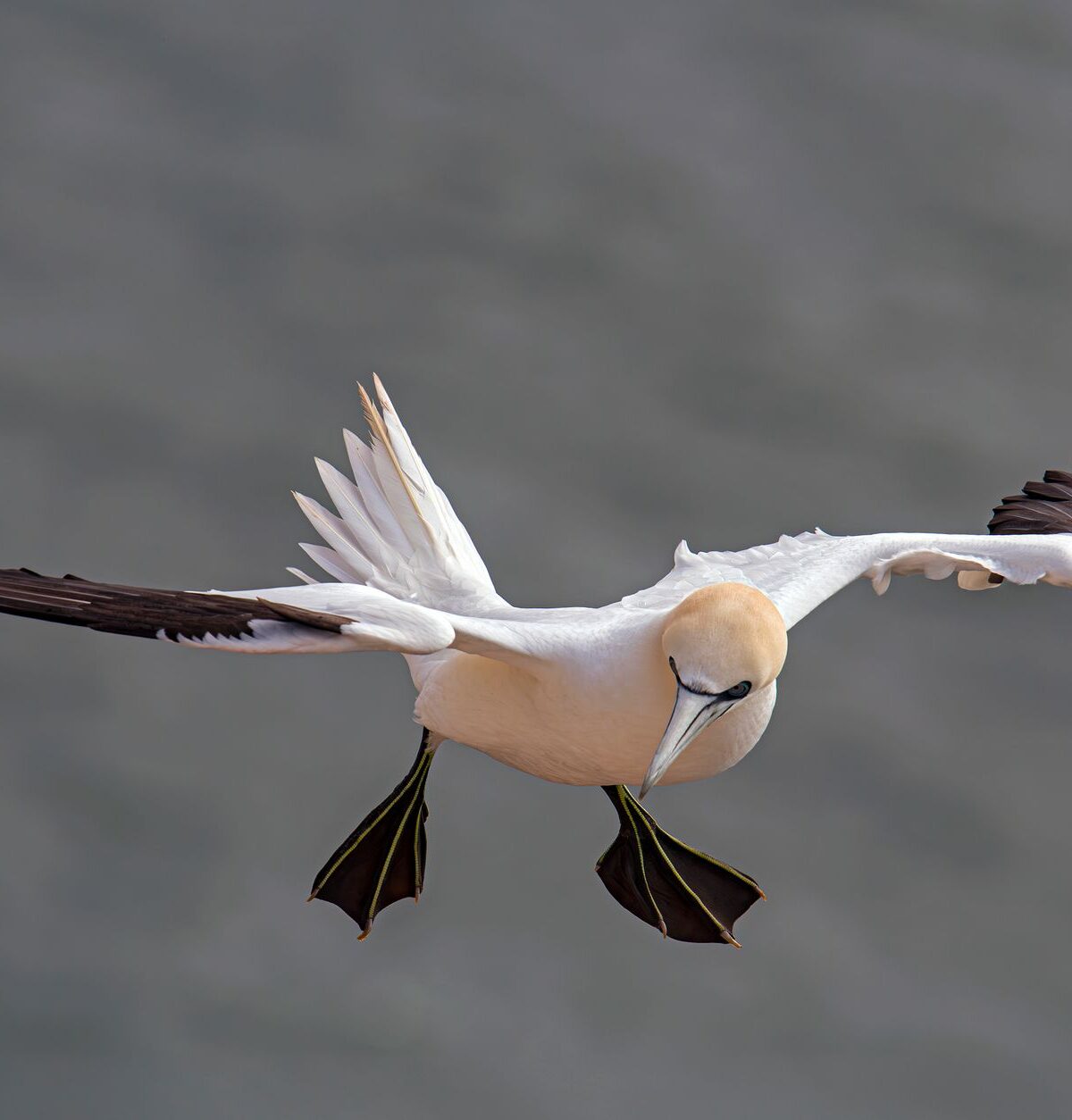
NORTHERN GANNET
Morus bassanus
DESCRIPTION
Northern Gannet (Morus bassanus) is commonly known as the Gannet. This large seabird is characterized by its striking white plumage, black-tipped wings, and a distinctive yellowish head. They are known for their impressive diving abilities, plunging into the ocean from great heights to catch fish, showcasing their agility and precision in the water.
FUN FACTS
- Northern Gannets can dive from heights of up to 40 meters, reaching speeds of 100 km/h when they hit the water
- Their specialized air sacs help cushion the impact, allowing them to hunt effectively
- | These birds have a unique method of communication, using a variety of vocalizations and body language to interact with their mates and colony members
- Their courtship displays are particularly elaborate, involving synchronized movements and mutual preening
QUICK INFO
Lifespan15-20 years in the wild
Average Weight2.5-3.5 kg
Average Length0.8-1.0 m
Diet TypePiscivore
Social Structuregroup — they nest and forage in large colonies, often numbering in the thousands.
Activity PatternDiurnal
Breeding SeasonSpring (March-July)
- Habitat
- Northern Gannets are typically found in coastal areas, often nesting on steep cliffs or rocky islands. They prefer locations with abundant fish supplies and are often seen in large colonies.
- Biomes
- Marine, Coastal
- Native Range
- Northern Gannets are found in the North Atlantic, breeding in colonies along the coasts of Canada, the UK, and parts of Europe.
- Continent
- North America, Europe
- Countries
- Canada, United Kingdom, France, Ireland, Norway
- Diet
- Northern Gannets primarily feed on fish, particularly herring and mackerel, which they catch by diving into the sea.
- Diet Type
- Piscivore
- Favorite Food
- herring, mackerel
- Social Structure
- group — they nest and forage in large colonies, often numbering in the thousands.
- Activity Pattern
- Diurnal
- Group Size
- 100-10,000
- Territorial
- 0
 LC
LC
 LC
LC
2.5-3.5 kg
Weight
0.8-1.0 m
Length
- Coloration
- primarily white with black wing tips and a yellowish head
- Sexual Dimorphism
- males and females are similar in appearance, though males are generally larger.
- Lifespan
- 15-20 years in the wild
- Offspring per Birth
- 1
- Sexual Maturity
- 4-5 years
- Breeding Season
- Spring (March-July)
LC
Least Concern
IUCN Red List Status
- Population Status
- The population of Northern Gannets is currently stable, with several large colonies.
- Wild Population Estimate
- 200,000-300,000
- Population Trend
- Stable
- Endangered
- 0
- Threats
- Main threats include overfishing, which reduces their food supply, and climate change, which affects their breeding habitats. Additionally, they can be impacted by oil spills and plastic pollution.
- Predators
- Great Black-backed Gull, White-tailed Eagle, and other large birds of prey may prey on eggs and chicks.
- Defense Mechanisms
- Northern Gannets rely on their large size and social nesting to deter predators, often nesting in colonies that provide safety in numbers.
- Found in Zoos
- Rare