


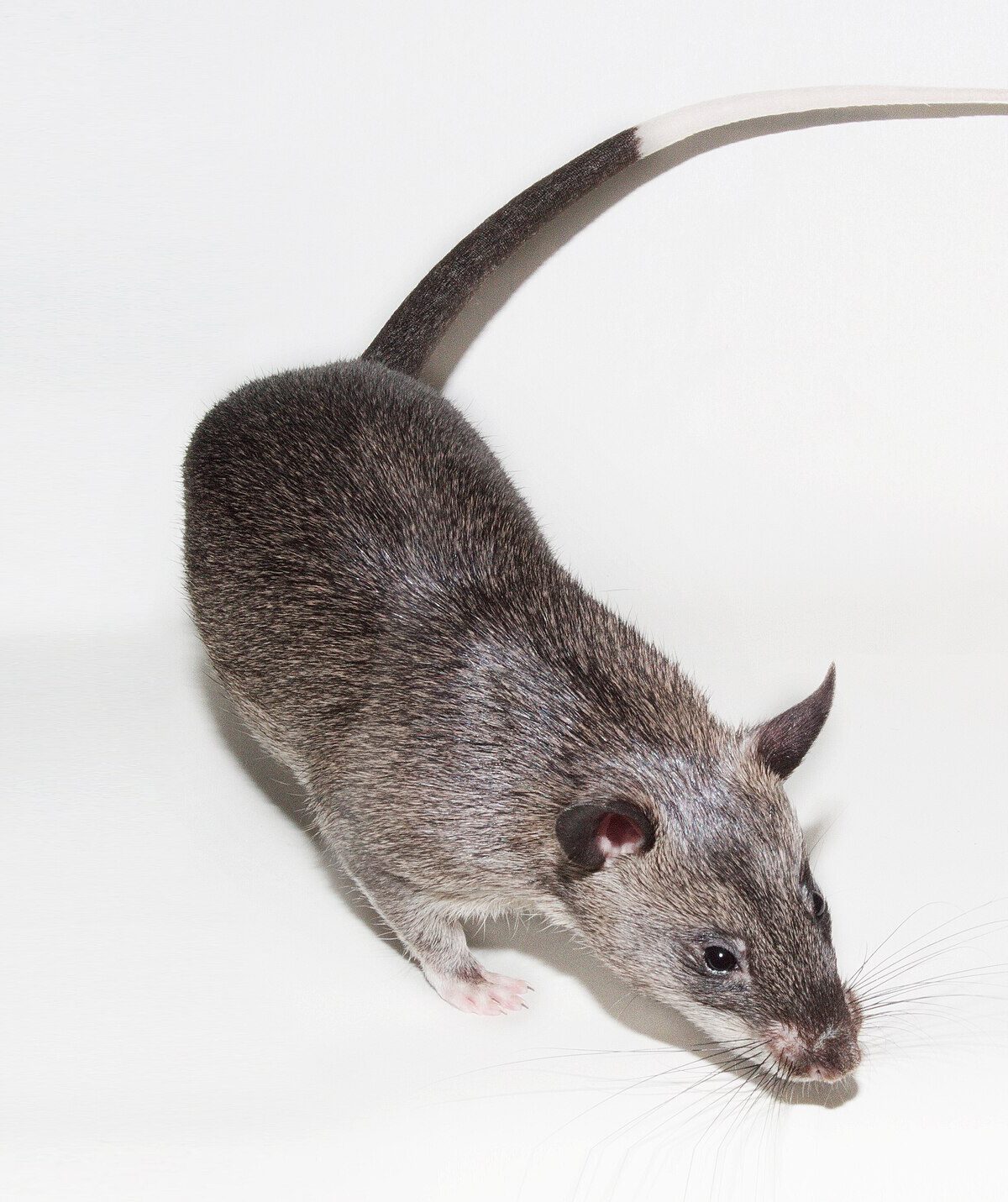
NORTHERN GIANT POUCHED RAT
Cricetomys gambianus
DESCRIPTION
Northern Giant Pouched Rat (Cricetomys gambianus) is a large rodent known for its distinctive cheek pouches, which it uses to store food. This species exhibits a robust body with long limbs and a long tail, typically covered in coarse fur that ranges from brown to gray. They are primarily nocturnal and are known for their intelligence and problem-solving abilities, often using their keen sense of smell to locate food and navigate their environment.
FUN FACTS
- Northern Giant Pouched Rats are often used in research due to their intelligence and ability to learn complex tasks
- They have been trained to detect landmines and diseases, showcasing their remarkable sense of smell and problem-solving skills.| These rats are also known for their unique social behaviors, including grooming and vocal communication, which help strengthen bonds within their groups
- Their adaptability to various environments makes them fascinating subjects for studying animal behavior and ecology
QUICK INFO
Lifespan4-6 years in the wild, up to 8 years in captivity
Average Weight1.0-1.5 kg
Average Length30-40 cm
Diet TypeOmnivore
Social StructureThey can be solitary or live in small groups, often forming loose social structures.
Activity PatternNocturnal
Breeding SeasonYear-round, with peaks depending on local conditions
- Habitat
- Northern Giant Pouched Rats inhabit a variety of environments, including savannas, forests, and agricultural areas. They prefer areas with ample vegetation for cover and food sources.
- Biomes
- Savanna, Tropical Rainforest, Grassland
- Native Range
- This species is native to parts of West and Central Africa.
- Continent
- Africa
- Countries
- Gambia, Senegal, Guinea, Nigeria, Cameroon, Democratic Republic of the Congo
- Diet
- They primarily feed on fruits, seeds, and roots, but are also known to consume insects and small animals when available.
- Diet Type
- Omnivore
- Favorite Food
- fruits, seeds, roots
- Social Structure
- They can be solitary or live in small groups, often forming loose social structures.
- Activity Pattern
- Nocturnal
- Group Size
- 2-10
- Territorial
- 0
 LC
LC
 VU
VU

1.0-1.5 kg
Weight
30-40 cm
Length
- Coloration
- Their fur is typically a mix of brown and gray, with lighter underparts.
- Lifespan
- 4-6 years in the wild, up to 8 years in captivity
- Gestation Period
- 30-32 days
- Offspring per Birth
- 2-6
- Sexual Maturity
- 3-4 months
- Breeding Season
- Year-round, with peaks depending on local conditions
LC
Least Concern
IUCN Red List Status
- Population Status
- The population is currently stable, but habitat loss poses a potential threat.
- Wild Population Estimate
- Unknown
- Population Trend
- Stable
- Endangered
- 0
- Threats
- Main threats include habitat destruction due to agriculture and urbanization. They are also hunted for food in some regions.
- Predators
- Snakes, birds of prey, and larger mammals such as cats and dogs.
- Defense Mechanisms
- They use their speed and agility to escape predators, and their cheek pouches allow them to quickly store food and retreat to safety.
- Found in Zoos
- Uncommon