


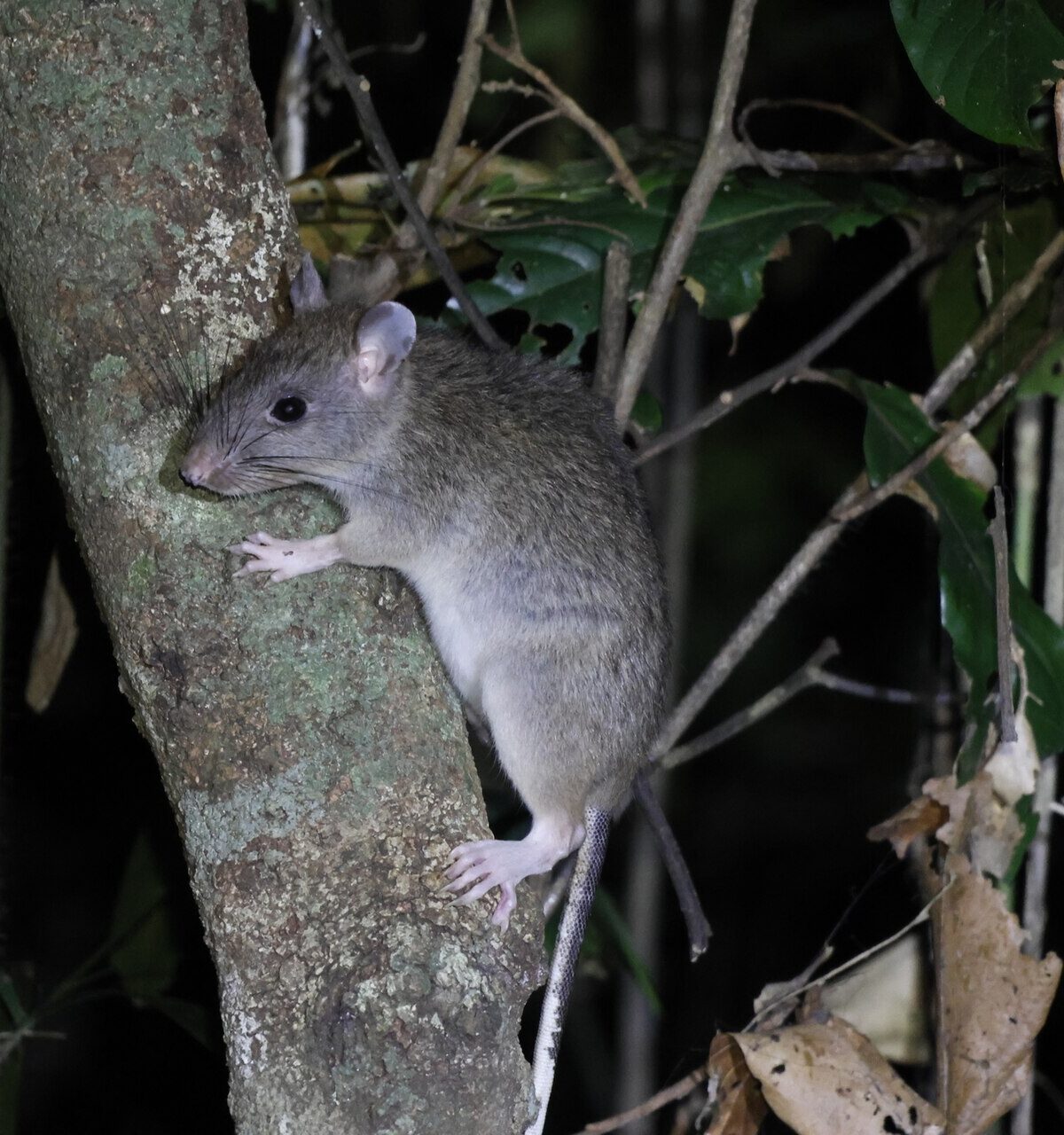
NORTHERN GIANT TREE RAT
Uromys caudimaculatus
DESCRIPTION
Northern Giant Tree Rat (Uromys caudimaculatus) is a large rodent native to the forests of Papua New Guinea. It has a distinctive appearance with a long, bushy tail and a robust body covered in coarse fur, typically brown or gray in color. This species is primarily arboreal, spending much of its time in trees, where it exhibits a range of behaviors including foraging and nesting in the canopy.
FUN FACTS
- Northern Giant Tree Rats are known for their impressive climbing abilities, which allow them to navigate the complex structure of their forest habitat with ease
- They have a unique social structure that can change based on environmental conditions, showcasing their adaptability to different situations.| These rodents are not only important for their role in the ecosystem as seed dispersers but also serve as a food source for various predators, highlighting their place in the food web of their native habitat
QUICK INFO
Lifespan5-7 years in the wild
Average Weight1-1.5 kg
Average Length40-50 cm
Diet TypeHerbivore
Social Structuresolitary, occasionally seen in pairs during breeding
Activity PatternNocturnal
Breeding SeasonYear-round, with peaks during wet seasons
- Habitat
- This species inhabits tropical rainforests, favoring areas with dense vegetation and abundant food sources. It is well-adapted to life in the trees, where it builds nests and forages for food.
- Biomes
- Tropical Rainforest
- Native Range
- Endemic to Papua New Guinea, particularly in the northern regions.
- Continent
- Oceania
- Countries
- Papua New Guinea
- Diet
- The Northern Giant Tree Rat primarily feeds on fruits, seeds, and leaves, showcasing its herbivorous diet. It plays a significant role in seed dispersal within its habitat.
- Diet Type
- Herbivore
- Favorite Food
- fruits, seeds, leaves
- Social Structure
- solitary, occasionally seen in pairs during breeding
- Activity Pattern
- Nocturnal
- Group Size
- 1-2
- Territorial
- 1
 VU
VU
 LC
LC
1-1.5 kg
Weight
40-50 cm
Length
- Coloration
- brown to gray fur with a bushy tail
- Sexual Dimorphism
- males are generally larger than females
- Lifespan
- 5-7 years in the wild
- Gestation Period
- approximately 30 days
- Offspring per Birth
- 1-3
- Sexual Maturity
- 6-12 months
- Breeding Season
- Year-round, with peaks during wet seasons
VU
Vulnerable
IUCN Red List Status
- Population Status
- Population status is not well-documented, but habitat loss poses a threat.
- Wild Population Estimate
- unknown
- Population Trend
- Decreasing
- Endangered
- 1
- Threats
- The main threats to the Northern Giant Tree Rat include habitat destruction due to logging and agricultural expansion. Additionally, hunting pressures may also impact local populations.
- Predators
- birds of prey, snakes, and larger mammals
- Defense Mechanisms
- They rely on their agility and climbing skills to escape predators, often retreating to the treetops.
- Found in Zoos
- Rare