


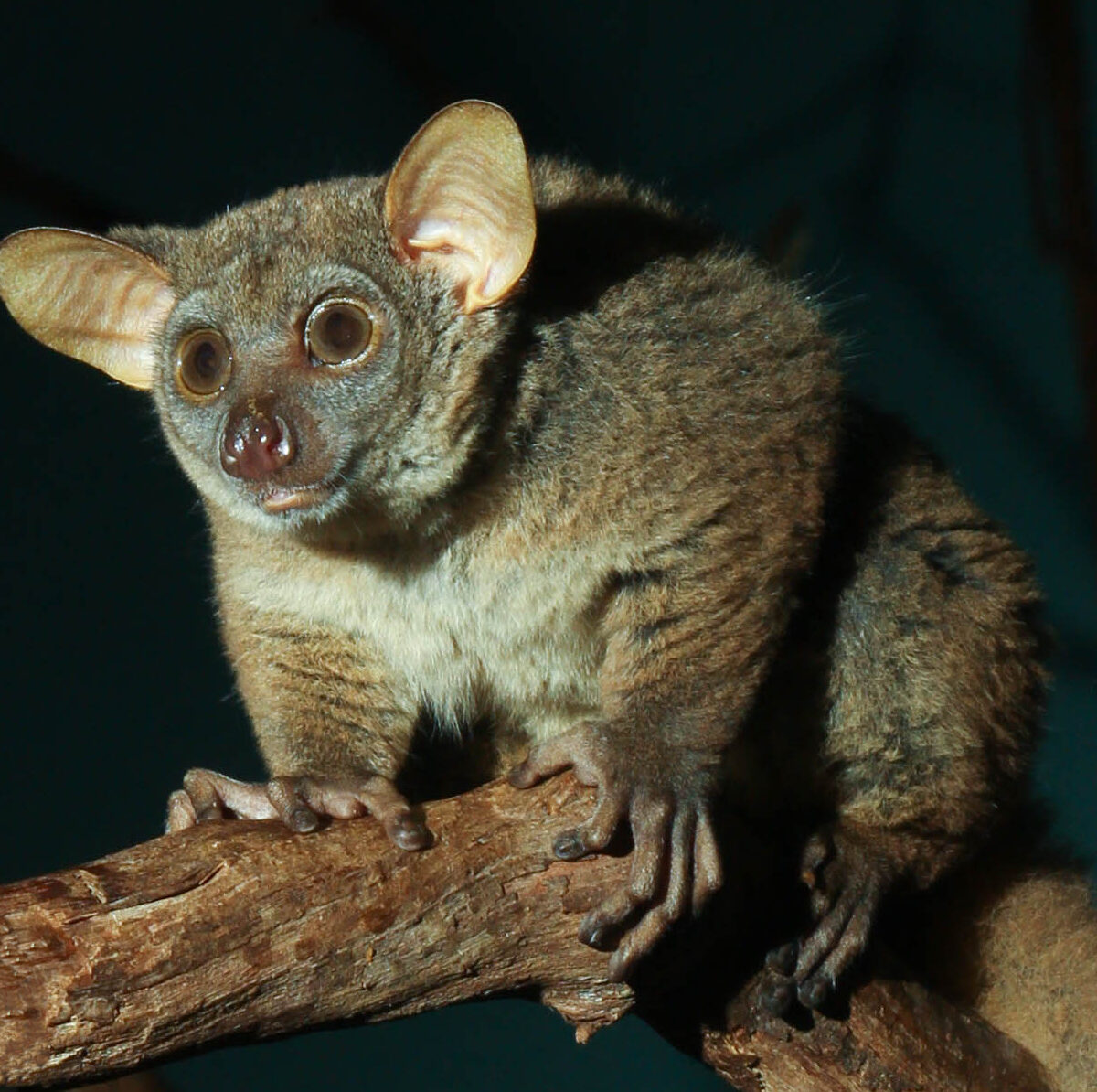
NORTHERN GREATER BUSHBABY
Otolemur garnettii
DESCRIPTION
Northern Greater Bushbaby (Otolemur garnettii) is commonly known as Garnett's Bushbaby. This species is characterized by its large eyes, which are adapted for nocturnal vision, and its long, bushy tail that aids in balance as it navigates through trees. They are agile and can leap significant distances between branches, showcasing their strong hind limbs and flexible limbs, which are essential for their arboreal lifestyle.
FUN FACTS
- Northern Greater Bushbabies have a unique ability to leap up to 6 meters in a single bound, which is essential for navigating their forested habitats
- They also have a highly developed sense of hearing, allowing them to detect predators and communicate effectively with their group
QUICK INFO
Lifespan10-15 years in the wild, up to 20 years in captivi
Average Weight1.5-2.5 kg
Average Length40-50 cm
Diet TypeOmnivore
Social StructureThey are generally social animals, often found in small groups or pairs, which helps in foraging and predator avoidance.
Activity PatternNocturnal
Breeding SeasonYear-round, with peaks depending on local conditions
- Habitat
- Northern Greater Bushbabies inhabit a variety of forested environments, including tropical and subtropical forests. They are often found in areas with dense canopy cover that provides ample food and shelter.
- Biomes
- Tropical Rainforest, Subtropical Forest
- Native Range
- They are native to the eastern and southern regions of Africa, particularly in countries like Tanzania and Mozambique.
- Continent
- Africa
- Countries
- Tanzania, Mozambique
- Diet
- They primarily consume fruits, leaves, and insects, making them opportunistic feeders. Their diet varies based on seasonal availability of food sources.
- Diet Type
- Omnivore
- Favorite Food
- fruits, leaves, insects
- Social Structure
- They are generally social animals, often found in small groups or pairs, which helps in foraging and predator avoidance.
- Activity Pattern
- Nocturnal
- Group Size
- 2-10
- Territorial
- 1
 LC
LC
 VU
VU
1.5-2.5 kg
Weight
40-50 cm
Length
- Coloration
- They have a grayish-brown fur with lighter underparts and distinctive facial markings.
- Lifespan
- 10-15 years in the wild, up to 20 years in captivi
- Gestation Period
- 120 days
- Offspring per Birth
- 1-2
- Sexual Maturity
- 1-2 years
- Breeding Season
- Year-round, with peaks depending on local conditions
LC
Least Concern
IUCN Red List Status
- Population Status
- The population is currently stable, but habitat loss poses a potential threat.
- Wild Population Estimate
- Unknown
- Population Trend
- Stable
- Endangered
- 0
- Threats
- Main threats include habitat destruction due to logging and agricultural expansion. Additionally, they face pressure from hunting in some areas.
- Predators
- Snakes, birds of prey, and larger mammals such as leopards.
- Defense Mechanisms
- They rely on their agility and ability to leap to escape predators, as well as their vocalizations to alert others of danger.
- Found in Zoos
- Uncommon