


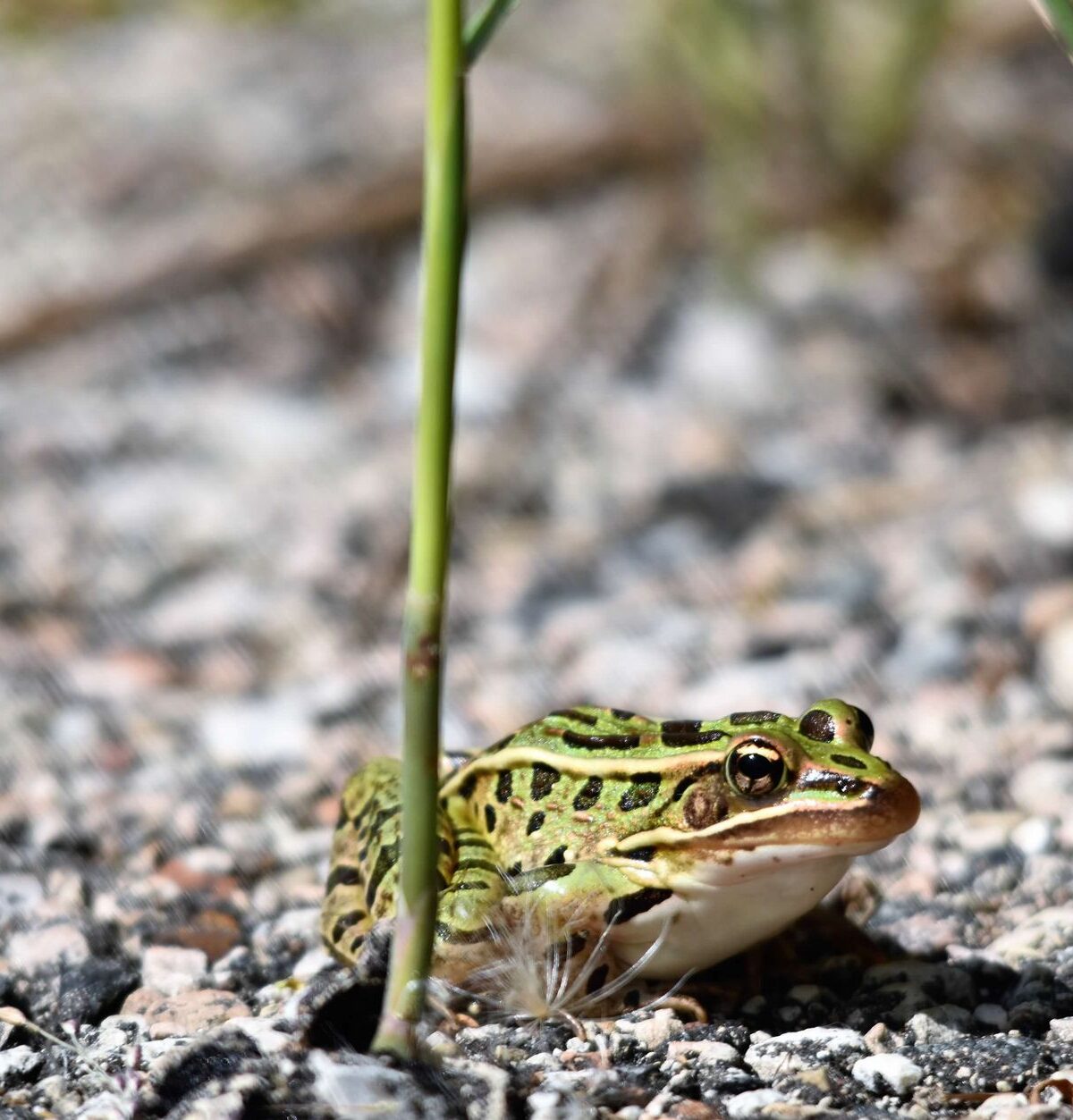
NORTHERN LEOPARD FROG
Lithobates pipiens
DESCRIPTION
Northern Leopard Frog (Lithobates pipiens) is a medium-sized frog known for its distinctive green or brown coloration with dark spots resembling a leopard's pattern. This species is primarily found in wetlands, grasslands, and near water bodies, where it exhibits a preference for open areas with abundant vegetation. Northern Leopard Frogs are known for their agile swimming and jumping abilities, making them effective predators and escape artists in their natural habitats.
FUN FACTS
- Northern Leopard Frogs are known for their impressive jumping ability, which can reach distances of over 2 meters in a single leap
- They also have a unique mating call that can be heard from a distance, often described as a low, resonant 'gurgle' that attracts females during the breeding season.|These frogs play a crucial role in their ecosystems as both predators and prey, helping to maintain the balance of insect populations while serving as a food source for various animals
- Their presence in an ecosystem is often an indicator of environmental health
QUICK INFO
Lifespan5-10 years in the wild
Average Weight30-100 g
Average Length7.5-10 cm
Diet TypeInsectivore
Social Structuresolitary, with occasional group gatherings during breeding
Activity PatternNocturnal
Breeding SeasonSpring (April-June)
- Habitat
- These frogs thrive in freshwater habitats such as ponds, marshes, and streams, often favoring areas with dense vegetation for cover. They require both aquatic and terrestrial environments for breeding and foraging.
- Biomes
- Wetlands, Grasslands
- Native Range
- Northern Leopard Frogs are native to North America, ranging from Canada to the northern United States.
- Continent
- North America
- Countries
- Canada, United States
- Diet
- Northern Leopard Frogs primarily consume a variety of invertebrates, including insects and worms. They are opportunistic feeders and will also eat small vertebrates when available.
- Diet Type
- Insectivore
- Favorite Food
- insects, worms
- Social Structure
- solitary, with occasional group gatherings during breeding
- Activity Pattern
- Nocturnal
- Group Size
- 1-10
- Territorial
- 0
 VU
VU
 LC
LC

 LC
LC
30-100 g
Weight
7.5-10 cm
Length
- Coloration
- green or brown with dark spots
- Sexual Dimorphism
- males are typically smaller and have more vibrant coloration than females
- Lifespan
- 5-10 years in the wild
- Offspring per Birth
- 1000-4000 eggs
- Sexual Maturity
- 1-3 years
- Breeding Season
- Spring (April-June)
VU
Vulnerable
IUCN Red List Status
- Population Status
- The population of Northern Leopard Frogs has been declining in some areas due to habitat loss and environmental changes.
- Wild Population Estimate
- unknown
- Population Trend
- Decreasing
- Endangered
- 1
- Threats
- Main threats include habitat destruction, pollution, and climate change, which affect their breeding and foraging habitats. Additionally, disease outbreaks, such as chytridiomycosis, pose significant risks to their populations.
- Conservation Program
- Various local conservation efforts are in place to protect their habitats and monitor populations.
- Predators
- birds, snakes, mammals, fish
- Defense Mechanisms
- Northern Leopard Frogs can use their jumping ability to escape predators quickly. They also have a cryptic coloration that helps them blend into their surroundings.
- Found in Zoos
- Uncommon