


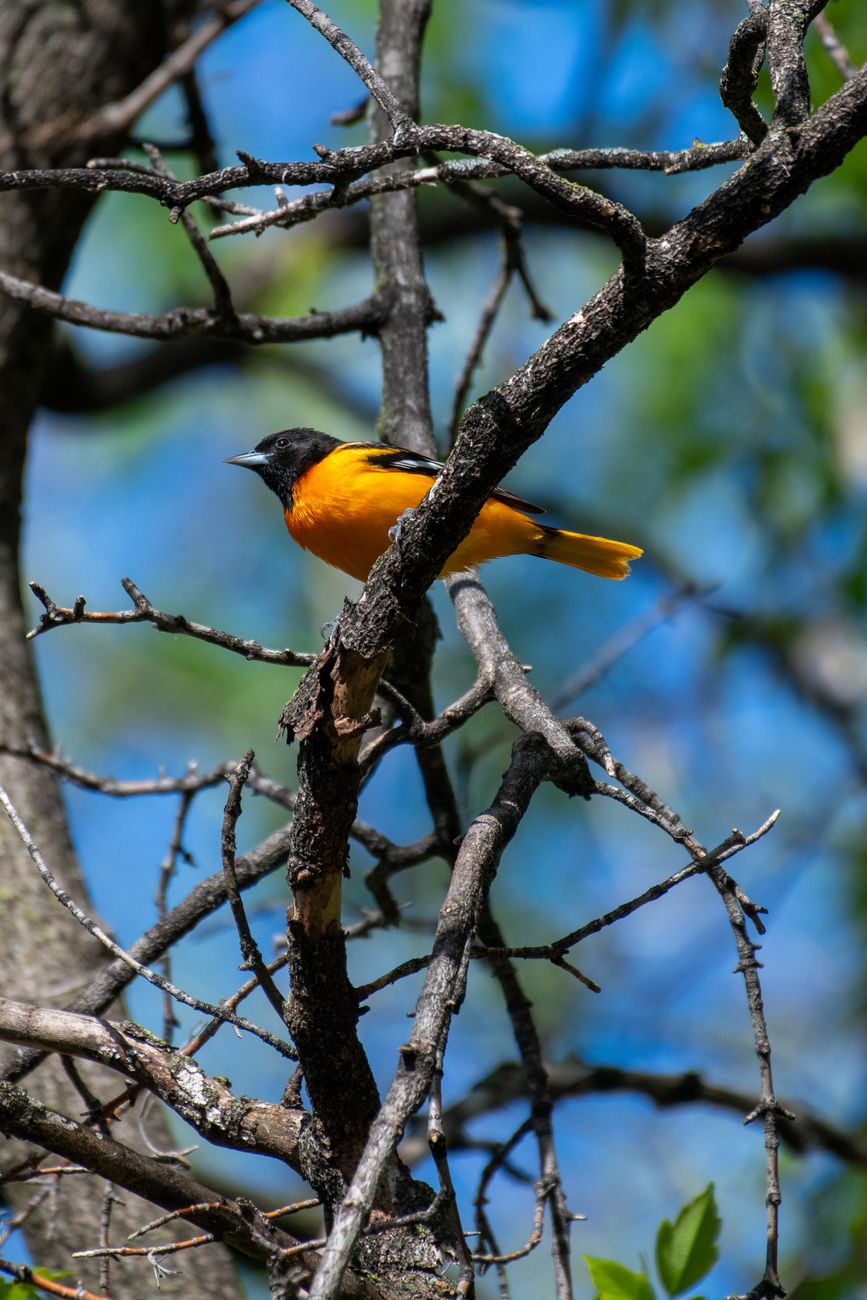
NORTHERN ORIOLE
Icterus galbula
DESCRIPTION
Northern Oriole (Icterus galbula) is commonly known as the Baltimore Oriole in some regions. This striking bird is characterized by its vibrant orange and black plumage, with males being particularly bright during the breeding season. They are known for their melodious songs and are often found in open woodlands, parks, and gardens, where they build hanging nests in trees.
FUN FACTS
- Northern Orioles are known for their unique nests, which are woven tightly from plant fibers and can hang several feet below a tree branch
- These nests are often mistaken for those of other species, but their distinctive shape and construction are a hallmark of the Northern Oriole
- | During migration, Northern Orioles can travel long distances, sometimes flying over 1,000 miles non-stop
- This remarkable endurance allows them to reach their wintering grounds in Central America, where they can find abundant food sources
QUICK INFO
Lifespanup to 10 years in the wild
Average Weight30-40 g
Average Length20-25 cm
Diet TypeOmnivore
Social Structurepair, typically seen in mated pairs during the breeding season
Activity PatternDiurnal
Breeding SeasonSpring (April-June)
- Habitat
- Northern Orioles prefer deciduous forests and open woodlands, often near water sources. They are also commonly found in suburban areas with suitable trees for nesting.
- Biomes
- Temperate Forest, Grassland
- Native Range
- They are native to North America, breeding in Canada and the northern United States, and migrating to Central America for the winter.
- Continent
- North America
- Countries
- Canada, United States, Mexico
- Diet
- Northern Orioles primarily feed on fruits, nectar, and insects. They are particularly fond of berries and can often be seen visiting flowering plants for nectar.
- Diet Type
- Omnivore
- Favorite Food
- berries, nectar, insects
- Social Structure
- pair, typically seen in mated pairs during the breeding season
- Activity Pattern
- Diurnal
- Group Size
- 1-2
- Territorial
- 1
 CR
CR
 LC
LC
 VU
VU
30-40 g
Weight
20-25 cm
Length
- Coloration
- bright orange and black plumage in males, yellowish-orange in females
- Sexual Dimorphism
- males are more brightly colored than females
- Lifespan
- up to 10 years in the wild
- Offspring per Birth
- 3-7
- Sexual Maturity
- 1 year
- Breeding Season
- Spring (April-June)
LC
Least Concern
IUCN Red List Status
- Population Status
- The population is currently stable, but habitat loss poses a potential threat.
- Wild Population Estimate
- 1,000,000-2,000,000
- Population Trend
- Stable
- Endangered
- 0
- Threats
- Main threats include habitat destruction due to urbanization and agricultural practices. Climate change may also impact their migratory patterns and food availability.
- Predators
- hawks, cats, snakes, and other birds of prey
- Defense Mechanisms
- They use their bright coloration to startle predators and can also be quite vocal to warn others of danger.
- Found in Zoos
- Uncommon