


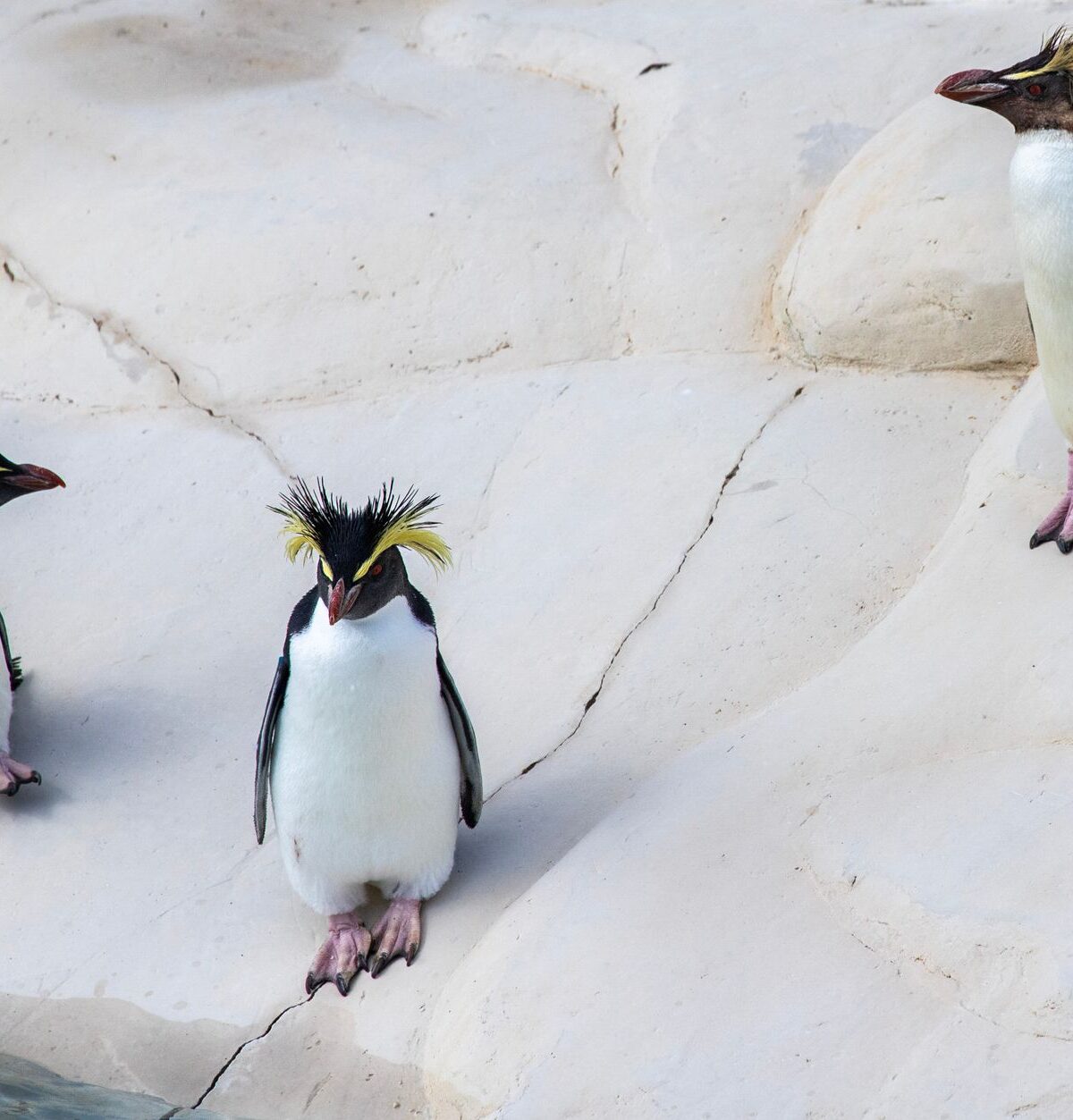
NORTHERN ROCKHOPPER PENGUIN
Eudyptes moseleyi
DESCRIPTION
Northern Rockhopper Penguin (Eudyptes moseleyi) is a small species of penguin characterized by its distinctive yellow and black crest feathers. This penguin has a robust body with a black back and white underbelly, and it typically exhibits a unique hopping behavior when navigating rocky terrains. They are social birds, often found in large colonies, and are known for their vocalizations and elaborate courtship displays.
FUN FACTS
- Northern Rockhopper Penguins are known for their unique hopping movement, which allows them to navigate rocky terrains with ease
- This behavior is not only efficient but also adds to their charming personality
- | These penguins have a distinctive call that sounds like a braying donkey, which they use to communicate with each other in their noisy colonies
- Their vocalizations play a crucial role in mate selection and maintaining social bonds
QUICK INFO
Lifespan10-15 years in the wild, up to 20 years in captivi
Average Weight1.5-2.5 kg
Average Length50-60 cm
Diet TypeCarnivore
Social StructureThey are typically found in large breeding colonies, indicating a group social structure.
Activity PatternDiurnal
Breeding SeasonSpring (September-November)
- Habitat
- Northern Rockhopper Penguins inhabit rocky coastal areas and islands, often nesting in crevices or under vegetation. They prefer locations that provide protection from predators and harsh weather.
- Biomes
- Coastal, Marine
- Native Range
- They are native to the sub-Antarctic islands, particularly the Tristan da Cunha and Gough Islands.
- Continent
- Antarctica
- Countries
- United Kingdom (Tristan da Cunha, Gough Island)
- Diet
- They primarily feed on small fish, krill, and other marine invertebrates. Their foraging behavior involves diving underwater to catch prey.
- Diet Type
- Carnivore
- Favorite Food
- krill, small fish
- Social Structure
- They are typically found in large breeding colonies, indicating a group social structure.
- Activity Pattern
- Diurnal
- Group Size
- 100-1,000
- Territorial
- 0

 LC
LC
1.5-2.5 kg
Weight
50-60 cm
Length
- Coloration
- Black back with a white belly and distinctive yellow crest feathers.
- Sexual Dimorphism
- Males are generally larger than females.
- Lifespan
- 10-15 years in the wild, up to 20 years in captivi
- Offspring per Birth
- 1-2
- Sexual Maturity
- 3-4 years
- Breeding Season
- Spring (September-November)
EN
Endangered
IUCN Red List Status
- Population Status
- The population is currently declining due to various threats, including habitat loss and climate change.
- Wild Population Estimate
- Approximately 30,000-50,000
- Population Trend
- Decreasing
- Endangered
- 1
- Threats
- Main threats include climate change, which affects their food supply, and invasive species that prey on their eggs and chicks. Additionally, human activities such as fishing can impact their food availability.
- Conservation Program
- Conservation efforts are in place to monitor populations and protect their habitats.
- Predators
- Seabirds, such as skuas and giant petrels, as well as terrestrial predators like rats and cats pose threats to their eggs and chicks.
- Defense Mechanisms
- They often use their agility and speed in the water to evade predators, and they can also be aggressive when defending their nests.
- Found in Zoos
- Uncommon