


NORTHERN SPUR-WINGED GOOSE
Plectropterus gambensis gambensis
DESCRIPTION
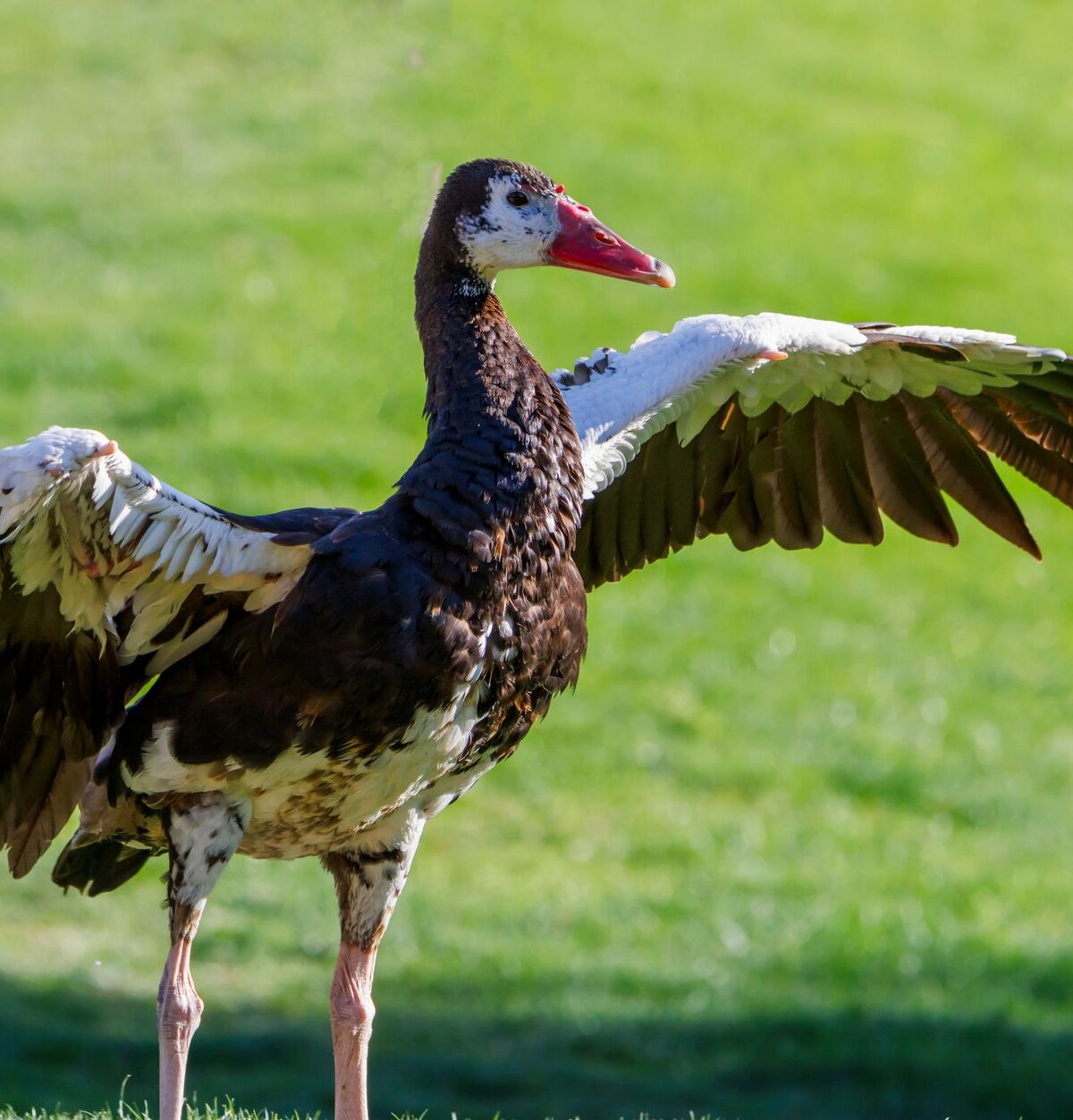
Northern spur-winged goose (Plectropterus gambensis gambensis) is commonly known as the spur-winged goose. This large waterfowl is characterized by its striking black and white plumage, with distinctive spur-like structures on its wings that are used for defense. They are social birds often found in groups, exhibiting a range of vocalizations and behaviors that enhance their interactions within flocks.
FUN FACTS
- Northern spur-winged geese are known for their unique wing spurs, which can inflict painful wounds on predators
- Additionally, they are one of the few goose species that can be found in both terrestrial and aquatic habitats, showcasing their adaptability to different environments
QUICK INFO
Lifespan10-15 years in the wild, up to 20 in captivity
Average Weight2.5-4 kg
Average Length70-90 cm
Diet TypeHerbivore
Social StructureThey are typically found in groups, often forming pairs during the breeding season.
Activity PatternDiurnal
Breeding SeasonWet season (varies by region)
- Habitat
- Northern spur-winged geese inhabit wetlands, marshes, and grasslands, often near water bodies. They prefer areas with abundant vegetation for foraging and nesting.
- Biomes
- Wetlands, Grassland
- Native Range
- They are native to parts of Africa, particularly in the sub-Saharan region.
- Continent
- Africa
- Countries
- Senegal, Gambia, Mali, Nigeria, Cameroon, Uganda, Kenya, Tanzania
- Diet
- They primarily feed on grasses, seeds, and aquatic plants, foraging in both terrestrial and aquatic environments.
- Diet Type
- Herbivore
- Favorite Food
- grasses, seeds, aquatic plants
- Social Structure
- They are typically found in groups, often forming pairs during the breeding season.
- Activity Pattern
- Diurnal
- Group Size
- 10-50
- Territorial
- 0
 VU
VU
2.5-4 kg
Weight
70-90 cm
Length
- Coloration
- They have a striking black and white coloration with a distinctive black head and neck.
- Sexual Dimorphism
- Males and females are similar in appearance, though males are generally larger.
- Lifespan
- 10-15 years in the wild, up to 20 in captivity
- Offspring per Birth
- 4-8
- Sexual Maturity
- 1-2 years
- Breeding Season
- Wet season (varies by region)
LC
Least Concern
IUCN Red List Status
- Population Status
- The population is currently stable, but habitat loss poses a potential threat.
- Wild Population Estimate
- 50,000-100,000
- Population Trend
- Stable
- Endangered
- 0
- Threats
- Main threats include habitat destruction due to agriculture and urban development, as well as hunting in some areas.
- Predators
- Predators include large birds of prey, crocodiles, and humans.
- Defense Mechanisms
- They use their wing spurs to defend against predators and can also flee quickly to escape danger.
- Compatible Animals
- other waterfowl, ducks, swans
- Found in Zoos
- Uncommon