


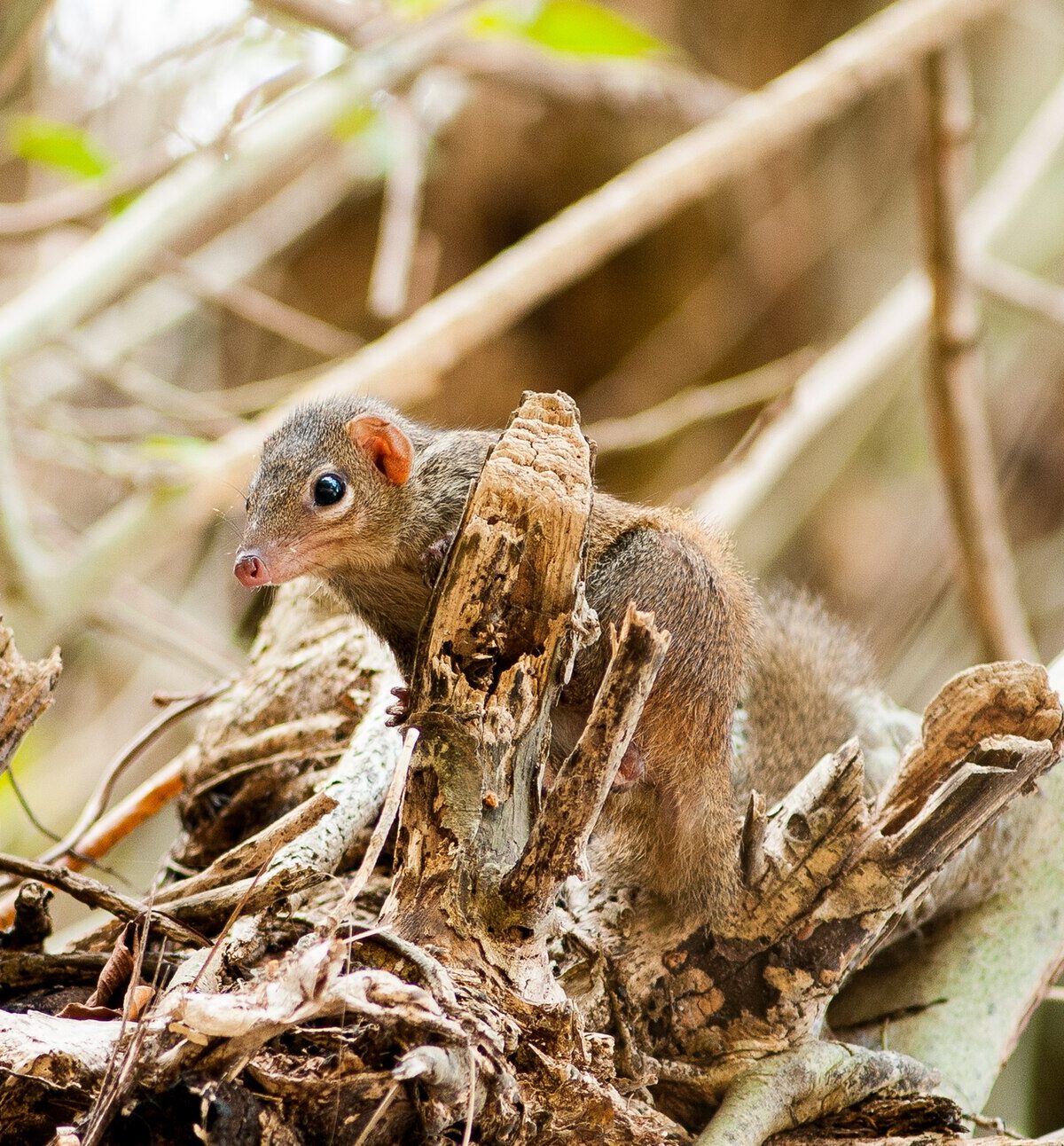
NORTHERN TREE SHREW
DESCRIPTION
Northern Tree Shrew is a small mammal known for its agile movements and tree-dwelling habits. It has a slender body, large eyes, and a long, bushy tail, which aids in balance as it navigates through the forest canopy. This species is primarily found in Southeast Asia, where it exhibits a range of behaviors including foraging for food and establishing territories.
FUN FACTS
- Northern Tree Shrews are often mistaken for rodents due to their size and appearance, but they are more closely related to primates
- They have a unique ability to leap great distances between branches, which is essential for their survival in the treetops.| These animals have a high metabolic rate and require a significant amount of food daily, often foraging for hours to meet their energy needs
- Their keen sense of smell helps them locate food in the dense forest environment
QUICK INFO
Lifespan5-7 years in the wild, up to 10 years in captivity
Average Weight150-250 g
Average Length20-30 cm
Diet TypeOmnivore
Social Structuresolitary, with individuals maintaining their own territories
Activity PatternDiurnal
Breeding SeasonYear-round, with peaks during wet seasons
- Habitat
- They inhabit tropical and subtropical forests, often residing in trees where they can find food and shelter. Their preference for arboreal environments makes them well-suited for life in dense foliage.
- Biomes
- Tropical Rainforest, Subtropical Forest
- Native Range
- Northern Tree Shrews are native to Southeast Asia, particularly found in countries like Myanmar, Thailand, and Malaysia.
- Continent
- Asia
- Countries
- Myanmar, Thailand, Malaysia, Vietnam, Laos
- Diet
- Northern Tree Shrews are omnivorous, feeding on a variety of fruits, insects, and small vertebrates. Their diet is diverse, allowing them to adapt to different food availability in their habitat.
- Diet Type
- Omnivore
- Favorite Food
- fruits, insects, small vertebrates
- Social Structure
- solitary, with individuals maintaining their own territories
- Activity Pattern
- Diurnal
- Group Size
- 1
- Territorial
- 1
 LC
LC
 VU
VU
150-250 g
Weight
20-30 cm
Length
- Coloration
- brownish-gray fur with lighter underparts
- Sexual Dimorphism
- males are slightly larger than females
- Lifespan
- 5-7 years in the wild, up to 10 years in captivity
- Gestation Period
- 45-50 days
- Offspring per Birth
- 1-3
- Sexual Maturity
- 6-12 months
- Breeding Season
- Year-round, with peaks during wet seasons
LC
Least Concern
IUCN Red List Status
- Population Status
- The population is currently stable, but habitat loss poses a potential threat.
- Wild Population Estimate
- unknown
- Population Trend
- Stable
- Endangered
- 0
- Threats
- Main threats include habitat destruction due to deforestation and agricultural expansion. These activities reduce their natural habitat and food sources.
- Predators
- snakes, birds of prey, and larger mammals
- Defense Mechanisms
- They rely on their agility and ability to climb trees to escape from predators.
- Found in Zoos
- Uncommon