


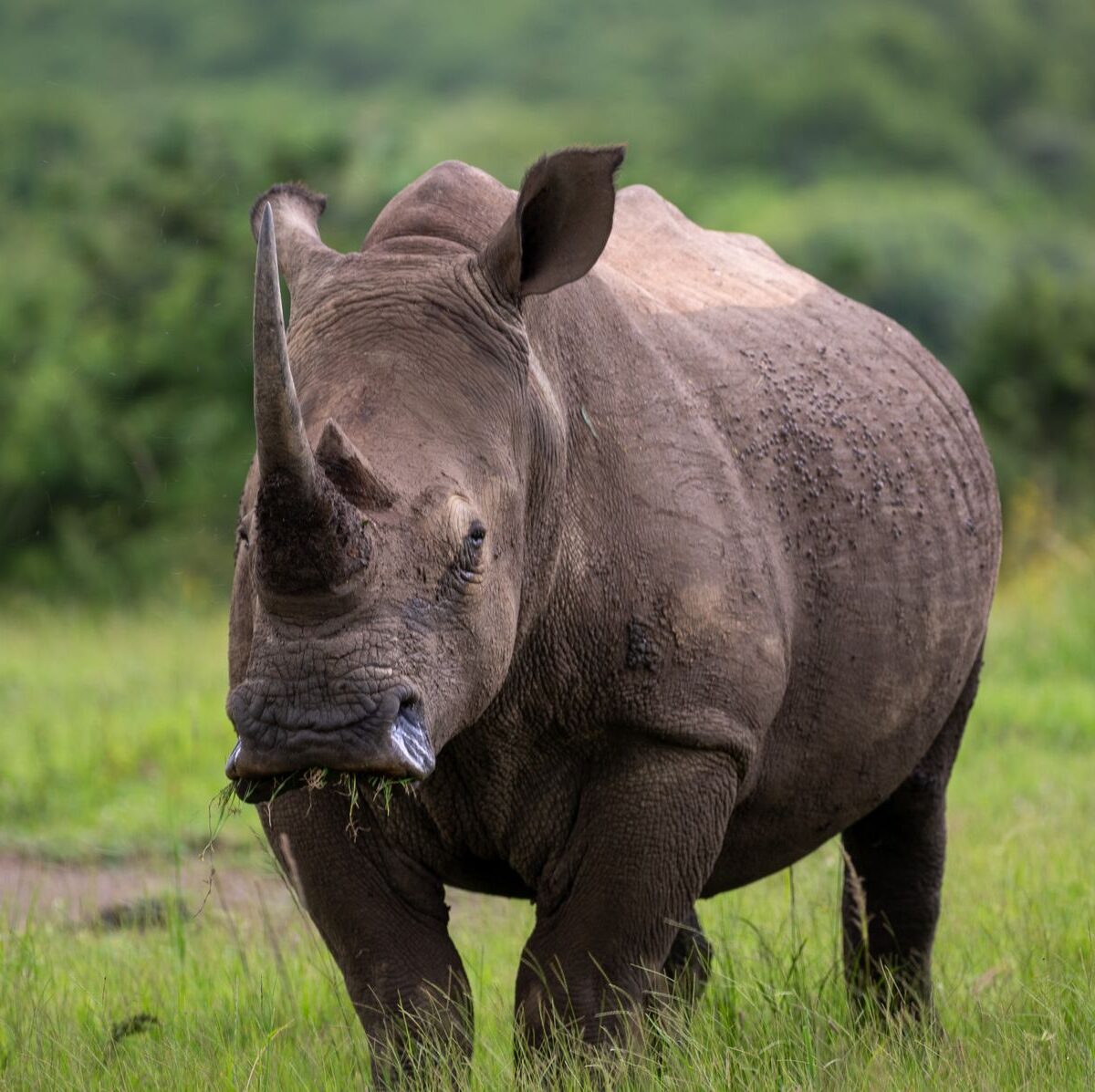
NORTHERN WHITE RHINOCEROS
Ceratotherium simum cottoni
DESCRIPTION
Northern White Rhinoceros (Ceratotherium simum cottoni) is a subspecies of the white rhinoceros, characterized by its large size and two horns on its snout. This subspecies has a more slender build compared to its Southern counterpart and features a broad mouth adapted for grazing on grasses. Once widespread across East and Central Africa, the Northern White Rhinoceros is now critically endangered, with only a few individuals remaining in captivity, primarily due to poaching and habitat loss.
FUN FACTS
- The Northern White Rhinoceros is one of the largest land mammals, with males weighing up to 2,300 kg
- Despite their size, they can run at speeds of up to 30 km/h over short distances, making them surprisingly agile for their bulk
- | The two remaining Northern White Rhinoceroses, Najin and Fatu, are under constant protection and are part of a breeding program that uses advanced reproductive technologies, including in vitro fertilization, in hopes of saving the subspecies from extinction
QUICK INFO
Lifespan40-50 years in the wild, up to 60 in captivity
Average Weight1,800-2,300 kg
Average Length3.5-4.5 m
Diet TypeHerbivore
Social Structuresolitary, with occasional small groups; females often stay with their young.
Activity PatternDiurnal
Breeding SeasonYear-round
- Habitat
- This species typically inhabits savannas and grasslands, where it can find ample food sources. They prefer areas with access to water and open spaces for grazing.
- Biomes
- Savanna, Grassland
- Native Range
- Historically, the Northern White Rhinoceros roamed across parts of East and Central Africa, including countries like Uganda, Sudan, and the Democratic Republic of the Congo.
- Continent
- Africa
- Countries
- Sudan, Uganda, Democratic Republic of the Congo
- Diet
- The Northern White Rhinoceros primarily feeds on grasses, leaves, and shoots. Its grazing habits play a crucial role in maintaining the grassland ecosystem.
- Diet Type
- Herbivore
- Favorite Food
- grasses
- Social Structure
- solitary, with occasional small groups; females often stay with their young.
- Activity Pattern
- Diurnal
- Group Size
- 1-2
- Territorial
- 0
 VU
VU
1,800-2,300 kg
Weight
3.5-4.5 m
Length
1.5-1.8 m at shoulder
Height (Shoulder)
- Coloration
- grayish-brown with a rough skin texture
- Sexual Dimorphism
- males are generally larger than females
- Lifespan
- 40-50 years in the wild, up to 60 in captivity
- Gestation Period
- 16 months
- Offspring per Birth
- 1
- Sexual Maturity
- 3-4 years
- Breeding Season
- Year-round
CR
Critically Endangered
IUCN Red List Status
- Population Status
- The Northern White Rhinoceros is functionally extinct, with only two known individuals remaining, both of which are female and live under protection in a conservancy.
- Wild Population Estimate
- 0
- Population Trend
- Decreasing
- Endangered
- 1
- Threats
- The primary threats to the Northern White Rhinoceros include poaching for their horns and habitat destruction due to agricultural expansion and human settlement. Conservation efforts are ongoing, but the situation remains dire.
- Conservation Program
- Ol Pejeta Conservancy's Northern White Rhino Initiative
- Predators
- Humans are the main threat, as they hunt the rhinos for their horns. In the wild, young rhinos may be vulnerable to lions and crocodiles, but adult rhinos have few natural predators.
- Defense Mechanisms
- Northern White Rhinoceroses rely on their size and strength for defense, using their horns to fend off threats. They also have a keen sense of hearing and smell to detect danger.
- Compatible Animals
- none
- Found in Zoos
- Rare