


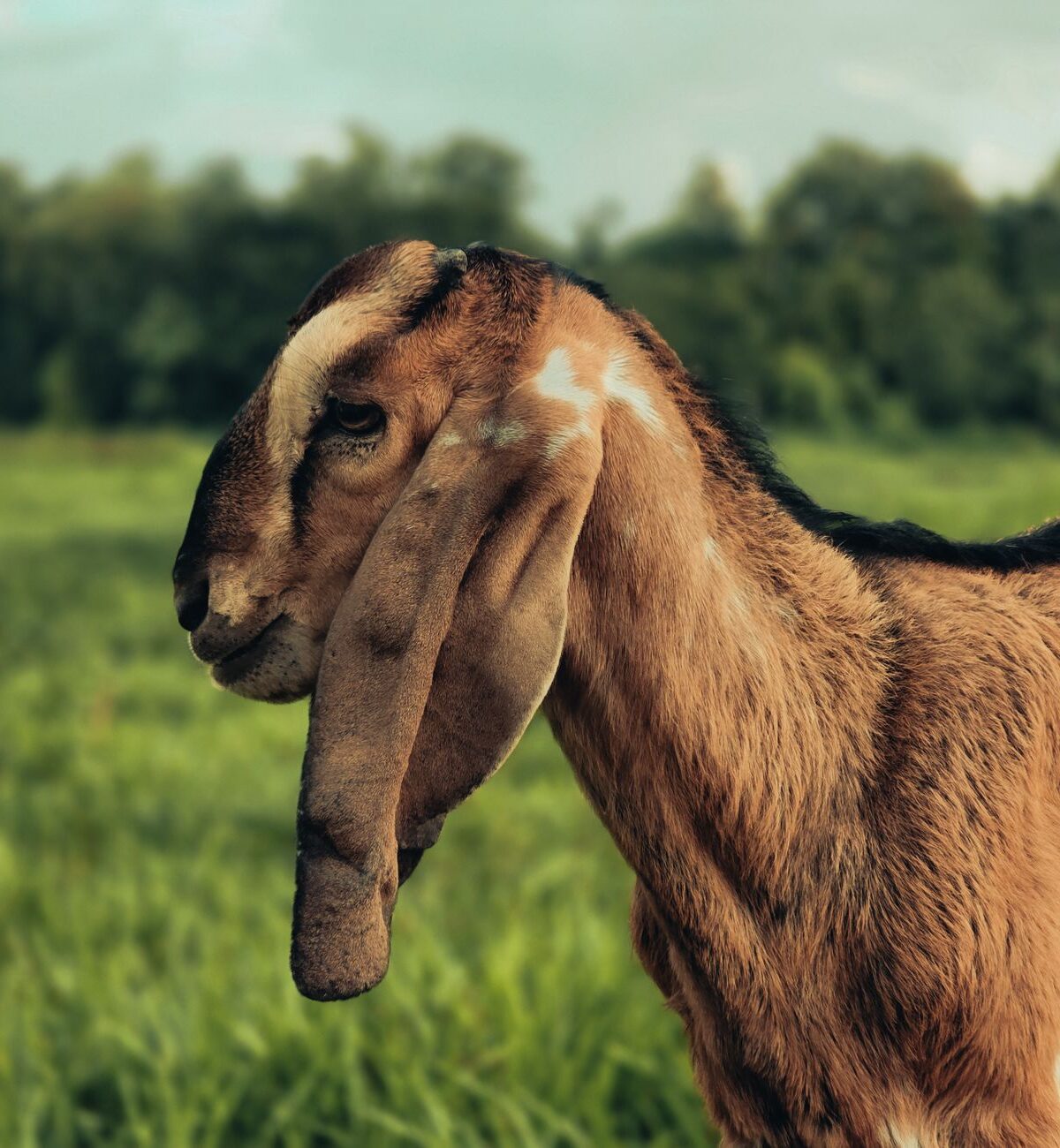
NUBIAN GOAT
Capra hircus
DESCRIPTION
Nubian Goat is commonly known as the British Nubian and Anglo-Nubian. This breed is characterized by its long, floppy ears and a distinctive Roman nose, giving it a unique appearance among goat breeds. They are known for their friendly and sociable behavior, often forming strong bonds with their human caretakers and other goats, making them popular in both farms and as pets.
FUN FACTS
- Nubian Goats are known for their high milk production, which is rich in butterfat, making it ideal for cheese production
- They are also recognized for their vocalizations, often 'talking' to their owners and other goats, which adds to their charm as companion animals
QUICK INFO
Lifespan15-18 years in captivity
Average Weight45-90 kg
Diet TypeHerbivore
Social Structuregroup — they typically live in herds, which provide social interaction and protection.
Activity PatternDiurnal
Breeding SeasonFall (September-November)
- Habitat
- Nubian Goats thrive in a variety of habitats, including pastures, woodlands, and scrublands. They are adaptable animals that can live in diverse environments as long as there is sufficient forage available.
- Biomes
- Grassland, Temperate Forest
- Native Range
- Originally from North Africa, Nubian Goats have been bred in various regions around the world, particularly in the United States and the United Kingdom.
- Continent
- Africa, North America, Europe
- Countries
- Egypt, United States, United Kingdom
- Diet
- Nubian Goats are herbivores, primarily grazing on grasses, shrubs, and other vegetation. They are known to be efficient foragers, often seeking out a variety of plants in their environment.
- Diet Type
- Herbivore
- Favorite Food
- grasses, shrubs, hay
- Social Structure
- group — they typically live in herds, which provide social interaction and protection.
- Activity Pattern
- Diurnal
- Group Size
- 5-15
- Territorial
- 0

 VU
VU
45-90 kg
Weight
0.9-1.1 m at shoulder
Height (Shoulder)
- Coloration
- varies widely, commonly seen in shades of brown, black, and white
- Sexual Dimorphism
- males are generally larger and have thicker necks than females
- Lifespan
- 15-18 years in captivity
- Gestation Period
- 150 days
- Offspring per Birth
- 1-3
- Sexual Maturity
- 6-12 months
- Breeding Season
- Fall (September-November)
LC
Least Concern
IUCN Red List Status
- Population Status
- Nubian Goats are not considered endangered and are widely bred for milk and meat.
- Population Trend
- Stable
- Endangered
- 0
- Threats
- The main threats to Nubian Goats include disease and genetic dilution from crossbreeding. Additionally, they may face challenges from habitat loss and changes in agricultural practices.
- Predators
- dogs, coyotes, foxes, and large birds of prey
- Defense Mechanisms
- Nubian Goats rely on their agility and speed to escape predators, often fleeing to higher ground or dense vegetation.
- Compatible Animals
- sheep, cattle, chickens
- Found in Zoos
- Uncommon