


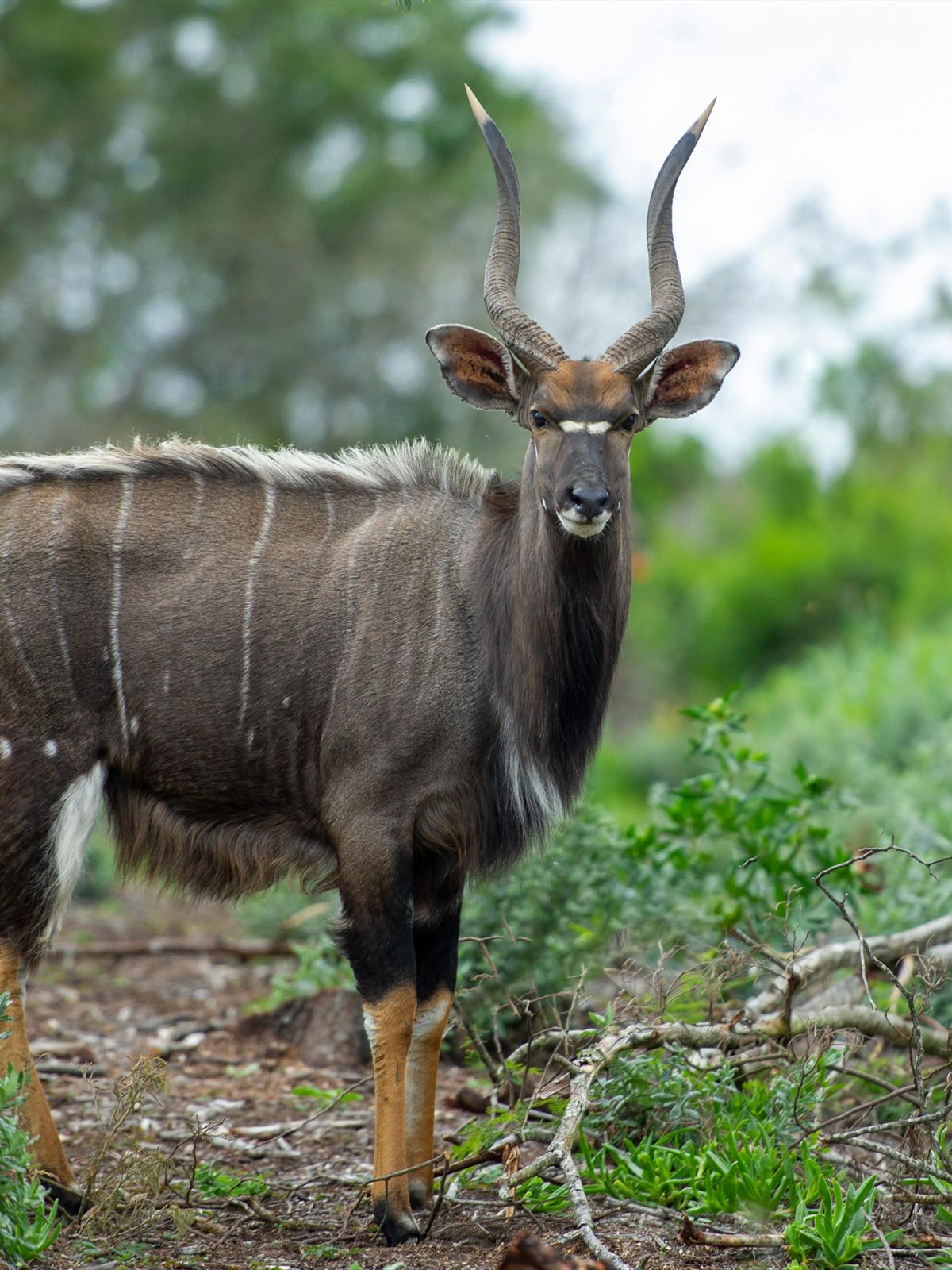
NYALA
Tragelaphus angasii
DESCRIPTION
Nyala is a medium-sized antelope native to southern Africa, characterized by its striking sexual dimorphism. Males are larger, with spiral horns and a dark brown coat adorned with white stripes and spots, while females are smaller and have a reddish-brown coat. They are known for their shy and elusive behavior, often found in dense bush and woodland areas, where they can easily hide from predators.
FUN FACTS
- Nyala are known for their unique mating rituals, where males engage in displays of strength and agility to attract females
- They can leap up to 2 meters high to escape predators or navigate through dense underbrush
- | The name 'Nyala' is derived from the Zulu language, where it is called 'inyala.' This species plays a crucial role in its ecosystem by helping to disperse seeds through its diet, contributing to the health of its habitat
QUICK INFO
Lifespan10-15 years in the wild, up to 20 years in captivi
Average Weight50-125 kg
Average Length1.5-2.0 m
Diet TypeHerbivore
Social StructureNyala exhibit a social structure where females and young males form small groups, while adult males are often solitary or form loose bachelor groups.
Activity PatternCrepuscular
Breeding SeasonYear-round, with peaks depending on local conditions
- Habitat
- Nyala inhabit dense bush and woodland areas, often near water sources. They prefer habitats with plenty of cover to hide from predators.
- Biomes
- Savanna, Woodland
- Native Range
- Nyala are found in the southern regions of Africa, particularly in countries like South Africa, Swaziland, and Mozambique.
- Continent
- Africa
- Countries
- South Africa, Swaziland, Mozambique
- Diet
- Nyala primarily feeds on leaves, fruits, and grasses, favoring tender shoots and foliage. They are selective feeders, often browsing in the undergrowth.
- Diet Type
- Herbivore
- Favorite Food
- leaves, fruits, grasses
- Social Structure
- Nyala exhibit a social structure where females and young males form small groups, while adult males are often solitary or form loose bachelor groups.
- Activity Pattern
- Crepuscular
- Group Size
- 2-10
- Territorial
- 0
 LC
LC
 VU
VU
 LC
LC
50-125 kg
Weight
1.5-2.0 m
Length
1.0-1.2 m at shoulder
Height (Shoulder)
- Coloration
- Males are dark brown with white stripes and spots, while females are reddish-brown.
- Sexual Dimorphism
- Males are larger with spiral horns, while females are smaller and hornless.
- Lifespan
- 10-15 years in the wild, up to 20 years in captivi
- Gestation Period
- 210 days
- Offspring per Birth
- 1
- Sexual Maturity
- 1-2 years
- Breeding Season
- Year-round, with peaks depending on local conditions
LC
Least Concern
IUCN Red List Status
- Population Status
- The population of Nyala is currently stable, but they face habitat loss in some areas.
- Wild Population Estimate
- 50,000-100,000
- Population Trend
- Stable
- Endangered
- 0
- Threats
- Main threats include habitat loss due to agriculture and urban development, as well as poaching in some regions. However, they are not currently considered endangered.
- Predators
- Lions, leopards, hyenas, and crocodiles are known predators of Nyala.
- Defense Mechanisms
- Nyala rely on their agility and ability to hide in dense vegetation to evade predators.
- Found in Zoos
- Uncommon