


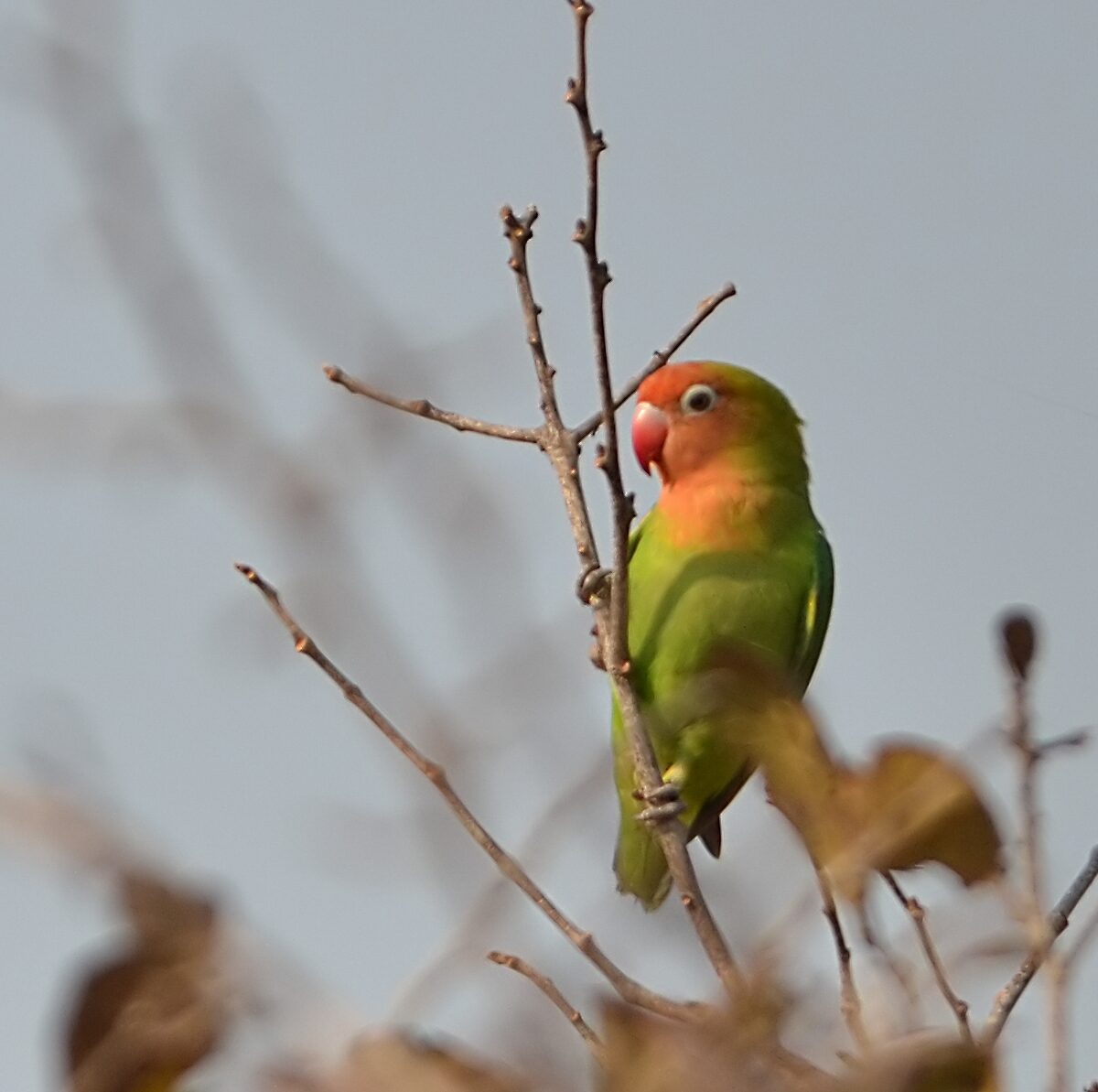
NYASA LOVEBIRD
Agapornis lilianae
DESCRIPTION
Nyasa Lovebird (Agapornis lilianae), also known as Liliane's Lovebird, is a small, colorful parrot native to the region around Lake Nyasa in East Africa. This species is characterized by its vibrant green plumage, with a distinctive orange-red face and a yellowish belly, making it visually striking among other lovebirds. They are social birds that often form strong pair bonds and are known for their playful and affectionate behavior, often seen engaging in mutual grooming and vocalizations.
FUN FACTS
- Nyasa Lovebirds are known for their strong pair bonds, often seen cuddling and preening each other, which is a behavior that strengthens their relationship
- They are also quite intelligent and can learn to mimic sounds and words, making them popular pets among bird enthusiasts.| These birds are highly social and thrive on interaction, both with their partners and with humans, often requiring plenty of mental stimulation and social engagement to stay happy and healthy
QUICK INFO
Lifespan10-15 years in the wild, up to 20 years in captivi
Average Weight50-60 g
Average Length13-14 cm
Diet TypeHerbivore
Social Structurepair, they often form strong monogamous bonds
Activity PatternDiurnal
Breeding SeasonSpring to early summer
- Habitat
- These birds inhabit woodlands, savannas, and scrub areas, often near water sources. They prefer areas with abundant vegetation that provides both food and nesting sites.
- Biomes
- Savanna, Woodland
- Native Range
- The Nyasa Lovebird is native to the southeastern region of Africa, particularly around Lake Nyasa in Malawi, Mozambique, and Tanzania.
- Continent
- Africa
- Countries
- Malawi, Mozambique, Tanzania
- Diet
- Nyasa Lovebirds primarily feed on seeds, fruits, and vegetables, which provide them with essential nutrients. They are known to enjoy a variety of seeds, including millet and sunflower seeds.
- Diet Type
- Herbivore
- Favorite Food
- seeds, fruits, vegetables
- Social Structure
- pair, they often form strong monogamous bonds
- Activity Pattern
- Diurnal
- Group Size
- 2-10
- Territorial
- 0
 LC
LC
 VU
VU
50-60 g
Weight
13-14 cm
Length
- Coloration
- vibrant green with an orange-red face and yellowish belly
- Sexual Dimorphism
- males and females are similar in appearance, but males may have slightly brighter coloration
- Lifespan
- 10-15 years in the wild, up to 20 years in captivi
- Offspring per Birth
- 3-6
- Sexual Maturity
- 6 months to 1 year
- Breeding Season
- Spring to early summer
LC
Least Concern
IUCN Red List Status
- Population Status
- The population of Nyasa Lovebirds is currently stable, but they face habitat loss due to deforestation.
- Wild Population Estimate
- unknown
- Population Trend
- Stable
- Endangered
- 0
- Threats
- Main threats include habitat destruction due to agriculture and logging, which reduces their natural habitat. Additionally, they are sometimes captured for the pet trade, which can impact local populations.
- Predators
- snakes, birds of prey, and larger mammals
- Defense Mechanisms
- They often rely on their agility and ability to fly quickly to evade predators.
- Compatible Animals
- other lovebirds, small parrots
- Found in Zoos
- Common