


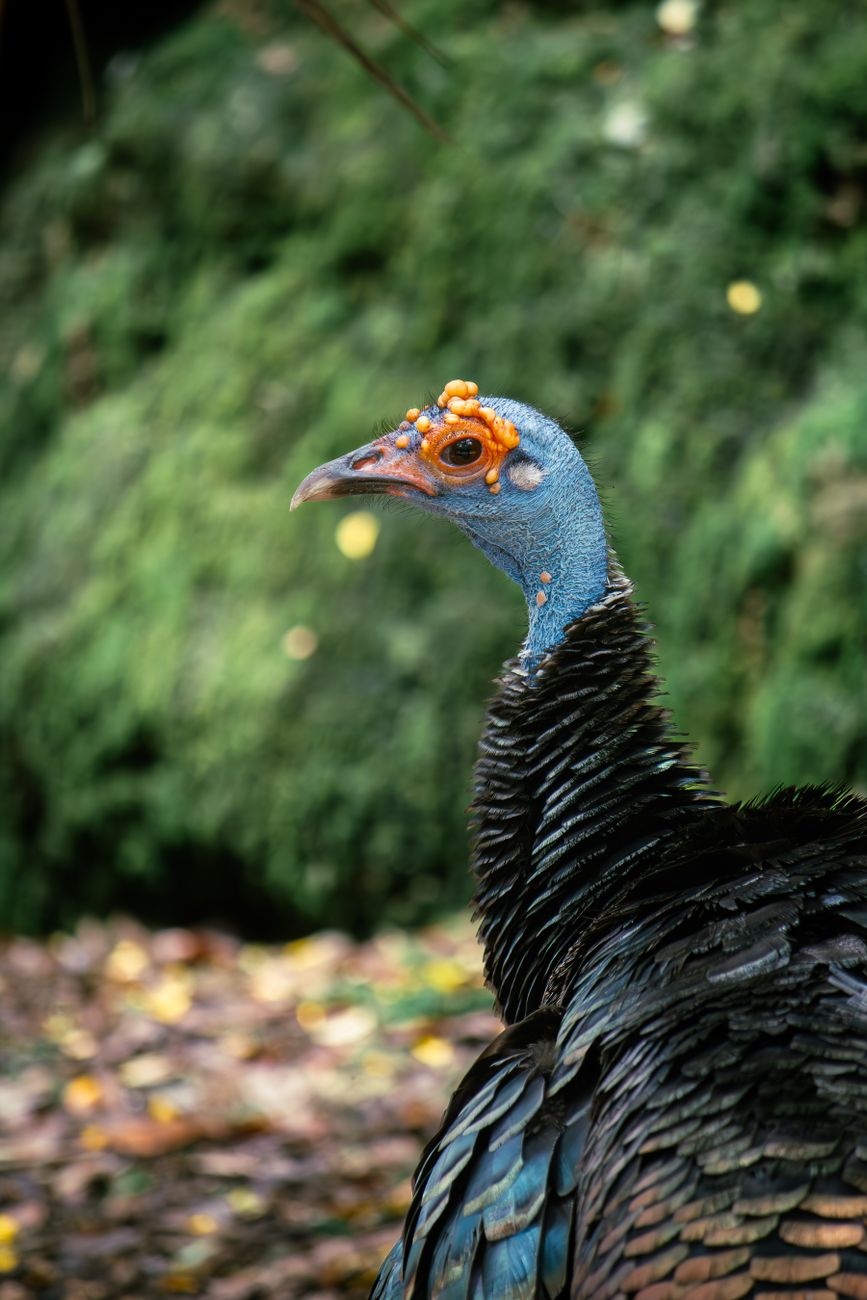
OCELLATED TURKEY
Meleagris ocellata
DESCRIPTION
Ocellated Turkey (Meleagris ocellata), also known as the Maya Turkey, is a striking bird native to the Yucatán Peninsula. It is characterized by its iridescent plumage, featuring a mix of green, blue, and bronze hues, along with distinctive eye-like spots on its tail feathers. This species is known for its elaborate courtship displays and vocalizations, which play a crucial role in mating rituals and social interactions.
FUN FACTS
- Ocellated Turkeys are unique among turkey species for their vibrant coloration and the distinctive eye-like patterns on their tail feathers, which are used in mating displays
- They are also known for their loud, varied calls, which can be heard over long distances, making them a fascinating subject for birdwatchers and ornithologists alike
QUICK INFO
Lifespan10-15 years in the wild, up to 20 in captivity
Average Weight2.5-4.5 kg
Average Length70-90 cm
Diet TypeOmnivore
Social Structuregroup — they often gather in small flocks, particularly during foraging.
Activity PatternDiurnal
Breeding SeasonSpring (March-May)
- Habitat
- These turkeys inhabit tropical and subtropical forests, often favoring areas with dense underbrush and open spaces for foraging. They are typically found in regions with a mix of trees and shrubs.
- Biomes
- Tropical Rainforest, Subtropical Forest
- Native Range
- The native range of the Ocellated Turkey is limited to the Yucatán Peninsula, encompassing parts of Mexico and Belize.
- Continent
- North America
- Countries
- Mexico, Belize
- Diet
- Ocellated Turkeys primarily feed on seeds, fruits, and insects, foraging on the ground for food. They are known to consume a variety of plant materials and small invertebrates.
- Diet Type
- Omnivore
- Favorite Food
- seeds, fruits, insects
- Social Structure
- group — they often gather in small flocks, particularly during foraging.
- Activity Pattern
- Diurnal
- Group Size
- 5-20
- Territorial
- 0
 NT
NT

 VU
VU
 LC
LC
2.5-4.5 kg
Weight
70-90 cm
Length
- Coloration
- iridescent green, blue, and bronze with eye-like spots on tail feathers
- Sexual Dimorphism
- Males are larger and more colorful than females, with more pronounced tail feather patterns.
- Lifespan
- 10-15 years in the wild, up to 20 in captivity
- Offspring per Birth
- 8-15
- Sexual Maturity
- 1 year
- Breeding Season
- Spring (March-May)
LC
Least Concern
IUCN Red List Status
- Population Status
- The population of Ocellated Turkeys is currently stable, but they face habitat loss.
- Wild Population Estimate
- 50,000-100,000
- Population Trend
- Stable
- Endangered
- 0
- Threats
- Main threats include habitat destruction due to agriculture and deforestation. Hunting also poses a risk, although it is regulated in some areas.
- Predators
- Jaguars, Coyotes, Birds of Prey, Snakes
- Defense Mechanisms
- Ocellated Turkeys rely on their ability to fly short distances to escape predators and often use dense vegetation for cover.
- Found in Zoos
- Uncommon