


OMAN LIZARD
Acanthodactylus schmidti
DESCRIPTION
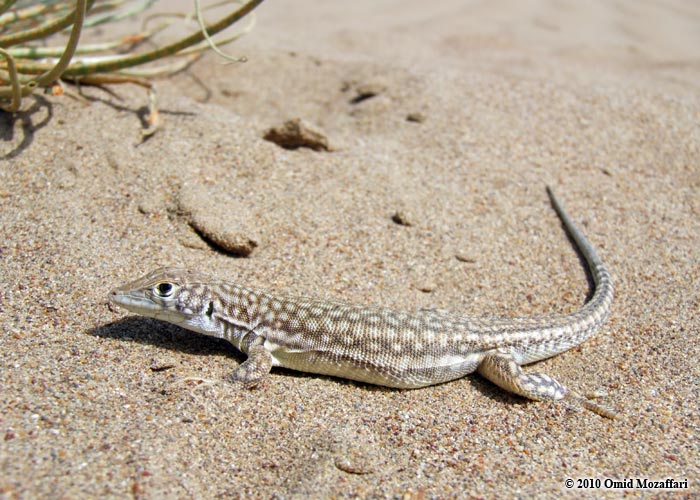
Oman Lizard (Acanthodactylus schmidti) is a small to medium-sized lizard characterized by its elongated body and distinctively spiny toes, which aid in its movement across sandy substrates. This species exhibits a range of colors, typically featuring a light brown or beige base with darker spots or stripes, providing effective camouflage in its arid habitat. Behaviorally, it is known for its quick movements and ability to burrow into the sand to escape predators or extreme temperatures.
FUN FACTS
- Oman Lizards are remarkable for their ability to adapt to extreme temperatures in their desert habitats, often basking in the sun to regulate their body temperature
- They are also known for their unique toe structure, which allows them to run swiftly across loose sand without sinking.|These lizards have a fascinating behavior of performing push-ups, which is thought to be a display of territoriality or a way to attract mates
- Their quick reflexes and ability to camouflage make them adept at avoiding predators in their harsh environments
QUICK INFO
Lifespan5-10 years in the wild
Average Length15-20 cm
Diet TypeInsectivore
Social Structuresolitary
Activity PatternDiurnal
Breeding SeasonSpring (March-May)
- Habitat
- This lizard inhabits arid and semi-arid regions, often found in sandy deserts and rocky outcrops. It prefers areas with sparse vegetation where it can easily blend into the environment.
- Biomes
- Desert, Semi-arid
- Native Range
- The Oman Lizard is native to the Arabian Peninsula, specifically found in Oman and parts of the surrounding regions.
- Continent
- Asia
- Countries
- Oman
- Diet
- The Oman Lizard primarily feeds on insects and other small invertebrates, showcasing its role as an insectivore in the ecosystem. It actively forages during the day, hunting for food among the sandy terrain.
- Diet Type
- Insectivore
- Favorite Food
- insects, small invertebrates
- Social Structure
- solitary
- Activity Pattern
- Diurnal
- Group Size
- 1
- Territorial
- 0
 VU
VU
 LC
LC
15-20 cm
Length
- Coloration
- light brown or beige with darker spots or stripes
- Lifespan
- 5-10 years in the wild
- Offspring per Birth
- 3-6
- Sexual Maturity
- 1-2 years
- Breeding Season
- Spring (March-May)
LC
Least Concern
IUCN Red List Status
- Population Status
- The population of Oman Lizard is currently stable, with no significant threats reported.
- Population Trend
- Stable
- Endangered
- 0
- Threats
- Main threats include habitat loss due to urbanization and climate change, which can impact their sandy habitats. However, they are not currently facing significant threats that would endanger their population.
- Predators
- Birds of prey, snakes, and larger lizards are known predators of the Oman Lizard.
- Defense Mechanisms
- Oman Lizards use their speed and agility to escape from predators, often burrowing into the sand for cover.
- Found in Zoos
- Uncommon