


ORANGE-FRONTED PARAKEET
Eupsittula canicularis
DESCRIPTION
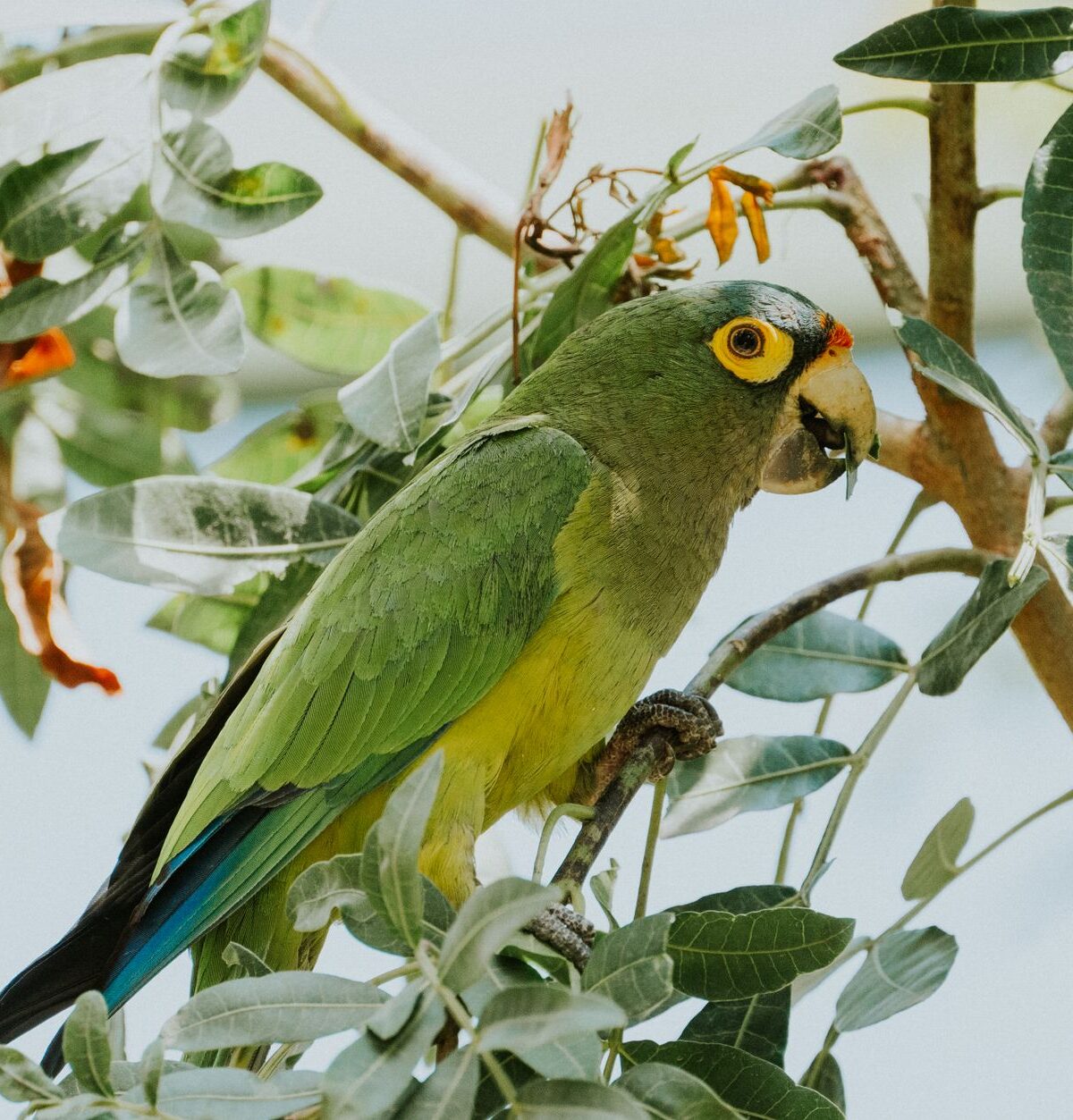
Orange-fronted Parakeet (Eupsittula canicularis) is a small, colorful parakeet native to the subtropical and tropical regions of Central America. It features a vibrant green body with a distinctive orange patch on its forehead and a yellowish hue on its cheeks, making it easily recognizable. These birds are social and often found in flocks, exhibiting playful behavior and strong vocalizations, which contribute to their lively presence in their natural habitats.
FUN FACTS
- Orange-fronted Parakeets are known for their playful and curious nature, often engaging in acrobatic displays while foraging for food
- They are also highly social birds, forming strong bonds with their mates and often seen grooming each other, which helps strengthen their social ties.|These parakeets are excellent mimics and can learn to imitate various sounds, including human speech, making them popular pets
- Their vibrant colors and engaging personalities contribute to their appeal in aviculture
QUICK INFO
Lifespan10-15 years in the wild, up to 25 years in captivi
Average Weight70-100 g
Average Length24-28 cm
Diet TypeHerbivore
Social StructureThey are typically found in pairs or small groups, often forming strong bonds with their mates.
Activity PatternDiurnal
Breeding SeasonSpring (March-May)
- Habitat
- Orange-fronted Parakeets inhabit subtropical and tropical forests, often favoring areas with abundant vegetation. They are also found in woodlands and shrubby regions, where they can easily find food and nesting sites.
- Biomes
- Tropical Rainforest, Subtropical Forest
- Native Range
- This species is native to parts of Central America, particularly in countries like Mexico and Guatemala.
- Continent
- North America, Central America
- Countries
- Mexico, Guatemala
- Diet
- They primarily feed on seeds, fruits, and flowers, showcasing a preference for a variety of plant materials. Their diet is crucial for their health and plays a role in seed dispersal within their ecosystem.
- Diet Type
- Herbivore
- Favorite Food
- seeds, fruits, flowers
- Social Structure
- They are typically found in pairs or small groups, often forming strong bonds with their mates.
- Activity Pattern
- Diurnal
- Group Size
- 5-30
- Territorial
- 0
 LC
LC
70-100 g
Weight
24-28 cm
Length
- Coloration
- Predominantly green with an orange forehead and yellow cheeks.
- Sexual Dimorphism
- Males and females are similar in appearance, making it difficult to distinguish between the sexes visually.
- Lifespan
- 10-15 years in the wild, up to 25 years in captivi
- Offspring per Birth
- 3-5
- Sexual Maturity
- 1-2 years
- Breeding Season
- Spring (March-May)
LC
Least Concern
IUCN Red List Status
- Population Status
- The population is currently stable, but habitat loss poses a potential threat.
- Wild Population Estimate
- 50,000-100,000
- Population Trend
- Stable
- Endangered
- 0
- Threats
- Main threats include habitat destruction due to deforestation and the illegal pet trade. These factors can significantly impact their populations in the wild.
- Predators
- Natural predators include birds of prey, snakes, and larger mammals that may prey on their nests.
- Defense Mechanisms
- They often use their agility and ability to fly quickly to evade predators, and they may also rely on their social structure to warn each other of danger.
- Compatible Animals
- Other small parakeets, finches, canaries
- Found in Zoos
- Common