


ORCA
Orcinus orca
DESCRIPTION
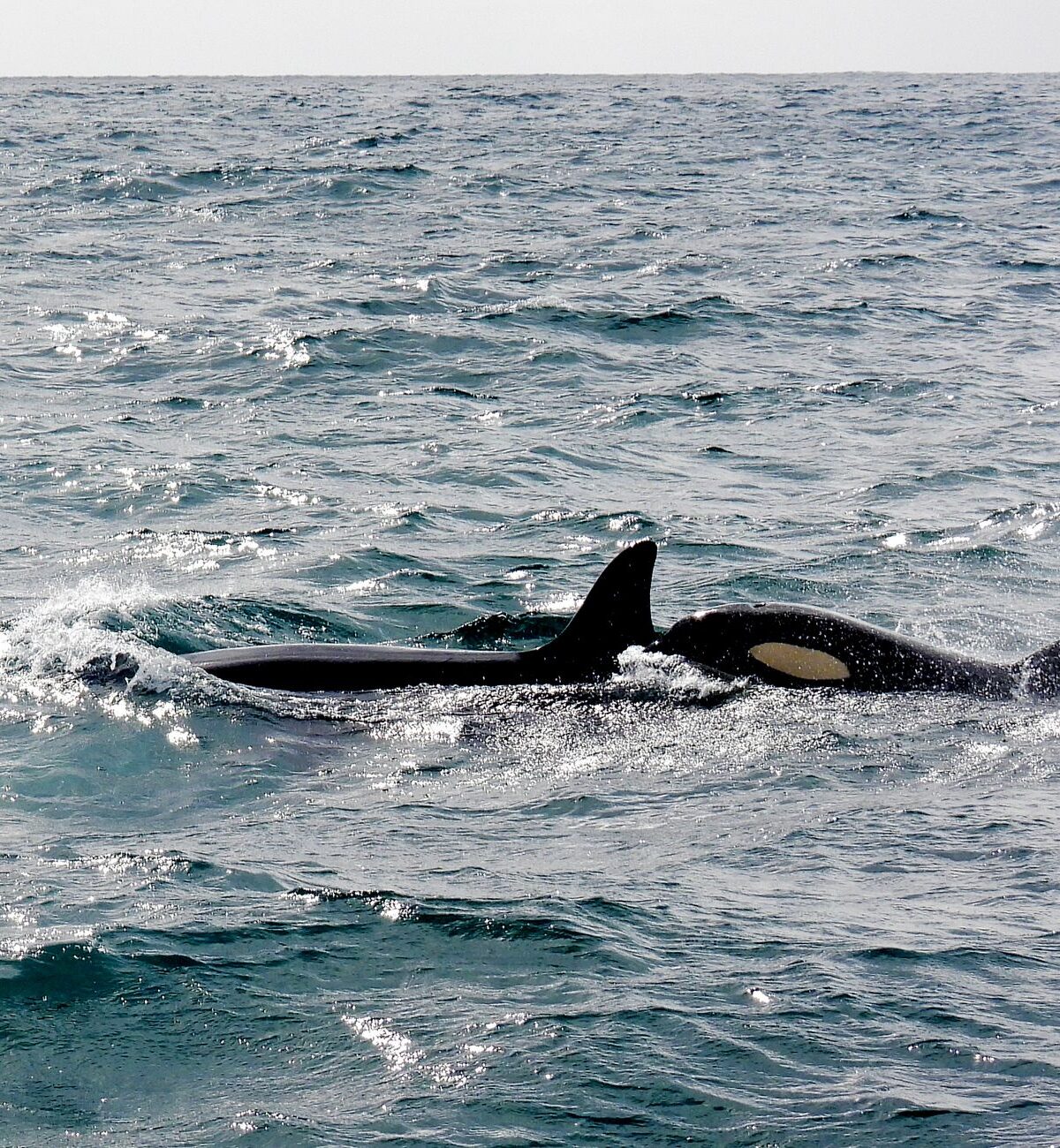
Orca (Orcinus orca) is commonly known as the killer whale, a name that reflects its position as a top predator in marine ecosystems. These striking cetaceans are characterized by their distinctive black and white coloration, with a robust body and a tall dorsal fin that can reach up to 1.8 meters in males. Orcas are highly social animals, often found in family groups called pods, and they exhibit complex behaviors, including sophisticated hunting techniques and vocal communication.
FUN FACTS
- Orcas are known for their sophisticated hunting techniques, which can include creating waves to wash seals off ice floes
- They also have unique vocalizations that can be considered a form of dialect, with different pods having distinct calls that they use to communicate with each other.|Orcas are highly intelligent and have been observed using tools, such as using marine sponges to protect their rostrums while foraging on the seafloor
- Their social structures are complex, with strong family bonds that can last a lifetime
QUICK INFO
Lifespan30-50 years in the wild, up to 90 years in captivi
Average Weight1000-6000 kg
Average Length5.5-9.8 m
Diet TypeCarnivore
Social Structuregroup — Orcas live in matrilineal family groups, often consisting of related females and their offspring.
Activity PatternDiurnal
Breeding SeasonYear-round
- Habitat
- Orcas inhabit a wide range of marine environments, from coastal waters to deep oceanic regions. They are highly adaptable and can be found in both cold and warm waters around the globe.
- Biomes
- Marine
- Native Range
- Orcas are found in all oceans, from the Arctic and Antarctic regions to tropical seas, with a higher concentration in colder waters.
- Continent
- North America, Europe, Asia, Australia, Antarctica, South America, Africa
- Countries
- United States, Canada, Norway, Japan, Australia, New Zealand, South Africa, Chile
- Diet
- Orcas are carnivorous and have a diverse diet that varies by population, including fish, squid, and marine mammals. Some pods specialize in hunting specific prey, such as seals or even whales.
- Diet Type
- Carnivore
- Favorite Food
- fish, seals, marine mammals
- Social Structure
- group — Orcas live in matrilineal family groups, often consisting of related females and their offspring.
- Activity Pattern
- Diurnal
- Group Size
- 5-30
- Territorial
- 0
1000-6000 kg
Weight
5.5-9.8 m
Length
- Coloration
- black with white patches on the belly and above the eyes
- Sexual Dimorphism
- males are larger than females and have taller dorsal fins
- Lifespan
- 30-50 years in the wild, up to 90 years in captivi
- Gestation Period
- 15-18 months
- Offspring per Birth
- 1
- Sexual Maturity
- 10-15 years
- Breeding Season
- Year-round
LC
Least Concern
IUCN Red List Status
- Population Status
- Orca populations are generally stable, but some local populations are threatened due to environmental changes and human activities.
- Wild Population Estimate
- 50,000-100,000
- Population Trend
- Stable
- Endangered
- 0
- Threats
- Main threats to orcas include habitat degradation, pollution, and depletion of prey species. Additionally, some populations face risks from boat traffic and entanglement in fishing gear.
- Predators
- humans, large sharks (rarely)
- Defense Mechanisms
- Orcas use their size, intelligence, and social structure to defend against threats, often working together in pods to protect themselves and their young.
- Compatible Animals
- none
- Found in Zoos
- Uncommon