


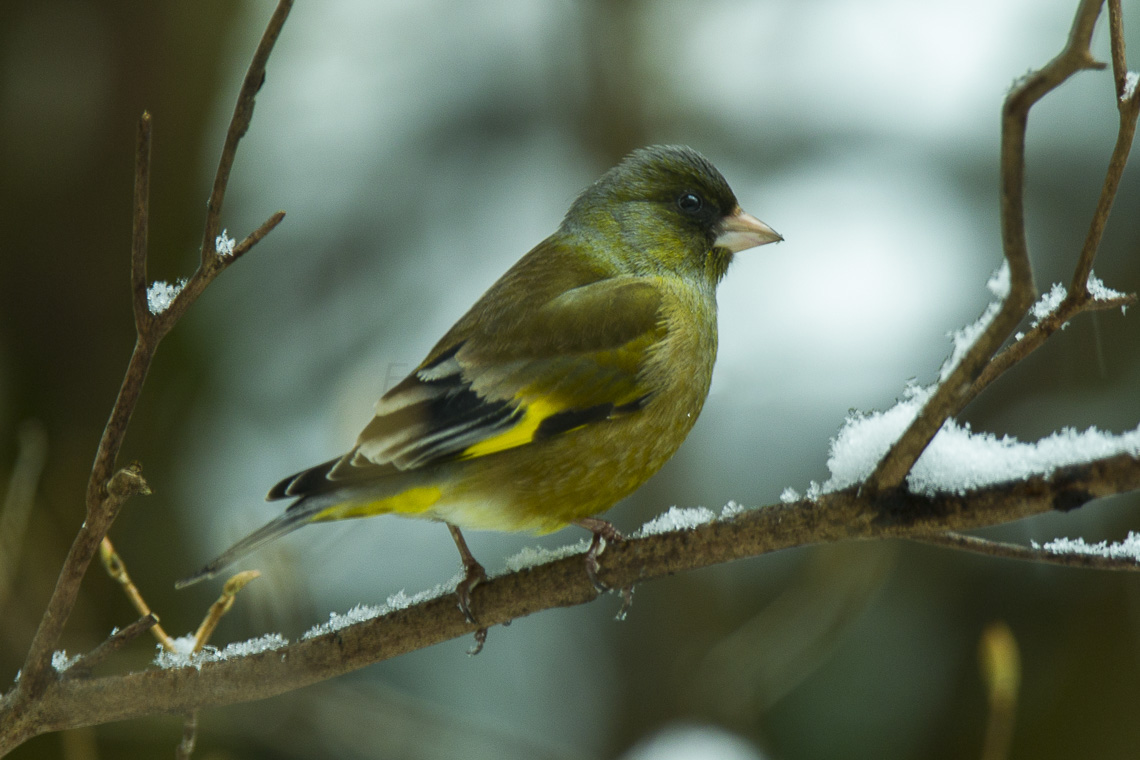
ORIENTAL GREENFINCH
Chloris sinica
DESCRIPTION
Oriental greenfinch (Chloris sinica) is commonly known as the Chinese greenfinch and Japanese greenfinch. This small bird features a vibrant green plumage with a distinctive yellow wing patch and a short, stout bill, which is well-adapted for seed eating. They are often found in flocks, exhibiting social behavior, and are known for their melodious songs, which they use to communicate with one another.
FUN FACTS
- Oriental greenfinches are known for their beautiful songs, which can vary significantly between individuals, making them popular among bird enthusiasts
- Additionally, they have a unique social structure, often forming flocks that can include dozens of individuals, especially during migration periods
QUICK INFO
Lifespan5-10 years in the wild.
Average Weight20-30 g
Average Length14-16 cm
Diet TypeHerbivore
Social StructureThey are typically found in pairs or small groups, especially during the breeding season.
Activity PatternDiurnal
Breeding SeasonSpring (April-June)
- Habitat
- Oriental greenfinches inhabit a variety of environments, including forests, gardens, and urban areas. They prefer areas with abundant vegetation for foraging and nesting.
- Biomes
- Temperate Forest, Urban
- Native Range
- They are native to East Asia, including parts of China, Japan, and Korea.
- Continent
- Asia
- Countries
- China, Japan, Korea, Taiwan
- Diet
- They primarily feed on seeds, fruits, and occasionally insects. Their strong beaks allow them to crack open hard seeds with ease.
- Diet Type
- Herbivore
- Favorite Food
- seeds, fruits
- Social Structure
- They are typically found in pairs or small groups, especially during the breeding season.
- Activity Pattern
- Diurnal
- Group Size
- 5-15
- Territorial
- 0
 CR
CR
 VU
VU
20-30 g
Weight
14-16 cm
Length
- Coloration
- Vibrant green with yellow wing patches and a pale underbelly.
- Sexual Dimorphism
- Males are generally brighter in color than females.
- Lifespan
- 5-10 years in the wild.
- Offspring per Birth
- 3-5
- Sexual Maturity
- 1 year
- Breeding Season
- Spring (April-June)
LC
Least Concern
IUCN Red List Status
- Population Status
- The population is currently stable, but habitat loss poses a potential threat.
- Wild Population Estimate
- Unknown
- Population Trend
- Stable
- Endangered
- 0
- Threats
- Main threats include habitat destruction due to urbanization and agricultural expansion. Additionally, they may be affected by climate change.
- Predators
- Cats, hawks, and other birds of prey.
- Defense Mechanisms
- They often rely on their ability to blend into foliage for camouflage and will flee to dense cover when threatened.
- Compatible Animals
- Other small finches, canaries
- Found in Zoos
- Uncommon