


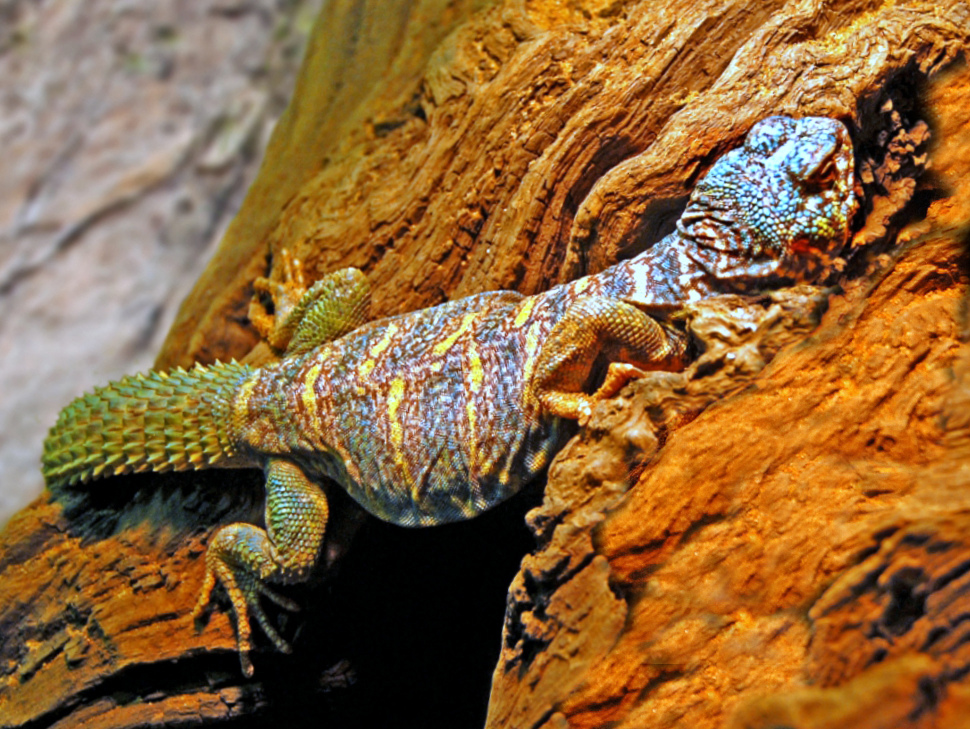
ORNATE UROMASTYX
Uromastyx ornata
DESCRIPTION
Ornate Uromastyx (Uromastyx ornata) is commonly known as the Spiny-tailed Lizard due to its distinctive spiny tail. This species exhibits a robust body with a broad head and can display a range of colors, including yellow, green, and brown, often with striking patterns. They are primarily herbivorous and are known for their burrowing behavior, creating extensive tunnel systems in arid environments.
FUN FACTS
- Ornate Uromastyx can tolerate high temperatures and can often be found basking in direct sunlight for extended periods
- They have a unique social structure, often being solitary except during the breeding season, where males will display to attract females.|These lizards are known for their impressive burrowing abilities, creating extensive tunnel systems that help them escape the heat and predators
- Their diet is primarily herbivorous, which is quite unique among lizards, making them an interesting subject for studies on herbivory in reptiles
QUICK INFO
Lifespan10-15 years in the wild, up to 20 years in captivi
Average Weight0.5-1 kg
Average Length30-50 cm
Diet TypeHerbivore
Social Structuresolitary, typically found alone except during mating season
Activity PatternDiurnal
Breeding SeasonSpring (March-May)
- Habitat
- This species inhabits rocky and sandy areas in arid regions, often found in deserts and semi-deserts. They prefer habitats with ample vegetation for foraging and burrowing.
- Biomes
- Desert, Semi-arid
- Native Range
- Ornate Uromastyx is native to North Africa and parts of the Middle East.
- Continent
- Africa, Asia
- Countries
- Egypt, Libya, Sudan, Saudi Arabia
- Diet
- Ornate Uromastyx primarily feeds on a variety of plant materials, including leaves, flowers, and fruits. They are adapted to a herbivorous diet, which is essential for their digestive health.
- Diet Type
- Herbivore
- Favorite Food
- leafy greens, flowers, fruits
- Social Structure
- solitary, typically found alone except during mating season
- Activity Pattern
- Diurnal
- Group Size
- 1-2
- Territorial
- 1
 VU
VU
 LC
LC
0.5-1 kg
Weight
30-50 cm
Length
- Coloration
- Typically yellow or brown with darker patterns and spines on the tail.
- Sexual Dimorphism
- Males are generally larger and have more pronounced coloration than females.
- Lifespan
- 10-15 years in the wild, up to 20 years in captivi
- Gestation Period
- 60-90 days
- Offspring per Birth
- 5-15
- Sexual Maturity
- 2-3 years
- Breeding Season
- Spring (March-May)
LC
Least Concern
IUCN Red List Status
- Population Status
- The population is currently stable, but habitat loss poses a potential threat.
- Wild Population Estimate
- Unknown
- Population Trend
- Stable
- Endangered
- 0
- Threats
- Main threats include habitat destruction due to urbanization and agriculture. Additionally, they are sometimes collected for the pet trade.
- Predators
- Birds of prey, snakes, and larger mammals can prey on Ornate Uromastyx.
- Defense Mechanisms
- They can retreat into their burrows quickly and use their spiny tails for defense against predators.
- Found in Zoos
- Uncommon