


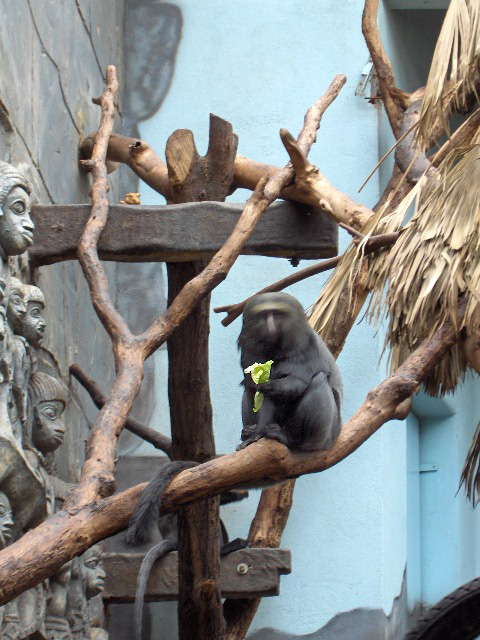
OWL-FACED MONKEY
Cercopithecus hamlyni
DESCRIPTION
Owl-faced Monkey (Cercopithecus hamlyni), also known as Hamlyn's Monkey, is a medium-sized primate characterized by its distinctive facial features, including large, expressive eyes and a unique coloration that resembles an owl's face. This species exhibits a predominantly arboreal lifestyle, spending much of its time in the trees of tropical forests. Socially, they are known to form small groups, which aids in foraging and protection from predators.
FUN FACTS
- Owl-faced Monkeys are known for their remarkable vocalizations, which can include a range of calls used for communication within their groups
- These calls are not only important for social interaction but also serve to alert others to potential dangers in their environment
- | Their unique facial features have made them a subject of interest in studies of primate evolution and behavior, as they exhibit complex social structures and interactions that are still being explored by researchers
QUICK INFO
Lifespan15-20 years in the wild, up to 25 in captivity
Average Weight4-8 kg
Average Length50-70 cm
Diet TypeOmnivore
Social StructureThey typically live in small groups, which can consist of a few individuals, promoting social interaction and cooperative foraging.
Activity PatternDiurnal
Breeding SeasonYear-round, with peaks depending on environmental conditions
- Habitat
- Owl-faced Monkeys inhabit dense tropical rainforests, where they are well-adapted to an arboreal lifestyle. They prefer areas with abundant foliage for foraging and nesting.
- Biomes
- Tropical Rainforest
- Native Range
- They are native to the mountainous regions of central Africa, particularly in the eastern Democratic Republic of the Congo.
- Continent
- Africa
- Countries
- Democratic Republic of the Congo
- Diet
- They primarily consume fruits, leaves, and flowers, supplemented by insects and small invertebrates.
- Diet Type
- Omnivore
- Favorite Food
- fruits, leaves
- Social Structure
- They typically live in small groups, which can consist of a few individuals, promoting social interaction and cooperative foraging.
- Activity Pattern
- Diurnal
- Group Size
- 3-10
- Territorial
- 1
 LC
LC
4-8 kg
Weight
50-70 cm
Length
- Coloration
- They have a distinctive coloration with a dark brown to grayish body and a lighter face, which contributes to their unique appearance.
- Sexual Dimorphism
- Males are generally larger than females.
- Lifespan
- 15-20 years in the wild, up to 25 in captivity
- Gestation Period
- 165 days
- Offspring per Birth
- 1
- Sexual Maturity
- 3-4 years
- Breeding Season
- Year-round, with peaks depending on environmental conditions
EN
Endangered
IUCN Red List Status
- Population Status
- The population is currently considered to be decreasing due to habitat loss and hunting.
- Wild Population Estimate
- Unknown
- Population Trend
- Decreasing
- Endangered
- 1
- Threats
- Main threats include habitat destruction due to logging and agricultural expansion, as well as hunting for bushmeat. These factors have significantly impacted their populations in the wild.
- Predators
- Main predators include large birds of prey and snakes, which can pose a threat to young or vulnerable individuals.
- Defense Mechanisms
- They rely on their agility and ability to escape into the trees to avoid predators.
- Found in Zoos
- Uncommon