


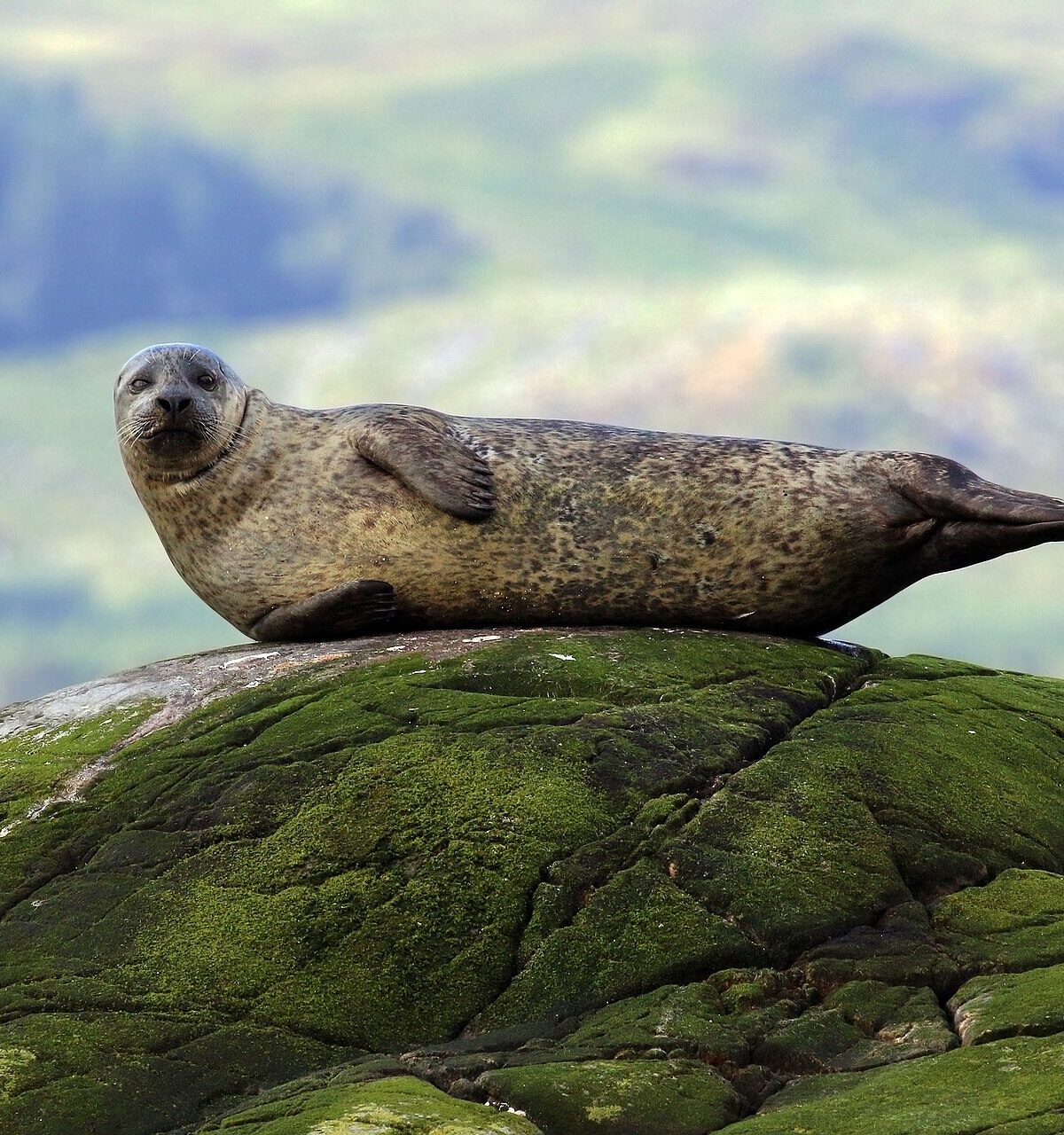
PACIFIC HARBOR SEAL
Phoca vitulina richardsi
DESCRIPTION
Pacific Harbor Seal (Phoca vitulina richardsi) is a subspecies of the harbor seal, characterized by its spotted gray to brown fur and a robust body. These seals are known for their playful behavior, often seen basking on rocks or beaches in groups, although they can also be solitary. They are highly adaptable and can thrive in various coastal environments, often foraging in shallow waters for food.
FUN FACTS
- Pacific Harbor Seals can dive to depths of over 600 feet in search of food, holding their breath for up to 30 minutes
- They are also known for their vocalizations, which include barks, growls, and grunts, used for communication, especially during the breeding season
QUICK INFO
Lifespan20-30 years in the wild.
Average Weight70-130 kg
Average Length1.5-2.0 m
Diet TypeCarnivore
Social StructureThey are generally social animals, often found in groups, especially during haul-out times.
Activity PatternDiurnal
Breeding SeasonSpring to early summer (April-July)
- Habitat
- They inhabit coastal waters, estuaries, and bays, often favoring sandy or rocky beaches for resting and breeding. Their habitat is typically characterized by shallow waters where they can easily hunt for food.
- Biomes
- Coastal, Marine
- Native Range
- Pacific Harbor Seals are found along the west coast of North America, from Alaska to California.
- Continent
- North America
- Countries
- United States, Canada
- Diet
- Pacific Harbor Seals primarily feed on fish and invertebrates, including squid and crustaceans. Their diet can vary based on the availability of prey in their habitat.
- Diet Type
- Carnivore
- Favorite Food
- fish, squid, crustaceans
- Social Structure
- They are generally social animals, often found in groups, especially during haul-out times.
- Activity Pattern
- Diurnal
- Group Size
- 5-50
- Territorial
- 0
 VU
VU
70-130 kg
Weight
1.5-2.0 m
Length
- Coloration
- Spotted gray to brown fur with a lighter underbelly.
- Sexual Dimorphism
- Males are generally larger than females.
- Lifespan
- 20-30 years in the wild.
- Gestation Period
- 11 months
- Offspring per Birth
- 1
- Sexual Maturity
- 3-5 years
- Breeding Season
- Spring to early summer (April-July)
LC
Least Concern
IUCN Red List Status
- Population Status
- The population of Pacific Harbor Seals is currently stable, with some local populations increasing.
- Wild Population Estimate
- Approximately 300,000
- Population Trend
- Stable
- Endangered
- 0
- Threats
- Main threats include habitat loss, entanglement in fishing gear, and disturbances from human activities. Climate change also poses a long-term threat to their habitat and food sources.
- Predators
- Great white sharks, orcas, and occasionally large terrestrial mammals like bears when they are on land.
- Defense Mechanisms
- They rely on their agility in water to evade predators and often use haul-out sites to escape threats.
- Found in Zoos
- Uncommon