


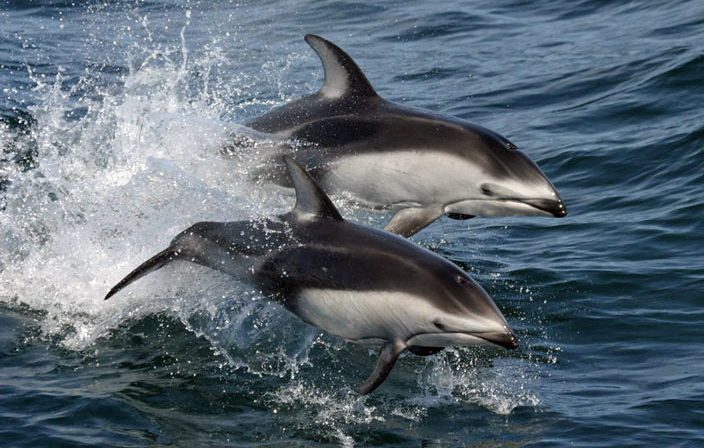
PACIFIC WHITE-SIDED DOLPHIN
Lagenorhynchus obliquidens
DESCRIPTION
Also called Lagenorhynchus, the Pacific White-Sided Dolphin (Lagenorhynchus obliquidens) is a striking marine mammal known for its distinctive coloration and playful behavior. It features a sleek body with a white underside, a dark gray back, and characteristic light gray and yellowish stripes along its sides. These dolphins are highly social animals, often seen in groups, engaging in acrobatic displays and riding the bow waves of boats.
FUN FACTS
- Pacific White-Sided Dolphins are known for their playful nature, often seen riding the waves created by boats and performing acrobatics
- They can leap up to 15 feet in the air, showcasing their agility and strength
- | These dolphins are highly vocal, using a variety of clicks, whistles, and body language to communicate with each other
- Their social interactions are complex, and they often engage in cooperative hunting, demonstrating their intelligence and teamwork
QUICK INFO
Lifespan20-30 years in the wild
Average Weight150-200 kg
Average Length2.0-2.5 m
Diet TypeCarnivore
Social Structuregroup — they typically live in pods that can range from a few individuals to several dozen.
Activity PatternDiurnal
Breeding SeasonYear-round, with peaks in spring and summer
- Habitat
- These dolphins inhabit temperate and subarctic waters, often found in coastal areas and sometimes in deeper offshore waters. They prefer regions with abundant prey and are frequently seen near the surface.
- Biomes
- Marine
- Native Range
- The Pacific White-Sided Dolphin is found along the North Pacific Ocean, from the coasts of California to Alaska and across to Japan.
- Continent
- North America, Asia
- Countries
- United States, Canada, Japan
- Diet
- Pacific White-Sided Dolphins primarily feed on fish and squid, utilizing echolocation to locate their prey. They are known to hunt cooperatively, which enhances their foraging success.
- Diet Type
- Carnivore
- Favorite Food
- fish, squid
- Social Structure
- group — they typically live in pods that can range from a few individuals to several dozen.
- Activity Pattern
- Diurnal
- Group Size
- 5-50
- Territorial
- 0
150-200 kg
Weight
2.0-2.5 m
Length
- Coloration
- They have a dark gray back, white underside, and light gray and yellowish stripes along the sides.
- Lifespan
- 20-30 years in the wild
- Gestation Period
- 10-12 months
- Offspring per Birth
- 1
- Sexual Maturity
- 5-7 years
- Breeding Season
- Year-round, with peaks in spring and summer
LC
Least Concern
IUCN Red List Status
- Population Status
- The population is considered stable, but local variations may occur.
- Wild Population Estimate
- 50,000-100,000
- Population Trend
- Stable
- Endangered
- 0
- Threats
- Main threats include habitat degradation, entanglement in fishing gear, and pollution. Climate change also poses a risk by affecting prey availability.
- Predators
- Orcas (killer whales) are known to prey on Pacific White-Sided Dolphins, particularly in areas where their ranges overlap.
- Defense Mechanisms
- They often use their speed and agility to evade predators, and their social structure provides safety in numbers.
- Found in Zoos
- Uncommon