


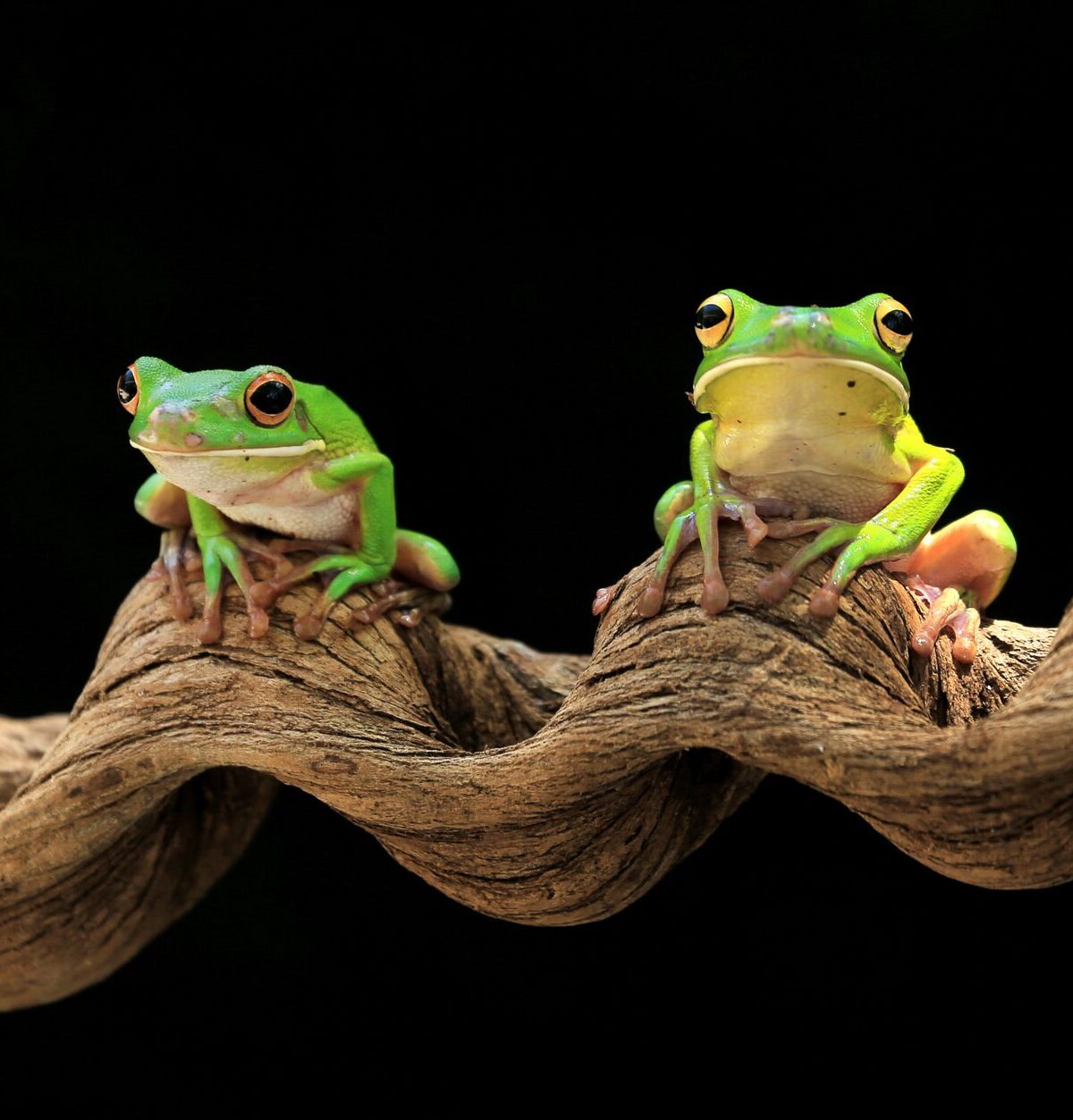
PAINTED INDONESIAN TREE FROG
Polypedates leucomystax
DESCRIPTION
Painted Indonesian Tree Frog (Polypedates leucomystax) is commonly known as the White-lipped Tree Frog and Polypedates Frog. This species is characterized by its vibrant coloration, which can range from green to brown with distinctive white or yellow markings. They are arboreal and are often found in trees near water bodies, where they exhibit a unique behavior of gliding between branches using their webbed feet.
FUN FACTS
- The Painted Indonesian Tree Frog is capable of gliding from tree to tree, thanks to its webbed feet that act like parachutes
- This adaptation allows them to escape predators and find new habitats more efficiently
- | These frogs are also known for their unique vocalizations, which can vary significantly between individuals, making them a fascinating subject for study in communication and mating behaviors
QUICK INFO
Lifespan5-10 years in the wild
Average Weight10-30 g
Average Length5-10 cm
Diet TypeInsectivore
Social Structuresolitary, with males often calling from perches to attract females during the breeding season
Activity PatternNocturnal
Breeding SeasonRainy season (varies by region)
- Habitat
- This species thrives in tropical and subtropical forests, often near freshwater sources such as ponds and streams. They prefer humid environments that provide ample vegetation for climbing and hiding.
- Biomes
- Tropical Rainforest, Subtropical Forest
- Native Range
- The Painted Indonesian Tree Frog is native to Southeast Asia, particularly found in Indonesia, Malaysia, and surrounding regions.
- Continent
- Asia
- Countries
- Indonesia, Malaysia, Thailand, Vietnam
- Diet
- They primarily feed on insects and other small invertebrates, capturing them with their quick reflexes. Their diet can vary based on availability, but they are predominantly insectivorous.
- Diet Type
- Insectivore
- Favorite Food
- crickets, moths, and other insects
- Social Structure
- solitary, with males often calling from perches to attract females during the breeding season
- Activity Pattern
- Nocturnal
- Group Size
- 1-5
- Territorial
- 0
 VU
VU
 LC
LC
10-30 g
Weight
5-10 cm
Length
- Coloration
- bright green or brown with distinctive white or yellow markings
- Sexual Dimorphism
- males are typically smaller and have more vibrant colors than females
- Lifespan
- 5-10 years in the wild
- Offspring per Birth
- up to 100 eggs
- Sexual Maturity
- 1-2 years
- Breeding Season
- Rainy season (varies by region)
LC
Least Concern
IUCN Red List Status
- Population Status
- The population is currently stable, but habitat loss poses a potential threat.
- Wild Population Estimate
- unknown
- Population Trend
- Stable
- Endangered
- 0
- Threats
- Main threats include habitat destruction due to deforestation and pollution of water bodies. Climate change also poses a risk to their habitat and breeding sites.
- Predators
- Birds, snakes, and larger amphibians are known predators of the Painted Indonesian Tree Frog.
- Defense Mechanisms
- They can use their coloration for camouflage among leaves and branches, and some may exhibit toxic skin secretions to deter predators.
- Compatible Animals
- other small frogs, certain reptiles
- Found in Zoos
- Uncommon