


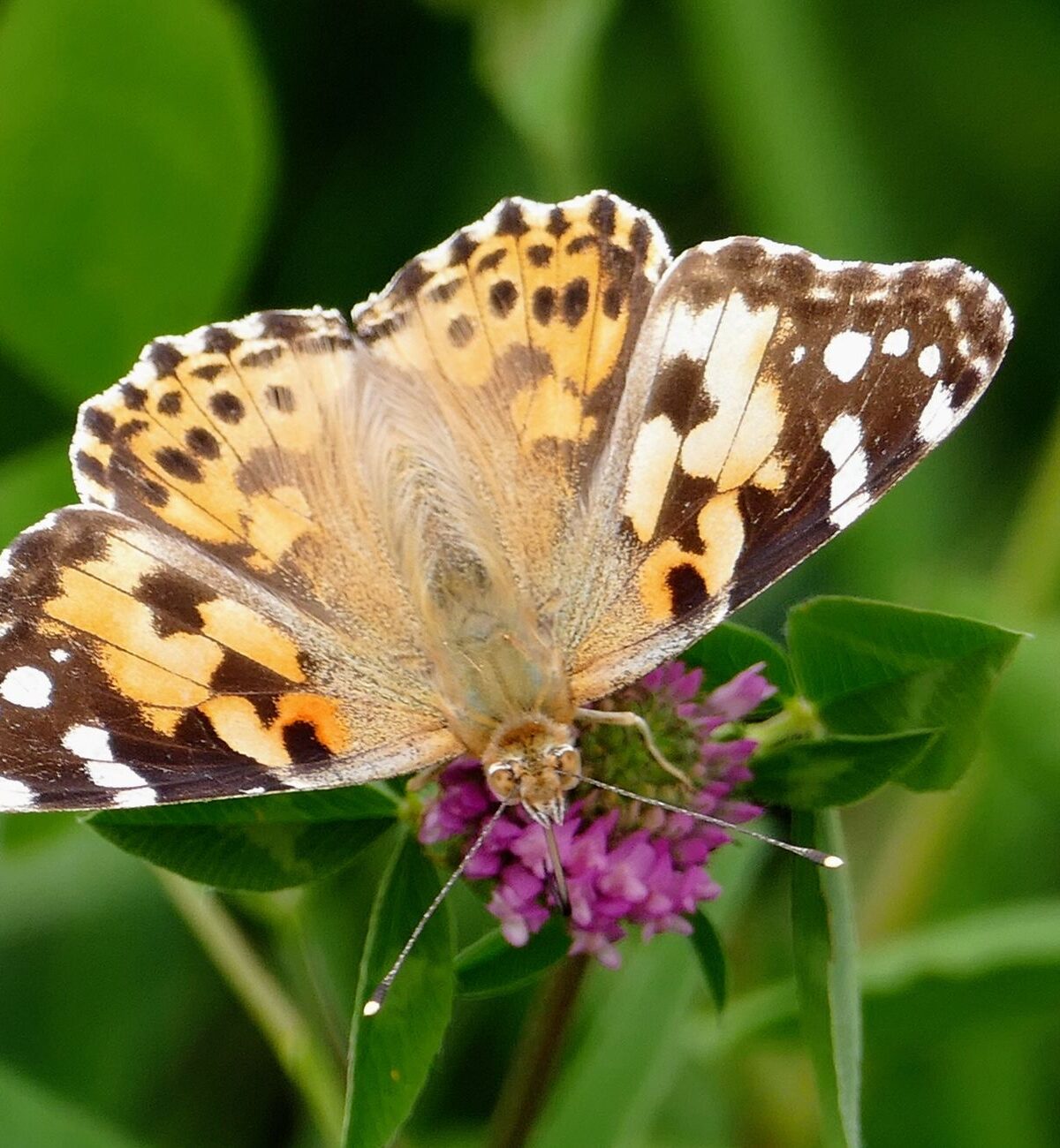
PAINTED LADY BUTTERFLY
DESCRIPTION
Also called the Cosmopolitan Butterfly, the Painted Lady Butterfly is known for its striking orange and black patterned wings, which can span 5.1 to 9.0 cm. This butterfly is highly migratory, often traveling thousands of miles between breeding grounds, and is found on every continent except Antarctica. Its adaptability to various environments allows it to thrive in gardens, meadows, and even urban areas, where it can often be seen fluttering around flowers.
FUN FACTS
- Painted Lady Butterflies are one of the most widely distributed butterfly species in the world, and they can migrate over 3,000 miles from their breeding grounds to warmer climates
- Their migration is one of the longest of any butterfly species, and they can travel at speeds of up to 30 miles per hour during their journey
- | The caterpillars of the Painted Lady Butterfly feed on a variety of host plants, including thistles and mallows, which provide them with the nutrients needed for their transformation into butterflies
- Interestingly, these caterpillars can change color based on their environment, helping them to blend in and avoid predators
QUICK INFO
Lifespan2-4 weeks in the wild, up to several months during
Average Weight0.5-1 g
Average Length5.1-9.0 cm
Diet TypeHerbivore
Social Structuresolitary, occasionally seen in groups during migration or feeding
Activity PatternDiurnal
Breeding SeasonSpring to early summer
- Habitat
- Painted Lady Butterflies inhabit a wide range of environments, including gardens, fields, and open woodlands. They prefer areas with abundant flowering plants for feeding and suitable conditions for laying eggs.
- Biomes
- Temperate Forest, Grassland, Urban
- Native Range
- The Painted Lady Butterfly is native to Europe, Asia, and North Africa, but it has a global distribution due to its migratory behavior.
- Continent
- North America, Europe, Asia, Africa
- Countries
- United States, Canada, Mexico, United Kingdom, France, India, China
- Diet
- Painted Lady Butterflies primarily feed on nectar from a variety of flowering plants. They are also known to consume the sap from trees and rotting fruit.
- Diet Type
- Herbivore
- Favorite Food
- Nectar from flowers
- Social Structure
- solitary, occasionally seen in groups during migration or feeding
- Activity Pattern
- Diurnal
- Group Size
- 1-50
- Territorial
- 0
 VU
VU
 EN
EN
0.5-1 g
Weight
5.1-9.0 cm
Length
- Coloration
- Orange and black patterned wings with white spots
- Sexual Dimorphism
- Males are generally smaller and have more vibrant colors than females.
- Lifespan
- 2-4 weeks in the wild, up to several months during
- Offspring per Birth
- 100-300 eggs
- Sexual Maturity
- 2-4 weeks after emergence
- Breeding Season
- Spring to early summer
LC
Least Concern
IUCN Red List Status
- Population Status
- The population of Painted Lady Butterflies is generally stable, with large migrations observed in certain years.
- Wild Population Estimate
- Unknown
- Population Trend
- Stable
- Endangered
- 0
- Threats
- Main threats include habitat loss due to urbanization and agricultural practices, as well as climate change affecting their migratory patterns. Pesticide use can also impact their populations.
- Predators
- Birds, spiders, and other insects such as wasps and dragonflies.
- Defense Mechanisms
- Painted Lady Butterflies can evade predators by flying quickly and erratically. They also have the ability to mimic the appearance of toxic species to deter potential threats.
- Found in Zoos
- Uncommon