


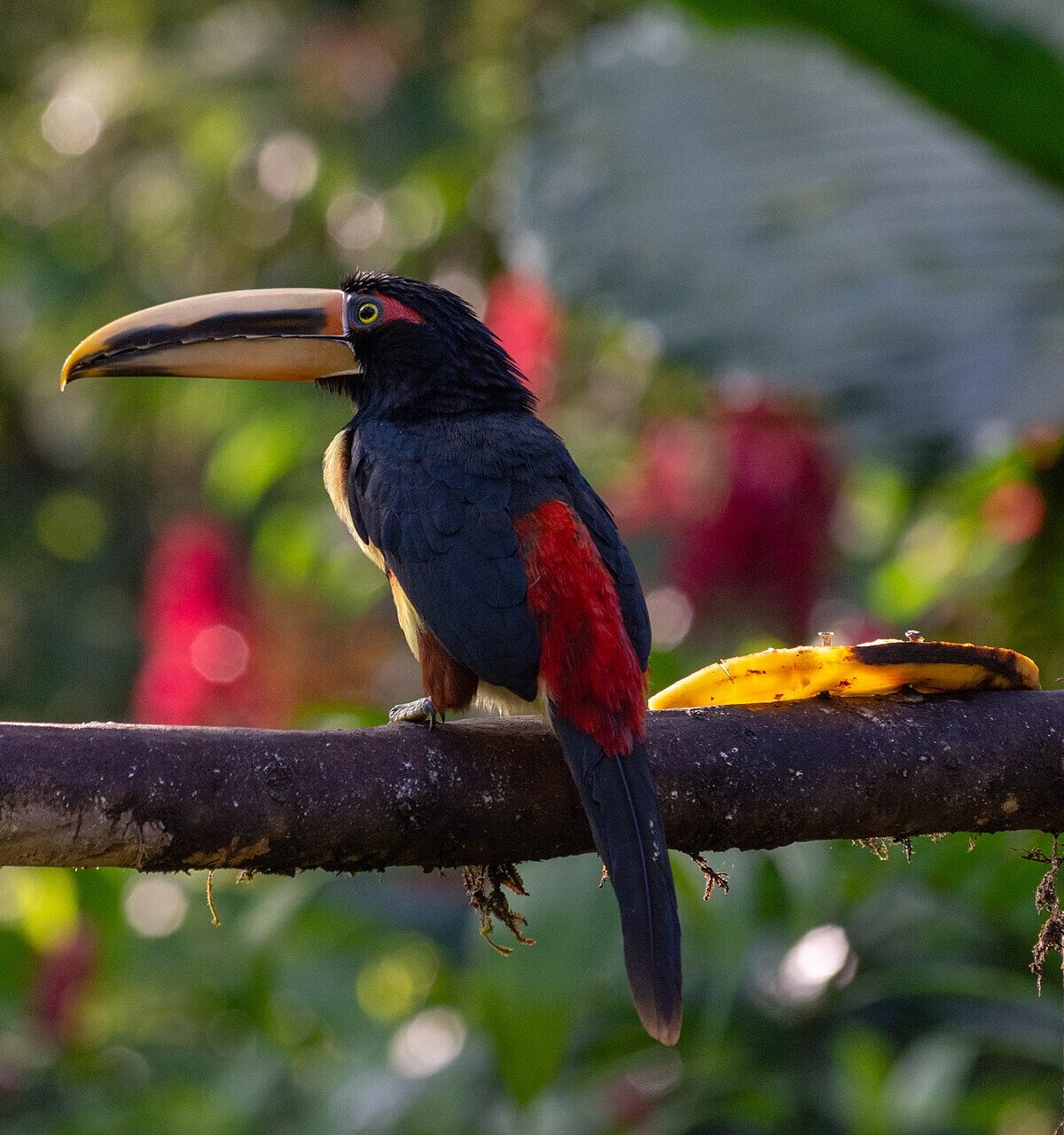
PALE-MANDIBLED ARACARI
Pteroglossus erythropygius
DESCRIPTION
Pale-mandibled Aracari (Pteroglossus erythropygius) is a striking bird known for its distinctive pale yellow mandible and vibrant plumage. This aracari features a predominantly black body with bright red underparts and a yellow throat, making it visually appealing. It is a social bird often found in small groups, engaging in playful behavior and vocalizations that contribute to its lively presence in the canopy.
FUN FACTS
- Pale-mandibled Aracaris have a unique feeding behavior where they toss fruits to each other, which helps in breaking down the fruit for easier consumption
- Additionally, they play a vital role in their ecosystem as seed dispersers, contributing to the growth of various plant species in their habitat
QUICK INFO
Lifespanup to 15 years in the wild
Average Weight150-200 g
Average Length40-45 cm
Diet TypeOmnivore
Social Structuregroup — they are often seen in small flocks, which helps them in foraging and protection.
Activity PatternDiurnal
Breeding SeasonSpring (March-May)
- Habitat
- This species inhabits tropical and subtropical forests, particularly favoring areas with abundant fruiting trees. It is often found in the mid to upper canopy where it can forage for food.
- Biomes
- Tropical Rainforest
- Native Range
- The Pale-mandibled Aracari is native to the Amazon Basin, specifically found in parts of Brazil, Colombia, and Peru.
- Continent
- South America
- Countries
- Brazil, Colombia, Peru
- Diet
- The Pale-mandibled Aracari primarily feeds on fruits, but it also consumes insects and small vertebrates. Its diet is crucial for seed dispersal in its habitat.
- Diet Type
- Omnivore
- Favorite Food
- fruits, insects
- Social Structure
- group — they are often seen in small flocks, which helps them in foraging and protection.
- Activity Pattern
- Diurnal
- Group Size
- 2-10
- Territorial
- 0
 LC
LC
 DD
DD
150-200 g
Weight
40-45 cm
Length
- Coloration
- black body with bright red underparts and a pale yellow mandible
- Lifespan
- up to 15 years in the wild
- Offspring per Birth
- 2-4
- Sexual Maturity
- 2-3 years
- Breeding Season
- Spring (March-May)
LC
Least Concern
IUCN Red List Status
- Population Status
- The population of Pale-mandibled Aracari is currently stable, but habitat loss poses a potential threat.
- Wild Population Estimate
- unknown
- Population Trend
- Stable
- Endangered
- 0
- Threats
- Main threats include habitat destruction due to deforestation and fragmentation of their rainforest habitat. These factors can lead to a decline in food availability and nesting sites.
- Predators
- snakes, raptors, and larger birds of prey
- Defense Mechanisms
- They often rely on their social structure for protection, using alarm calls to warn others of potential threats.
- Found in Zoos
- Uncommon