


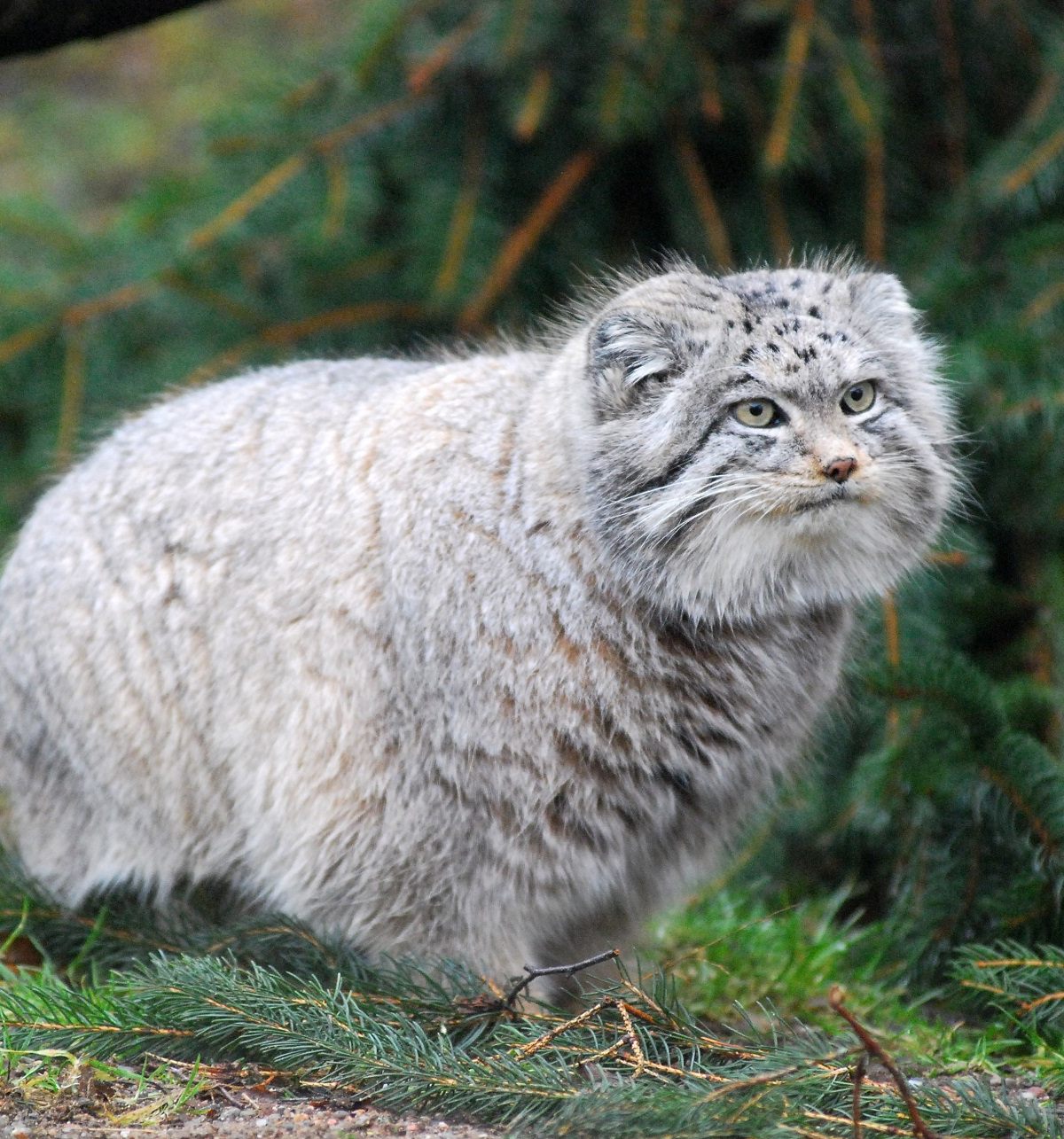
PALLAS'S CAT
Otocolobus manul
DESCRIPTION
Also called the Manul, Pallas's Cat is a small wild cat known for its distinctive appearance, featuring a stocky build, short legs, and a long, bushy tail. Its fur is thick and soft, with a grayish-brown color and dark stripes, which provide excellent camouflage in its natural habitat. Pallas's Cat is primarily solitary and is known for its unique hunting techniques, often stalking prey with a low, crouched posture.
FUN FACTS
- Pallas's Cat has a unique way of hunting, often using a low crouch to stalk its prey, which allows it to blend into the grasslands
- This cat is also known for its expressive face, with large, round eyes that give it a distinctive appearance, making it a favorite among wildlife enthusiasts
QUICK INFO
Lifespan10-12 years in the wild, up to 15 years in captivi
Average Weight3-5 kg
Average Length46-65 cm
Diet TypeCarnivore
Social StructureSolitary, with individuals marking and defending their own territories.
Activity PatternCrepuscular
Breeding SeasonLate winter to early spring
- Habitat
- Pallas's Cat inhabits grasslands, steppes, and rocky areas, often at high altitudes. It prefers open landscapes where it can easily spot prey.
- Biomes
- Grassland, Steppe, Rocky areas
- Native Range
- Pallas's Cat is native to Central Asia, ranging from Mongolia and northern China to parts of Kazakhstan and Afghanistan.
- Continent
- Asia
- Countries
- Mongolia, China, Kazakhstan, Afghanistan, Russia, Iran
- Diet
- Pallas's Cat primarily feeds on small mammals, birds, and insects. Its hunting strategy involves ambushing prey rather than chasing it.
- Diet Type
- Carnivore
- Favorite Food
- Rodents, birds
- Social Structure
- Solitary, with individuals marking and defending their own territories.
- Activity Pattern
- Crepuscular
- Group Size
- 1
- Territorial
- 1
 LC
LC
 LC
LC
3-5 kg
Weight
46-65 cm
Length
- Coloration
- Grayish-brown with dark stripes and spots
- Sexual Dimorphism
- Males are generally larger than females.
- Lifespan
- 10-12 years in the wild, up to 15 years in captivi
- Gestation Period
- 66-75 days
- Offspring per Birth
- 2-6
- Sexual Maturity
- 1 year
- Breeding Season
- Late winter to early spring
LC
Least Concern
IUCN Red List Status
- Population Status
- The population of Pallas's Cat is currently stable, but it faces threats from habitat loss and hunting.
- Wild Population Estimate
- Unknown, but believed to be in the tens of thousands
- Population Trend
- Stable
- Endangered
- 0
- Threats
- Main threats include habitat destruction due to agriculture and livestock grazing, as well as hunting for fur. These factors have led to localized declines in some areas.
- Predators
- Wolves, eagles, and larger carnivores may prey on Pallas's Cats, especially on young individuals.
- Defense Mechanisms
- Pallas's Cat relies on its camouflage and solitary behavior to avoid detection by predators.
- Found in Zoos
- Uncommon