


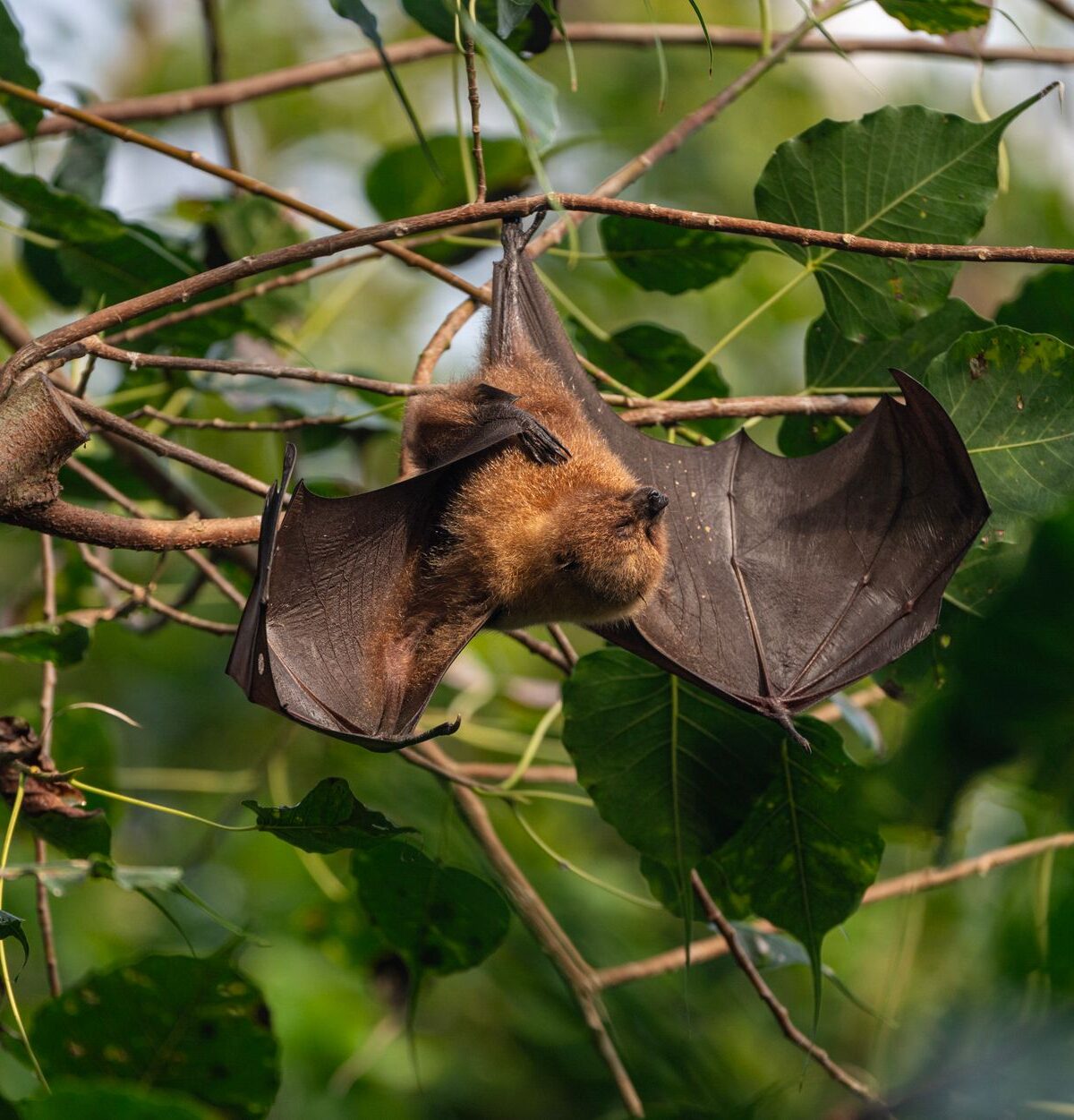
PALM FLYING FOX
Pteropus vampyrus
DESCRIPTION
Palm Flying Fox (Pteropus vampyrus) is one of the largest bat species, with a wingspan that can reach up to 1.5 meters. It has a distinctive appearance with a large body covered in dark brown to black fur, and a characteristic face with large eyes and a long snout. This species is primarily nocturnal, roosting in large colonies during the day and foraging for food at night, playing a crucial role in pollination and seed dispersal in its ecosystem.
FUN FACTS
- Palm Flying Foxes are known for their impressive wingspan, which can reach up to 1.5 meters, making them one of the largest bat species in the world
- They play a vital role in their ecosystem as pollinators and seed dispersers, helping to maintain the health of tropical forests
- | These bats have a unique way of feeding; they often hang upside down while consuming fruits and nectar, using their keen sense of smell to locate ripe food sources
- Their social behavior is fascinating, as they can often be seen roosting in large colonies, creating a lively atmosphere in the trees
QUICK INFO
Lifespan15-20 years in the wild, up to 30 in captivity
Average Weight0.7-1.2 kg
Average Length0.3-0.4 m
Diet TypeHerbivore
Social StructureThey are typically found in large colonies, indicating a group social structure.
Activity PatternNocturnal
Breeding SeasonYear-round, with peaks depending on food availability
- Habitat
- This species inhabits tropical and subtropical forests, often found near mangroves and coastal areas. They prefer areas with abundant fruiting trees, which provide their primary food sources.
- Biomes
- Tropical Rainforest, Mangrove
- Native Range
- Palm Flying Fox is native to Southeast Asia, particularly found in countries like Malaysia, Indonesia, and the Philippines.
- Continent
- Asia
- Countries
- Malaysia, Indonesia, Philippines, Thailand, Vietnam
- Diet
- Palm Flying Fox primarily feeds on fruits, nectar, and flowers, making it an important pollinator for various plant species.
- Diet Type
- Herbivore
- Favorite Food
- Fruits and nectar
- Social Structure
- They are typically found in large colonies, indicating a group social structure.
- Activity Pattern
- Nocturnal
- Group Size
- 50-100
- Territorial
- 0
 VU
VU
 LC
LC
0.7-1.2 kg
Weight
0.3-0.4 m
Length
- Coloration
- Dark brown to black fur with lighter underparts
- Sexual Dimorphism
- Males are generally larger than females.
- Lifespan
- 15-20 years in the wild, up to 30 in captivity
- Gestation Period
- 150 days
- Offspring per Birth
- 1
- Sexual Maturity
- 1-2 years
- Breeding Season
- Year-round, with peaks depending on food availability
VU
Vulnerable
IUCN Red List Status
- Population Status
- The population is currently declining due to habitat loss and hunting.
- Wild Population Estimate
- 10,000-20,000
- Population Trend
- Decreasing
- Endangered
- 1
- Threats
- Main threats include habitat destruction due to deforestation and hunting for bushmeat. Additionally, they face risks from climate change affecting their food sources.
- Predators
- Birds of prey, large snakes, and possibly domestic animals like dogs.
- Defense Mechanisms
- They rely on their ability to fly and roost high in trees to avoid predators.
- Found in Zoos
- Uncommon