


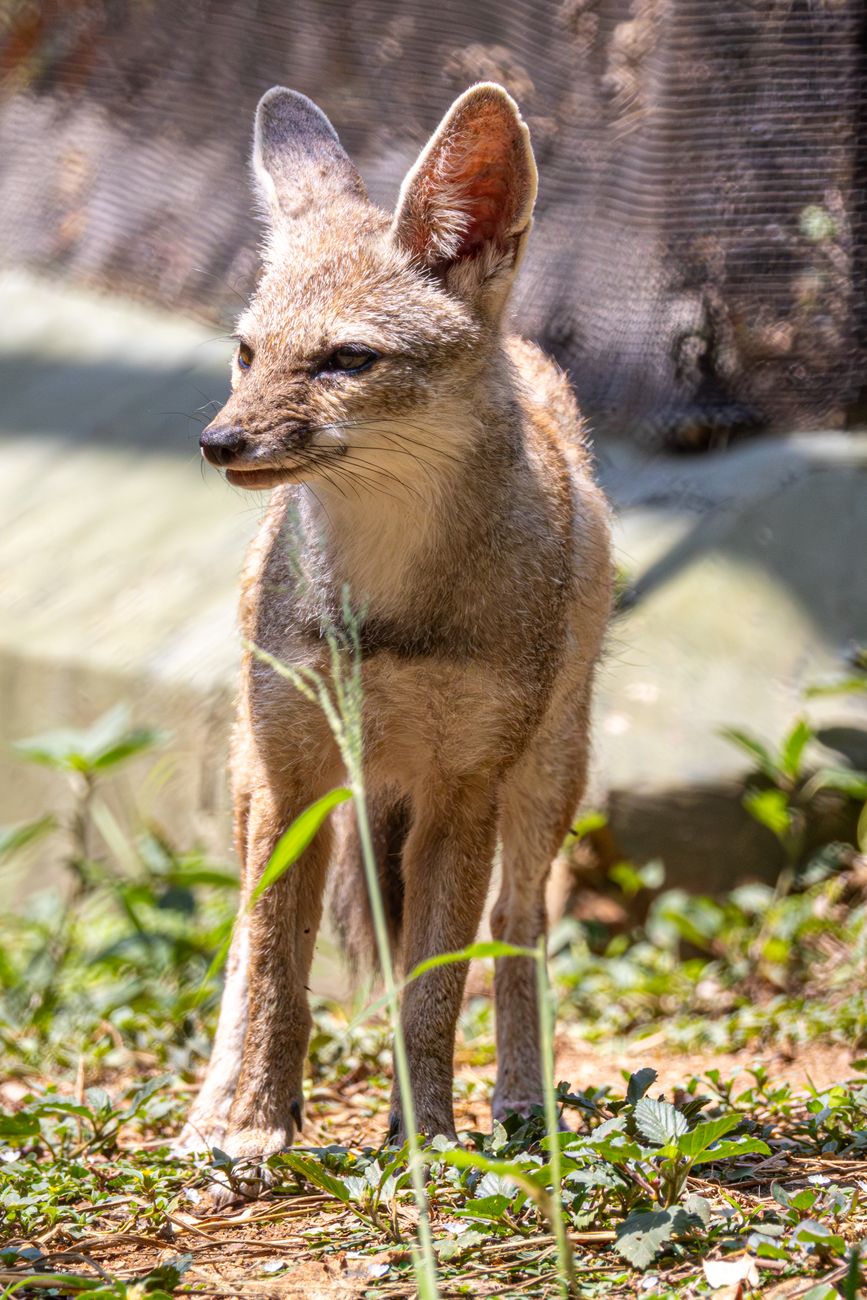
PAMPAS FOX
Lycalopex gymnocercus
DESCRIPTION
Pampas Fox (Lycalopex gymnocercus), also known as the Southern Fox, is a medium-sized canid native to South America. It has a slender body, long legs, and a bushy tail, with a coat that is typically grayish-brown with lighter underparts and distinctive black markings on the face and legs. This species is primarily found in open grasslands and savannas, where it exhibits a mix of solitary and social behaviors, often foraging alone or in pairs.
FUN FACTS
- Pampas Foxes are known for their vocalizations, which include a variety of barks, howls, and yips that they use to communicate with each other
- They are also skilled hunters, capable of catching small rodents and birds with impressive speed and agility.|Despite their name, Pampas Foxes are not exclusive to the Pampas region; they can adapt to various habitats, including scrublands and even agricultural areas, showcasing their versatility as a species
QUICK INFO
Lifespan10-15 years in the wild, up to 20 in captivity
Average Weight5-10 kg
Average Length60-80 cm
Diet TypeOmnivore
Social StructurePampas Foxes are generally solitary but may form pairs during the breeding season. They establish territories that they defend from other foxes.
Activity PatternCrepuscular
Breeding SeasonWinter (June-August)
- Habitat
- Pampas Fox inhabits open grasslands, savannas, and scrublands, often favoring areas with dense vegetation for cover. It is adaptable and can also be found in agricultural areas.
- Biomes
- Grassland, Savanna
- Native Range
- The Pampas Fox is native to the grasslands and savannas of Argentina, Uruguay, and parts of Brazil and Paraguay.
- Continent
- South America
- Countries
- Argentina, Uruguay, Brazil, Paraguay
- Diet
- Pampas Fox primarily feeds on small mammals, birds, and insects, but it may also consume fruits and other plant materials. Its diet can vary based on the availability of food sources in its habitat.
- Diet Type
- Omnivore
- Favorite Food
- small mammals, birds, insects
- Social Structure
- Pampas Foxes are generally solitary but may form pairs during the breeding season. They establish territories that they defend from other foxes.
- Activity Pattern
- Crepuscular
- Group Size
- 1-2
- Territorial
- 1
 VU
VU
 LC
LC
5-10 kg
Weight
60-80 cm
Length
- Coloration
- Grayish-brown with lighter underparts and black markings
- Sexual Dimorphism
- Males are typically larger than females.
- Lifespan
- 10-15 years in the wild, up to 20 in captivity
- Gestation Period
- 60-65 days
- Offspring per Birth
- 2-6
- Sexual Maturity
- 1-2 years
- Breeding Season
- Winter (June-August)
LC
Least Concern
IUCN Red List Status
- Population Status
- The population of Pampas Fox is currently stable, but habitat loss poses a potential threat.
- Wild Population Estimate
- Unknown
- Population Trend
- Stable
- Endangered
- 0
- Threats
- Main threats include habitat destruction due to agriculture and urbanization, as well as hunting in some areas. These factors can lead to localized declines in their populations.
- Predators
- Large birds of prey, domestic dogs, and humans can pose threats to Pampas Foxes.
- Defense Mechanisms
- Pampas Foxes rely on their agility and speed to escape predators, often using dense vegetation for cover.
- Found in Zoos
- Uncommon