


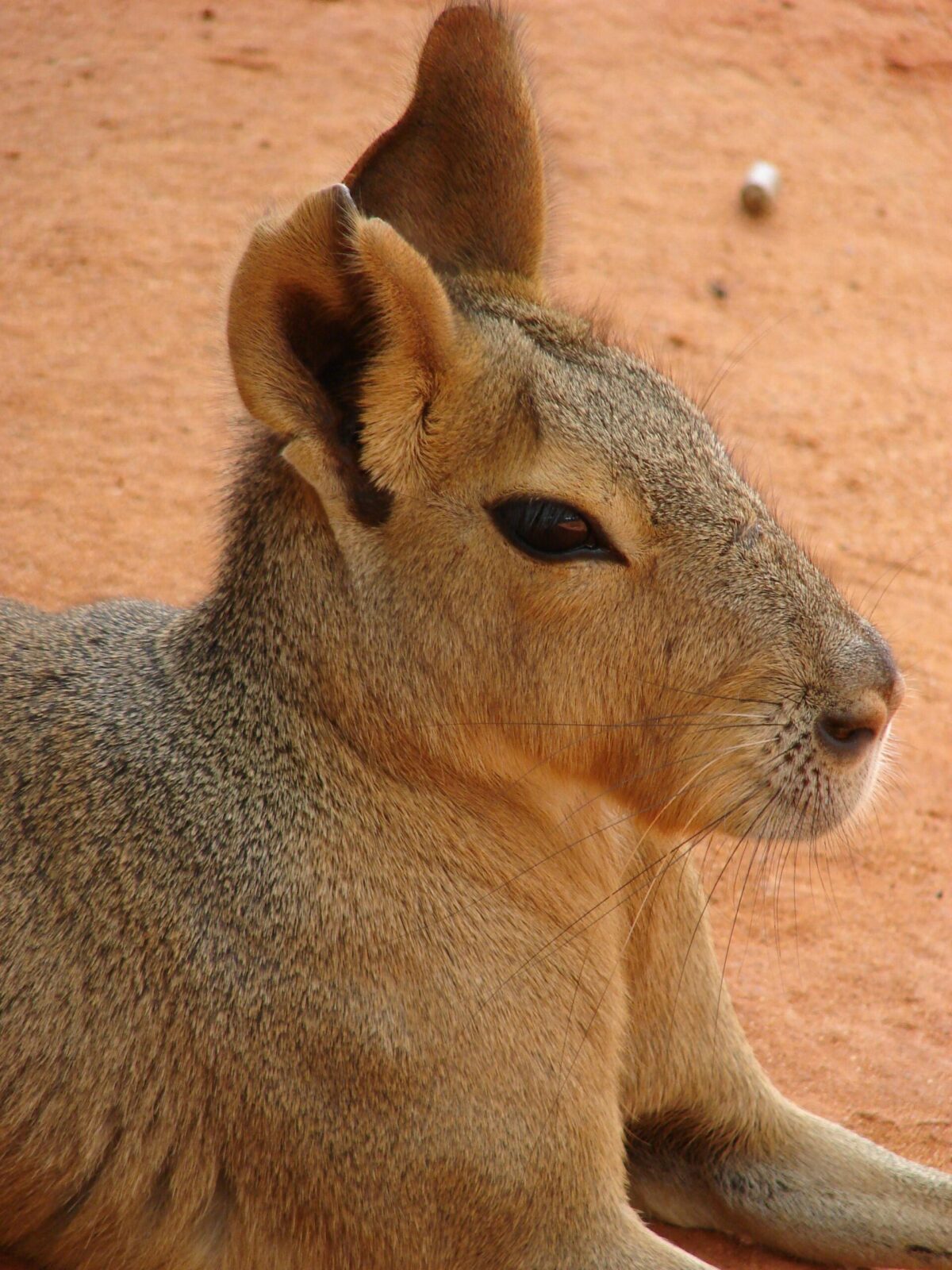
PAMPAS HARE
Dolichotis pajeros
DESCRIPTION
Pampas Hare (Dolichotis pajeros) is a large rodent native to the grasslands of South America. It has a robust body, long ears, and powerful hind legs, which allow it to run swiftly across open terrain. This species is primarily active during the day and is known for its solitary behavior, often being seen grazing alone or in small groups.
FUN FACTS
- Pampas Hares are known for their impressive speed, capable of running up to 30 miles per hour when threatened
- This speed is crucial for their survival in the wild, allowing them to escape from various predators
- | Unlike many other rodents, Pampas Hares have a unique social structure that allows them to thrive in solitary conditions, making them fascinating subjects for behavioral studies in zoology
QUICK INFO
Lifespan5-7 years in the wild, up to 10 years in captivity
Average Weight4-6 kg
Average Length50-70 cm
Diet TypeHerbivore
Social Structuresolitary, occasionally seen in small groups
Activity PatternDiurnal
Breeding SeasonYear-round, with peaks in spring and summer
- Habitat
- They inhabit open grasslands, savannas, and scrublands, where they can find ample food and space to run. Their habitat is characterized by a mix of tall grasses and sparse shrubs.
- Biomes
- Grassland, Savanna
- Native Range
- Pampas Hares are found in the central and southern regions of South America, particularly in Argentina, Uruguay, and parts of Brazil.
- Continent
- South America
- Countries
- Argentina, Uruguay, Brazil
- Diet
- Pampas Hares are herbivores, primarily feeding on grasses, herbs, and other vegetation found in their habitat. They have a preference for tender shoots and leaves.
- Diet Type
- Herbivore
- Favorite Food
- grasses, herbs
- Social Structure
- solitary, occasionally seen in small groups
- Activity Pattern
- Diurnal
- Group Size
- 1-5
- Territorial
- 0

 VU
LC
VU
LC
4-6 kg
Weight
50-70 cm
Length
- Coloration
- They have a brownish-gray fur with lighter underparts, providing camouflage in their grassland habitat.
- Sexual Dimorphism
- males are generally larger than females
- Lifespan
- 5-7 years in the wild, up to 10 years in captivity
- Gestation Period
- 90-100 days
- Offspring per Birth
- 1-3
- Sexual Maturity
- 6-12 months
- Breeding Season
- Year-round, with peaks in spring and summer
LC
Least Concern
IUCN Red List Status
- Population Status
- The population of Pampas Hares is currently stable, but habitat loss poses a potential threat.
- Wild Population Estimate
- unknown
- Population Trend
- Stable
- Endangered
- 0
- Threats
- Main threats include habitat destruction due to agriculture and urbanization. Additionally, hunting for meat and fur can impact local populations.
- Predators
- foxes, birds of prey, domestic dogs
- Defense Mechanisms
- Pampas Hares rely on their speed and agility to escape from predators, often using zigzag patterns to evade capture.
- Found in Zoos
- Uncommon