


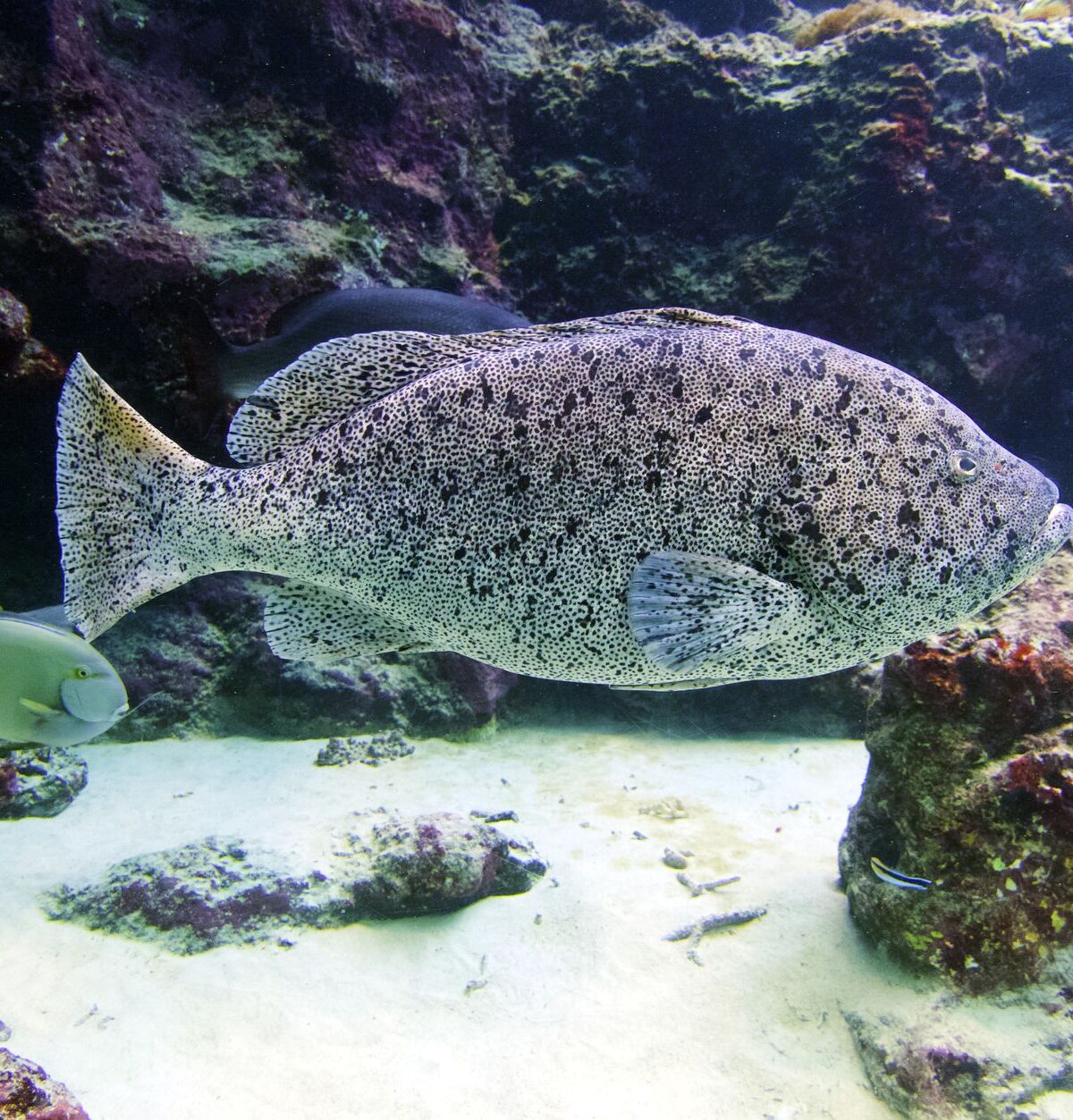
PANTHER GROUPER
DESCRIPTION
Also called Pantherfish and Spotted Grouper, Panther Grouper is a striking species known for its distinctive coloration and patterns. They typically exhibit a white to light yellow body adorned with dark spots, which can vary in size and intensity. These fish are primarily found in coral reef environments, where they exhibit a range of behaviors including hunting and social interactions with other reef species.
FUN FACTS
- Panther Groupers are known for their impressive hunting skills, often using a technique called 'suction feeding' to capture prey quickly
- They can expand their mouths rapidly to create a vacuum that pulls in small fish and invertebrates
- | These fish are also popular in the aquarium trade due to their striking appearance, but they require large tanks and specific care to thrive
- Their vibrant colors and patterns make them a favorite among marine enthusiasts
QUICK INFO
Lifespan10-15 years in the wild, up to 20 in captivity
Average Weight10-15 kg
Average Length0.6-1.2 m
Diet TypeCarnivore
Social Structuresolitary, occasionally found in pairs during breeding
Activity PatternDiurnal
Breeding SeasonYear-round, with peaks during warmer months
- Habitat
- Panther Groupers inhabit coral reefs and rocky areas, often found in shallow waters. They prefer environments with plenty of hiding spots and abundant prey.
- Biomes
- Coral Reef, Coastal
- Native Range
- They are native to the Indo-Pacific region, including areas around the Great Barrier Reef and various islands in the Pacific Ocean.
- Continent
- Asia, Australia, Africa
- Countries
- Australia, Indonesia, Philippines, Papua New Guinea, Solomon Islands
- Diet
- Panther Groupers are carnivorous and primarily feed on smaller fish and invertebrates. They are known to use their keen eyesight to hunt effectively in their reef habitats.
- Diet Type
- Carnivore
- Favorite Food
- small fish, crustaceans
- Social Structure
- solitary, occasionally found in pairs during breeding
- Activity Pattern
- Diurnal
- Group Size
- 1-2
- Territorial
- 1
 LC
LC
10-15 kg
Weight
0.6-1.2 m
Length
- Coloration
- white to light yellow body with dark spots
- Lifespan
- 10-15 years in the wild, up to 20 in captivity
- Offspring per Birth
- up to several thousand eggs
- Sexual Maturity
- 2-3 years
- Breeding Season
- Year-round, with peaks during warmer months
LC
Least Concern
IUCN Red List Status
- Population Status
- The population is currently stable, but local declines may occur due to overfishing and habitat loss.
- Wild Population Estimate
- unknown
- Population Trend
- Stable
- Endangered
- 0
- Threats
- Main threats include habitat destruction due to coral reef degradation and overfishing. These factors can significantly impact their populations in certain areas.
- Predators
- Larger fish species, sharks, and humans are known predators of the Panther Grouper.
- Defense Mechanisms
- They rely on their coloration for camouflage among the coral and can also retreat into crevices to avoid predators.
- Compatible Animals
- various reef fish species, such as clownfish and tangs
- Found in Zoos
- Uncommon