


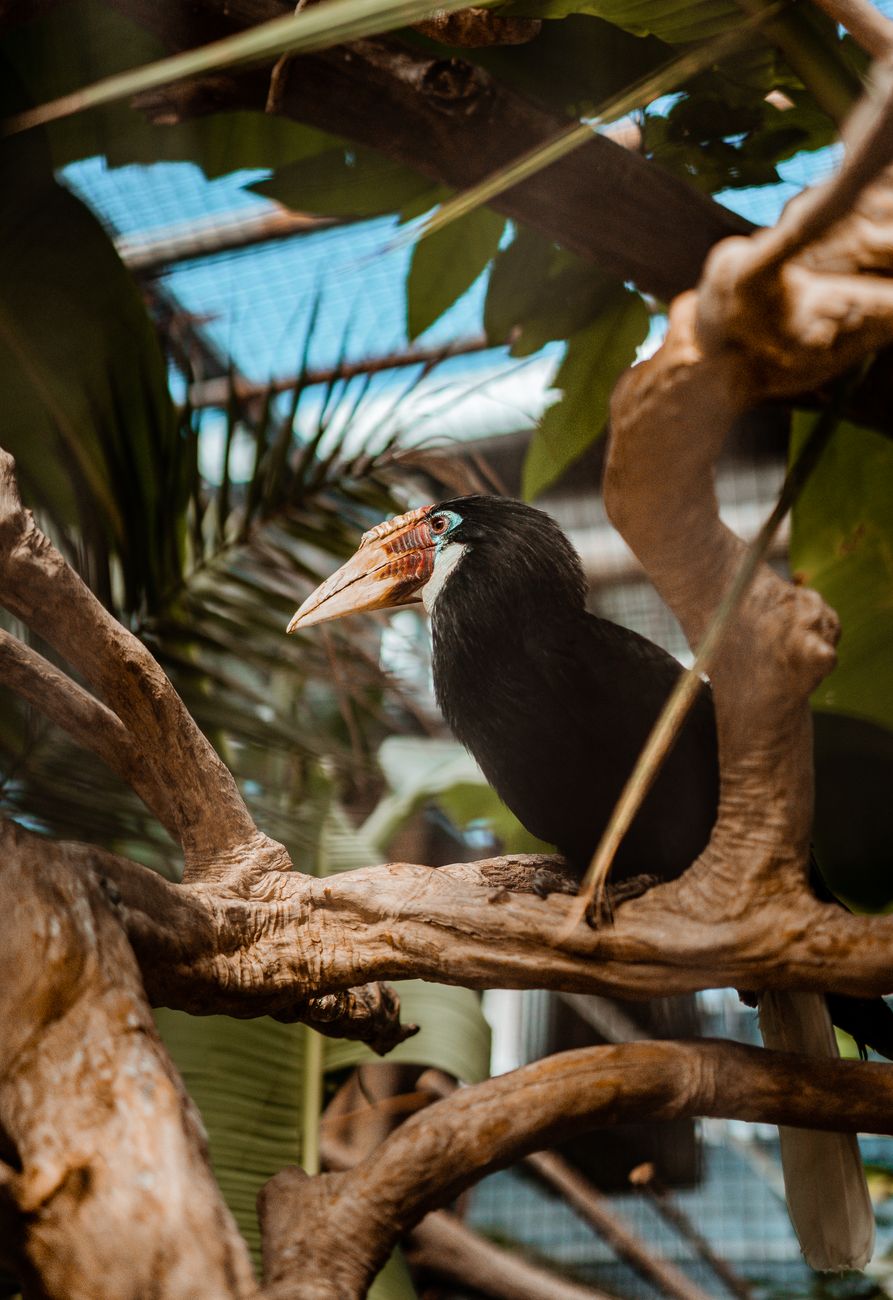
PAPUAN HORNBILL
Aceros plicatus
DESCRIPTION
Papuan Hornbill (Aceros plicatus) is a striking bird known for its large size and distinctive curved bill, which is often brightly colored. This species exhibits sexual dimorphism, with males typically having a more vibrant coloration than females. They are primarily arboreal, spending much of their time in the canopy of tropical forests, where they are known for their loud calls and social behavior.
FUN FACTS
- Papuan Hornbills are known for their unique nesting behavior, where the female seals herself inside a tree cavity during breeding, relying on the male to bring her food
- This fascinating adaptation helps protect the young from predators and environmental threats.| These birds play a vital role in their ecosystem as seed dispersers, helping to maintain the health of their forest habitats
- Their feeding habits contribute significantly to the growth and regeneration of various tree species
QUICK INFO
Lifespan20-30 years in the wild
Average Weight1.5-2.5 kg
Average Length60-70 cm
Diet TypeOmnivore
Social StructureThey are typically seen in pairs or small family groups, often consisting of a mated pair and their offspring.
Activity PatternDiurnal
Breeding SeasonSpring (March-May)
- Habitat
- They inhabit tropical rainforests, favoring areas with abundant fruiting trees. These birds are often found in both primary and secondary forests.
- Biomes
- Tropical Rainforest
- Native Range
- The Papuan Hornbill is native to New Guinea and surrounding islands.
- Continent
- Oceania
- Countries
- Papua New Guinea, Indonesia
- Diet
- Papuan Hornbills primarily feed on fruits, but they also consume insects and small vertebrates. Their diet plays a crucial role in seed dispersal within their forest habitat.
- Diet Type
- Omnivore
- Favorite Food
- fruits, insects
- Social Structure
- They are typically seen in pairs or small family groups, often consisting of a mated pair and their offspring.
- Activity Pattern
- Diurnal
- Group Size
- 2-6
- Territorial
- 1
 VU
VU
 LC
LC
1.5-2.5 kg
Weight
60-70 cm
Length
- Coloration
- They have a predominantly black plumage with white wing tips and a striking yellow and orange bill.
- Sexual Dimorphism
- Males are generally larger and have brighter coloration compared to females.
- Lifespan
- 20-30 years in the wild
- Offspring per Birth
- 1-2
- Sexual Maturity
- 3-4 years
- Breeding Season
- Spring (March-May)
LC
Least Concern
IUCN Red List Status
- Population Status
- The population is currently stable, but habitat loss poses a potential threat.
- Wild Population Estimate
- 10,000-20,000
- Population Trend
- Stable
- Endangered
- 0
- Threats
- The main threats to the Papuan Hornbill include habitat destruction due to logging and agricultural expansion. Additionally, hunting for bushmeat can impact local populations.
- Predators
- Large birds of prey, snakes, and possibly feral cats.
- Defense Mechanisms
- They use their size and loud calls to deter potential threats, and they can also fly quickly to escape predators.
- Found in Zoos
- Uncommon