


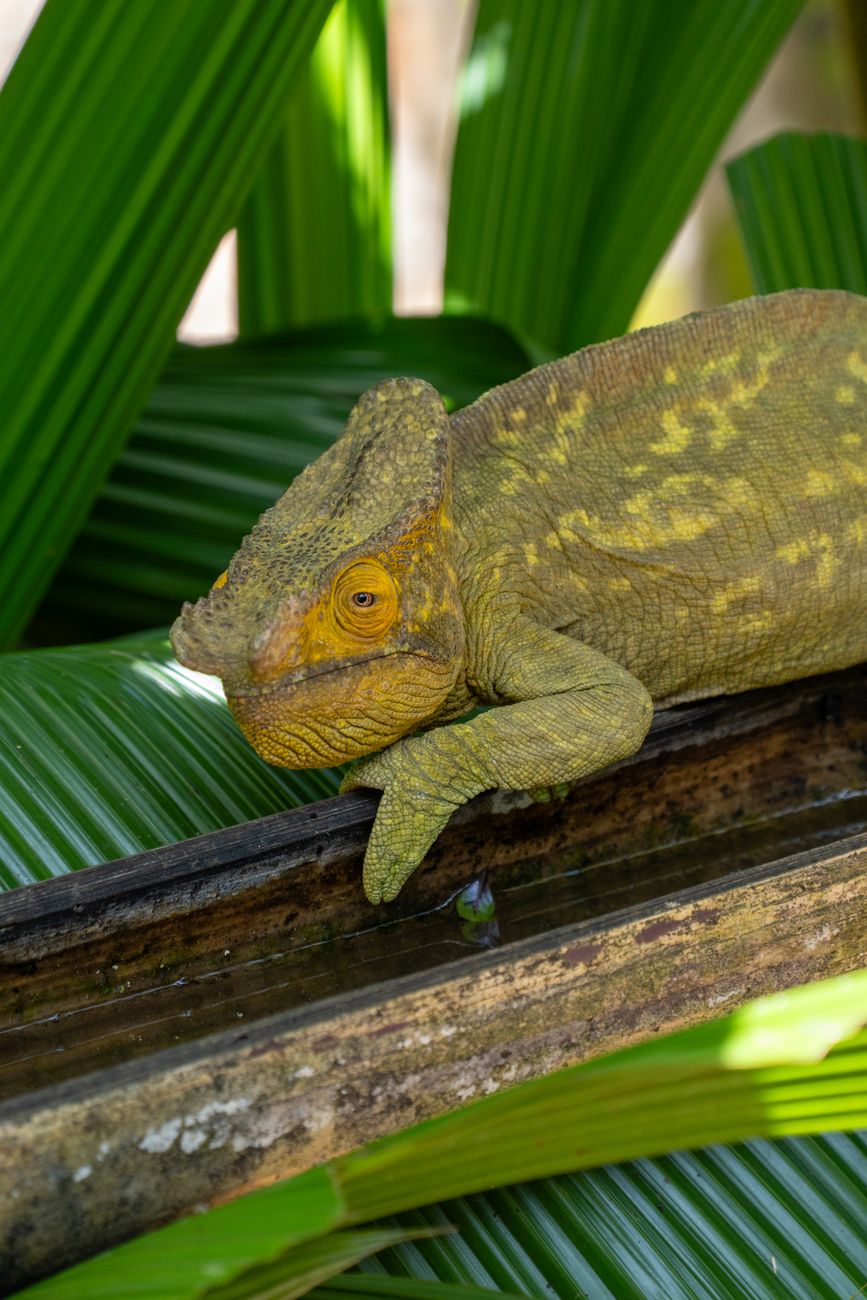
PARSON'S CHAMELEON
Calumma parsonii
DESCRIPTION
Parson's Chameleon (Calumma parsonii) is one of the largest chameleon species, known for its vibrant coloration and impressive size, reaching lengths of up to 68 cm. This species exhibits remarkable color-changing abilities, which it uses for communication and camouflage in its natural habitat. Parson's Chameleons are primarily arboreal, spending most of their time in trees and shrubs, where they hunt for prey and bask in the sun.
FUN FACTS
- Parson's Chameleons have a unique ability to change their color not just for camouflage but also to express their mood and communicate with other chameleons
- They possess a specialized tongue that can extend up to twice their body length, allowing them to catch prey from a distance.| These chameleons have a prehensile tail that helps them grip branches and maintain balance while navigating through the trees
- Their eyes can move independently, providing a wide field of vision to spot both predators and prey
QUICK INFO
Lifespan5-7 years in the wild, up to 10 years in captivity
Average Lengthup to 68 cm
Diet TypeInsectivore
Social Structuresolitary, typically found alone except during mating season
Activity PatternDiurnal
Breeding SeasonSpring (October-December)
- Habitat
- These chameleons inhabit humid, tropical forests, often found in the canopy where they can easily blend in with the foliage. They prefer areas with abundant vegetation for hunting and shelter.
- Biomes
- Tropical Rainforest
- Native Range
- Endemic to Madagascar, specifically found in the eastern rainforests of the island.
- Continent
- Africa
- Countries
- Madagascar
- Diet
- Parson's Chameleons primarily feed on insects, using their long, sticky tongues to capture prey. They may also consume small vertebrates occasionally.
- Diet Type
- Insectivore
- Favorite Food
- crickets, grasshoppers, and other insects
- Social Structure
- solitary, typically found alone except during mating season
- Activity Pattern
- Diurnal
- Group Size
- 1
- Territorial
- 1
 VU
VU
 LC
LC
up to 68 cm
Length
- Coloration
- vibrant green with blue, yellow, and orange markings, capable of changing colors
- Sexual Dimorphism
- males are generally larger and more colorful than females
- Lifespan
- 5-7 years in the wild, up to 10 years in captivity
- Offspring per Birth
- 10-30 eggs
- Sexual Maturity
- 1-2 years
- Breeding Season
- Spring (October-December)
LC
Least Concern
IUCN Red List Status
- Population Status
- The population is currently stable, but habitat loss poses a potential threat.
- Wild Population Estimate
- unknown
- Population Trend
- Stable
- Endangered
- 0
- Threats
- Main threats include habitat destruction due to deforestation and agricultural expansion. Additionally, the pet trade poses a risk to wild populations.
- Predators
- birds of prey, snakes, and larger reptiles
- Defense Mechanisms
- Parson's Chameleons can change color to blend into their surroundings, which helps them avoid predators.
- Found in Zoos
- Uncommon