


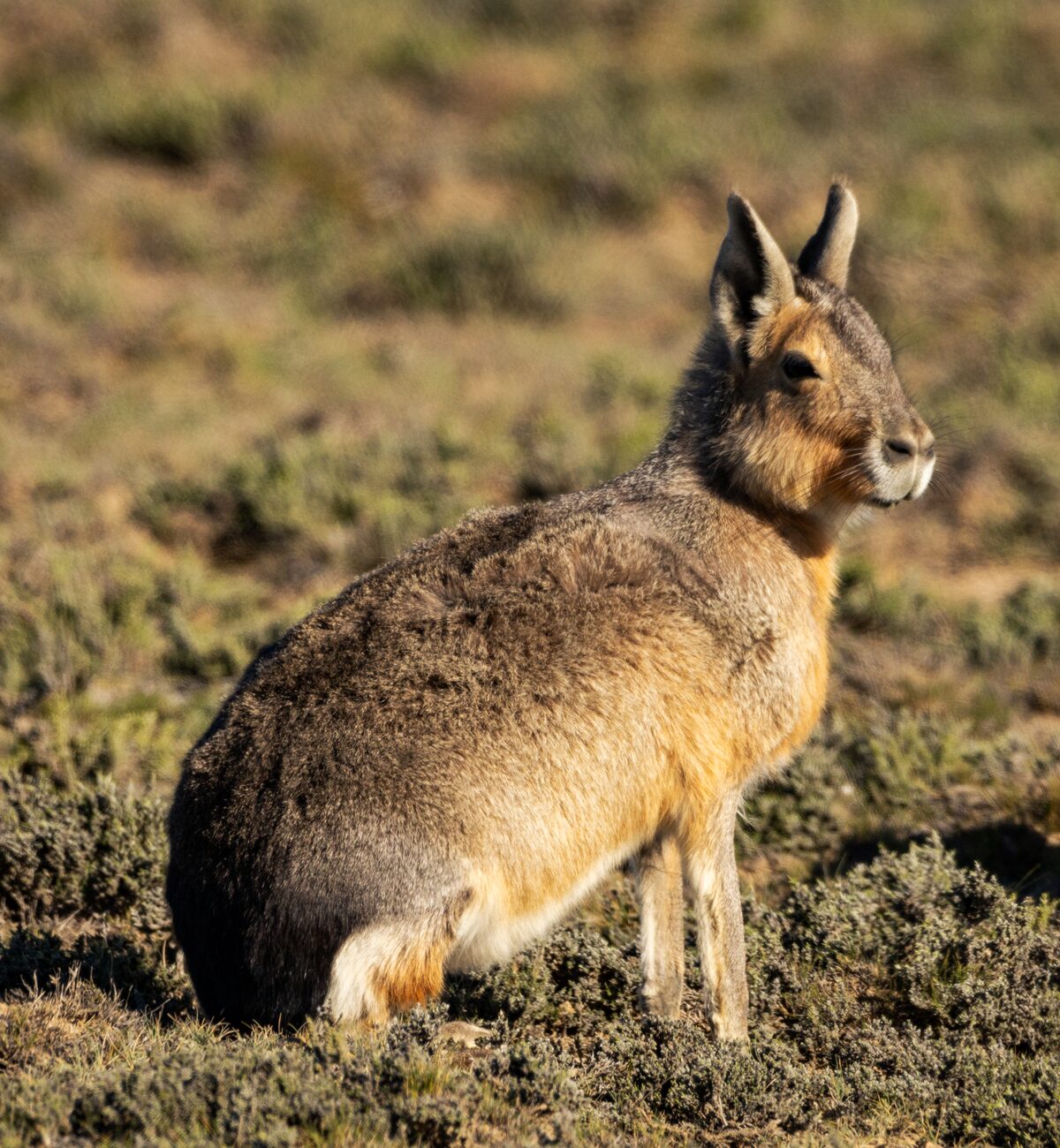
PATAGONIAN MARA
Dolichotis patagonum
DESCRIPTION
Also called the Patagonian Cavy, the Patagonian Mara is a large, herbivorous rodent native to Argentina. It has long legs, a slender body, and a distinctive coat that is typically a mix of brown and gray, allowing it to blend into its grassland habitat. These animals are known for their unique social structure, often forming monogamous pairs that can be seen foraging together in the wild.
FUN FACTS
- Patagonian Maras are known for their unique mating rituals, which include elaborate displays of jumping and running together
- These behaviors not only strengthen their bond but also serve to establish territory
- | Unlike many other rodents, Patagonian Maras have a very social structure, often forming lifelong pairs that work together to raise their young and defend their territory from intruders
QUICK INFO
Lifespan10-12 years in the wild, up to 15 years in captivi
Average Weight8-16 kg
Average Length70-80 cm
Diet TypeHerbivore
Social StructureThey typically form monogamous pairs, although they can also be found in small family groups. This social structure helps them to raise their young and defend their territory.
Activity PatternDiurnal
Breeding SeasonSpring (September-November)
- Habitat
- Patagonian Maras inhabit open grasslands and scrublands, where they can find ample food and space to roam. They prefer areas with sparse vegetation that allows for easy movement and visibility of potential predators.
- Biomes
- Grassland, Savanna
- Native Range
- The native range of the Patagonian Mara is primarily in the arid and semi-arid regions of Argentina, particularly in Patagonia.
- Continent
- South America
- Countries
- Argentina
- Diet
- The Patagonian Mara primarily feeds on grasses, herbs, and other vegetation. They are known to graze in open areas, using their strong teeth to clip and consume plant material.
- Diet Type
- Herbivore
- Favorite Food
- grasses, herbs
- Social Structure
- They typically form monogamous pairs, although they can also be found in small family groups. This social structure helps them to raise their young and defend their territory.
- Activity Pattern
- Diurnal
- Group Size
- 2-10
- Territorial
- 1

8-16 kg
Weight
70-80 cm
Length
- Coloration
- The coloration of the Patagonian Mara is generally a mix of brown and gray, with lighter underparts.
- Lifespan
- 10-12 years in the wild, up to 15 years in captivi
- Gestation Period
- 90-100 days
- Offspring per Birth
- 1-3
- Sexual Maturity
- 1-2 years
- Breeding Season
- Spring (September-November)
VU
Vulnerable
IUCN Red List Status
- Population Status
- The population of Patagonian Maras is currently declining due to habitat loss and hunting.
- Wild Population Estimate
- 10,000-20,000
- Population Trend
- Decreasing
- Endangered
- 1
- Threats
- Main threats to the Patagonian Mara include habitat destruction due to agriculture and urban development, as well as hunting for their meat and pelts. These pressures have led to a significant decline in their population.
- Conservation Program
- Conservation efforts are underway in some regions to protect their habitat and raise awareness about their plight.
- Predators
- Main predators include foxes, pumas, and birds of prey such as eagles.
- Defense Mechanisms
- Patagonian Maras rely on their speed and agility to escape predators, often using their strong hind legs to make quick jumps.
- Found in Zoos
- Uncommon