


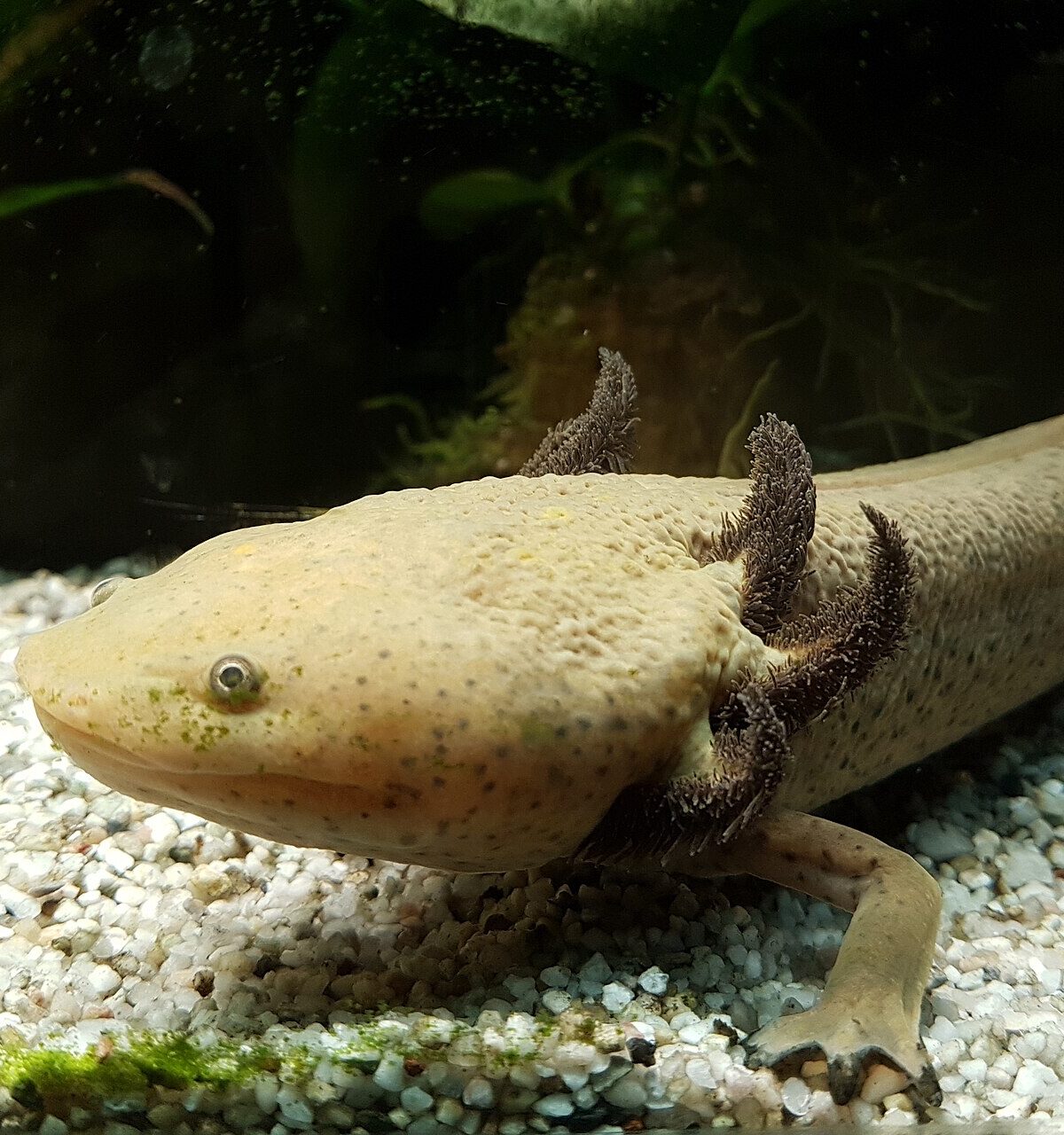
PáTZCUARO AXOLOTL
Ambystoma dumerilii
DESCRIPTION
Pátzcuaro Axolotl (Ambystoma dumerilii) is commonly known as the Mexican Axolotl, a unique amphibian that exhibits neoteny, retaining its larval features throughout its life. This species is characterized by its external gills, which are feathery and protrude from the sides of its head, and its ability to regenerate lost limbs and other body parts. Inhabiting the waters of Lake Pátzcuaro in Mexico, it plays a crucial role in the local ecosystem, feeding on various aquatic organisms and serving as prey for larger predators.
FUN FACTS
- Pátzcuaro Axolotls are famous for their remarkable regenerative abilities, capable of regrowing limbs, spinal cords, and even parts of their heart and brain
- This unique trait has made them a subject of scientific research, as understanding their regeneration could have implications for human medicine
- | Unlike many amphibians, Pátzcuaro Axolotls do not undergo metamorphosis; they remain aquatic and gilled throughout their lives, which is a fascinating example of neoteny in the animal kingdom
- This adaptation allows them to thrive in their specific aquatic environment, where they have evolved to be perfectly suited for life in the water
QUICK INFO
Lifespan10-15 years in the wild, up to 20 years in captivi
Average Weight50-100 g
Average Length15-30 cm
Diet TypeCarnivore
Social Structuresolitary
Activity PatternNocturnal
Breeding SeasonSpring (March-May)
- Habitat
- This species is found in freshwater lakes and canals, particularly in the high-altitude waters of Lake Pátzcuaro. The habitat is characterized by a mix of aquatic vegetation and rocky substrates.
- Biomes
- Freshwater, Lakes
- Native Range
- Endemic to Lake Pátzcuaro in Michoacán, Mexico.
- Continent
- North America
- Countries
- Mexico
- Diet
- Pátzcuaro Axolotls primarily consume small invertebrates and fish. Their diet consists of worms, insects, and small crustaceans.
- Diet Type
- Carnivore
- Favorite Food
- small invertebrates, fish
- Social Structure
- solitary
- Activity Pattern
- Nocturnal
- Group Size
- 1-2
- Territorial
- 0
 VU
VU
 LC
LC
50-100 g
Weight
15-30 cm
Length
- Coloration
- Typically dark brown or gray with lighter mottling, but can also exhibit albino variations.
- Sexual Dimorphism
- Males are generally smaller and have a more slender body compared to females.
- Lifespan
- 10-15 years in the wild, up to 20 years in captivi
- Offspring per Birth
- 100-300
- Sexual Maturity
- 1-2 years
- Breeding Season
- Spring (March-May)
CR
Critically Endangered
IUCN Red List Status
- Population Status
- The population of Pátzcuaro Axolotl is critically low due to habitat loss and pollution.
- Wild Population Estimate
- Less than 50 individuals in the wild
- Population Trend
- Decreasing
- Endangered
- 1
- Threats
- Main threats include habitat destruction due to urbanization, pollution, and the introduction of invasive species. These factors have significantly reduced their natural habitat and food sources.
- Conservation Program
- Conservation efforts are underway, including habitat restoration and breeding programs in captivity.
- Predators
- Birds, fish, and larger amphibians are known predators of the Pátzcuaro Axolotl.
- Defense Mechanisms
- They can regenerate lost limbs and other body parts, which serves as a defense mechanism against predation.
- Found in Zoos
- Uncommon