


PEACH-FACED LOVEBIRD
Agapornis roseicollis
DESCRIPTION
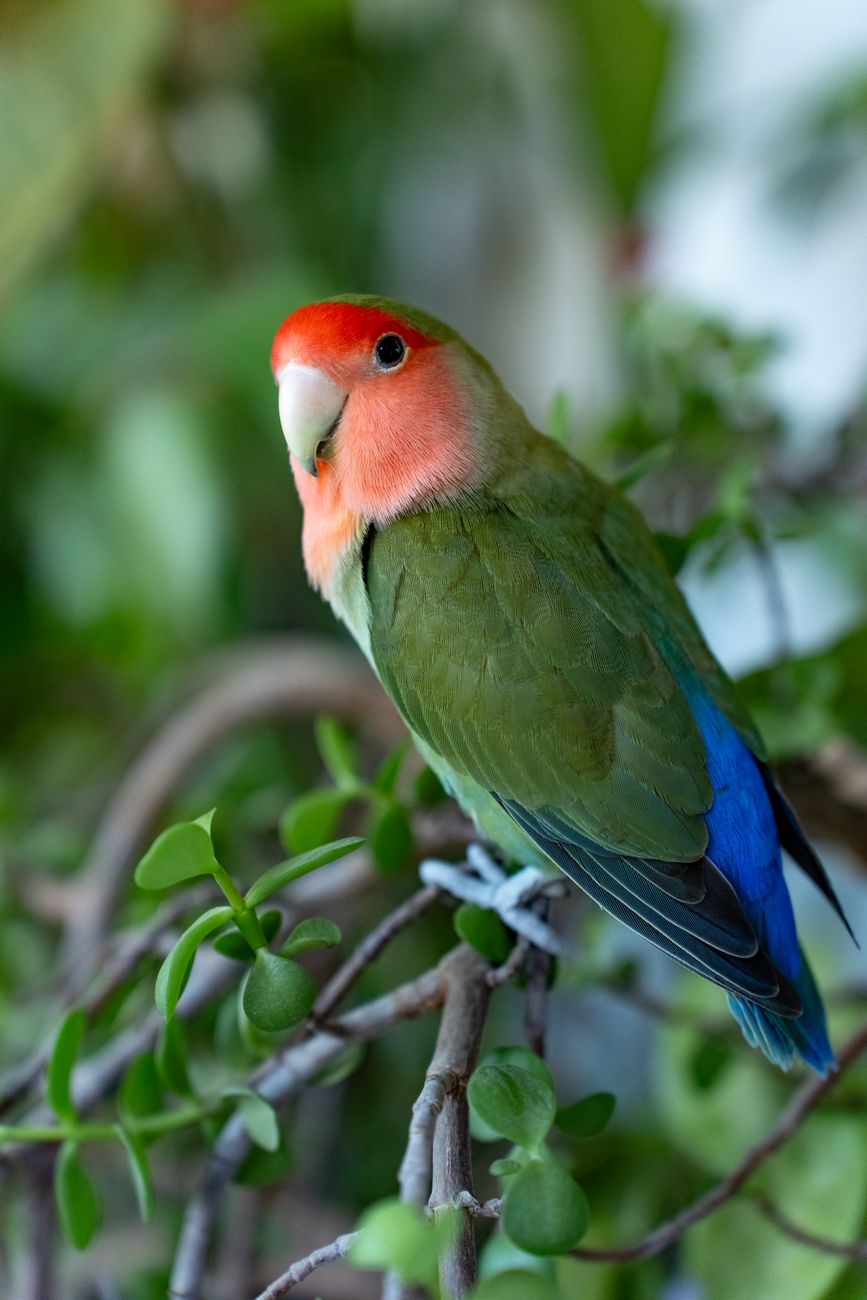
Peach-faced Lovebird (Agapornis roseicollis) is commonly known as the Rosy-faced Lovebird and is characterized by its vibrant green body and distinctive peach-colored face. These small parrots are highly social and often found in pairs or small flocks, displaying playful and affectionate behavior towards each other. In the wild, they inhabit arid regions and are known for their strong pair bonds, often engaging in mutual preening and feeding.
FUN FACTS
- Peach-faced Lovebirds are known for their strong pair bonds, often seen cuddling and preening each other, which is a behavior that strengthens their relationship
- They are also quite intelligent and can learn to mimic sounds and words, making them popular pets among bird enthusiasts.| In the wild, these lovebirds are often seen foraging in flocks, which helps them find food more efficiently and provides safety in numbers from potential predators
QUICK INFO
Lifespan10-15 years in the wild, up to 20 years in captivi
Average Weight50-70 g
Average Length13-17 cm
Diet TypeHerbivore
Social StructureThey are typically found in pairs or small groups, forming strong bonds with their mates.
Activity PatternDiurnal
Breeding SeasonYear-round in captivity, typically during the rainy season in the wild.
- Habitat
- Peach-faced Lovebirds thrive in dry, open woodlands and scrublands, often near water sources. They build their nests in tree cavities or dense shrubs.
- Biomes
- Savanna, Dry Forest
- Native Range
- They are native to the southwestern regions of Africa, particularly in countries like Namibia and Botswana.
- Continent
- Africa
- Countries
- Namibia, Botswana, South Africa
- Diet
- They primarily feed on seeds, fruits, and vegetables, showing a preference for soft foods. In the wild, they also consume grasses and flowers.
- Diet Type
- Herbivore
- Favorite Food
- seeds, fruits, vegetables
- Social Structure
- They are typically found in pairs or small groups, forming strong bonds with their mates.
- Activity Pattern
- Diurnal
- Group Size
- 2-10
- Territorial
- 0
 VU
VU
 LC
LC
50-70 g
Weight
13-17 cm
Length
- Coloration
- Vibrant green body with a peach-colored face and a yellowish underbelly.
- Sexual Dimorphism
- Males generally have brighter coloration than females.
- Lifespan
- 10-15 years in the wild, up to 20 years in captivi
- Offspring per Birth
- 3-6
- Sexual Maturity
- 6 months to 1 year
- Breeding Season
- Year-round in captivity, typically during the rainy season in the wild.
LC
Least Concern
IUCN Red List Status
- Population Status
- The population is currently stable, with no immediate threats to their survival.
- Wild Population Estimate
- 100,000+
- Population Trend
- Stable
- Endangered
- 0
- Threats
- Habitat loss due to agricultural expansion and trapping for the pet trade are the main threats to their population. However, they are not currently considered endangered.
- Predators
- Birds of prey, snakes, and larger mammals can pose threats to Peach-faced Lovebirds.
- Defense Mechanisms
- They often rely on their agility and ability to fly quickly to evade predators.
- Compatible Animals
- Other small parrots, finches, canaries
- Found in Zoos
- Common