


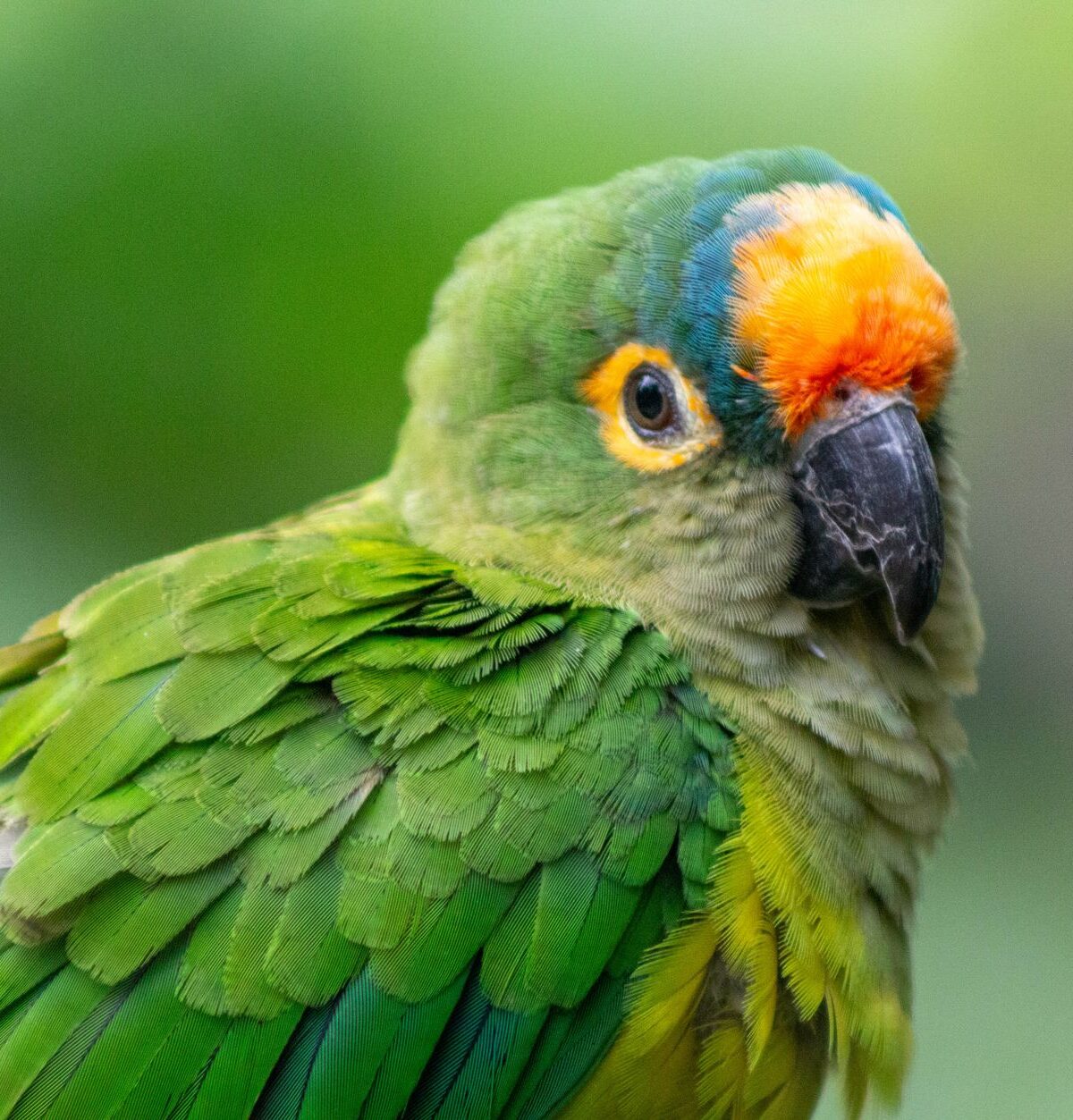
PEACH-FRONTED PARAKEET
Eupsittula aurea
DESCRIPTION
Peach-fronted Parakeet (Eupsittula aurea) is also known as the Golden-fronted Parakeet, characterized by its vibrant green plumage and distinctive peach-colored forehead. This medium-sized parakeet exhibits a playful and social behavior, often seen in flocks, where they engage in vocalizations and acrobatics. They inhabit a variety of environments, including woodlands and savannas, showcasing adaptability in their ecological niches.
FUN FACTS
- Peach-fronted Parakeets are known for their intelligence and ability to mimic sounds, including human speech
- They are also highly social birds, often engaging in playful behavior and forming strong bonds with their flock members.| These parakeets are popular in aviculture due to their vibrant colors and engaging personalities
- They require ample space and social interaction to thrive, making them a favorite among bird enthusiasts
QUICK INFO
Lifespan10-15 years in the wild, up to 25 years in captivi
Average Weight80-120 g
Average Length24-28 cm
Diet TypeHerbivore
Social StructureThey are typically found in groups, often seen in flocks of 10-30 individuals. Their social structure is dynamic, with strong bonds formed within the group.
Activity PatternDiurnal
Breeding SeasonSpring to early summer
- Habitat
- Peach-fronted Parakeets thrive in open woodlands, savannas, and areas with abundant vegetation. They prefer habitats that provide ample food sources and nesting sites.
- Biomes
- Tropical Rainforest, Savanna
- Native Range
- This species is native to parts of South America, particularly in Brazil, Paraguay, and Argentina.
- Continent
- South America
- Countries
- Brazil, Paraguay, Argentina
- Diet
- They primarily feed on seeds, fruits, and nuts, foraging in trees and shrubs. Their diet is supplemented with flowers and leaves, making them opportunistic feeders.
- Diet Type
- Herbivore
- Favorite Food
- seeds, fruits, nuts
- Social Structure
- They are typically found in groups, often seen in flocks of 10-30 individuals. Their social structure is dynamic, with strong bonds formed within the group.
- Activity Pattern
- Diurnal
- Group Size
- 10-30
- Territorial
- 0
 LC
LC
80-120 g
Weight
24-28 cm
Length
- Coloration
- Vibrant green body with a peach-colored forehead and blue wing feathers.
- Sexual Dimorphism
- Males and females are similar in appearance, making it difficult to distinguish between the sexes.
- Lifespan
- 10-15 years in the wild, up to 25 years in captivi
- Offspring per Birth
- 3-5
- Sexual Maturity
- 1-2 years
- Breeding Season
- Spring to early summer
LC
Least Concern
IUCN Red List Status
- Population Status
- The population is currently stable, with no immediate threats to their numbers.
- Wild Population Estimate
- 50,000-100,000
- Population Trend
- Stable
- Endangered
- 0
- Threats
- Main threats include habitat loss due to deforestation and illegal trapping for the pet trade. However, they are not currently considered endangered.
- Predators
- Natural predators include birds of prey, snakes, and larger mammals that may prey on their nests.
- Defense Mechanisms
- They often use their agility and speed to evade predators, and they can also be quite vocal to alert others of danger.
- Compatible Animals
- Other parakeets, small parrots, finches
- Found in Zoos
- Common