


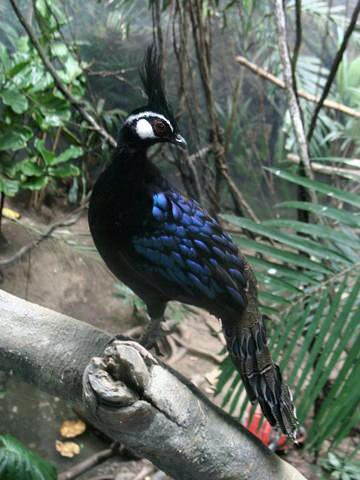
PEACOCK PHEASANT
Polyplectron spp.
DESCRIPTION
Peacock Pheasant (Polyplectron spp.) is a striking bird known for its vibrant plumage and intricate patterns. Males are particularly notable for their iridescent feathers, which display a range of colors including blue, green, and gold, often adorned with eye-like spots. These birds are primarily ground-dwelling and exhibit shy behavior, often foraging in dense underbrush in their natural habitats.
FUN FACTS
- Peacock Pheasants are known for their unique courtship displays, where males will fan out their spectacular tail feathers and perform intricate movements to attract females
- This display is not only a visual spectacle but also a crucial part of their mating ritual, showcasing their health and vitality
- | The feathers of the Peacock Pheasant are not only beautiful but also serve a practical purpose; their coloration helps them blend into the forest floor, providing camouflage from predators
- This adaptation is vital for their survival in the wild, where they spend most of their time foraging and nesting
QUICK INFO
Lifespan10-15 years in the wild, up to 20 in captivity
Average Weight0.5-1 kg
Average Length60-75 cm
Diet TypeOmnivore
Social Structuresolitary or pair, with males often displaying to attract females during the breeding season
Activity PatternDiurnal
Breeding SeasonSpring (March-May)
- Habitat
- They inhabit tropical and subtropical forests, often favoring areas with dense undergrowth. These birds are adapted to life on the forest floor, where they can find ample food and cover.
- Biomes
- Tropical Rainforest
- Native Range
- Peacock Pheasants are native to Southeast Asia, particularly found in countries like Myanmar, Thailand, and Indonesia.
- Continent
- Asia
- Countries
- Myanmar, Thailand, Indonesia
- Diet
- Peacock Pheasants primarily feed on seeds, fruits, and insects, foraging on the forest floor. Their diet can vary based on seasonal availability of food sources.
- Diet Type
- Omnivore
- Favorite Food
- seeds, fruits, insects
- Social Structure
- solitary or pair, with males often displaying to attract females during the breeding season
- Activity Pattern
- Diurnal
- Group Size
- 1-2
- Territorial
- 1
 LC
LC
 VU
VU
0.5-1 kg
Weight
60-75 cm
Length
- Coloration
- males have iridescent blue and green feathers with eye-like spots, while females are more cryptic with brown and tan coloring
- Sexual Dimorphism
- males are more colorful and larger than females
- Lifespan
- 10-15 years in the wild, up to 20 in captivity
- Offspring per Birth
- 3-6
- Sexual Maturity
- 1-2 years
- Breeding Season
- Spring (March-May)
VU
Vulnerable
IUCN Red List Status
- Population Status
- Population estimates are uncertain, but habitat loss poses a significant threat to their numbers.
- Wild Population Estimate
- unknown
- Population Trend
- Decreasing
- Endangered
- 1
- Threats
- Main threats include habitat destruction due to deforestation and hunting. These pressures have led to a decline in their populations across their native range.
- Predators
- snakes, birds of prey, and larger mammals may prey on eggs and chicks; adults have few natural predators due to their elusive nature
- Defense Mechanisms
- They rely on camouflage and their ability to remain still to avoid detection by predators.
- Found in Zoos
- Uncommon