


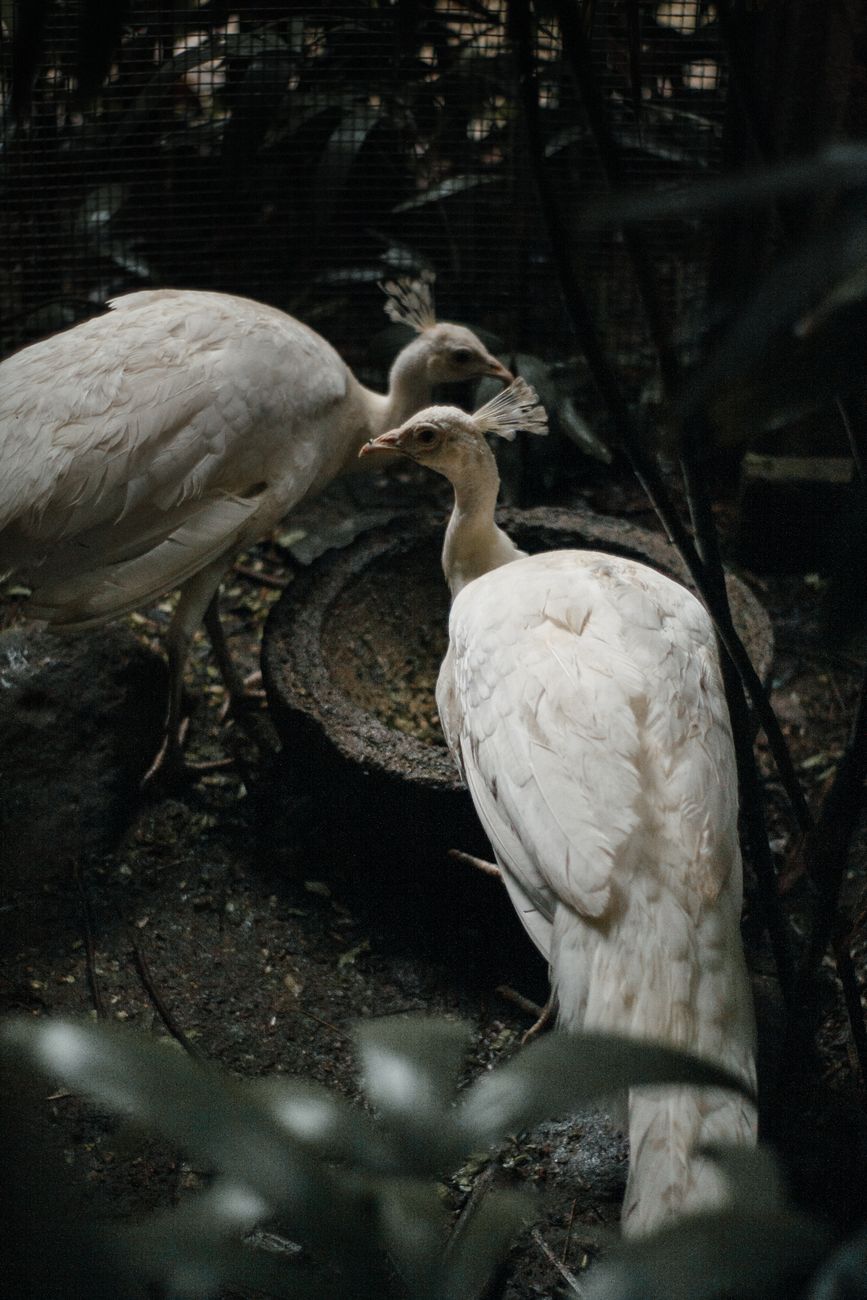
PEAFOWL
DESCRIPTION
Also called Indian Peafowl, Peafowl is a large and colorful bird known for its iridescent plumage and striking tail feathers, which can be fanned out in a spectacular display during courtship rituals. Males are particularly notable for their vibrant blue and green feathers, while females are more subdued in coloration, typically brown and gray. Peafowl are social birds that often inhabit open forests and grasslands, where they forage for food and establish territories.
FUN FACTS
- Peafowl are known for their impressive courtship displays, where males can fan out their tail feathers to create a stunning visual spectacle that can reach up to 1.5 meters in width
- This display is not only a means of attracting females but also serves to establish dominance among males
- | The peacock's tail feathers, or train, can have up to 200 eye-like patterns, known as ocelli, which are used to impress potential mates
- Interestingly, these feathers are molted annually, and the peacock will grow a new set each year, ensuring that its display remains vibrant and attractive
QUICK INFO
Lifespan15-20 years in the wild, up to 25 years in captivi
Average Weight3-6 kg
Average Length1.5-2.3 m
Diet TypeOmnivore
Social Structuregroup — Peafowl are often found in small groups or flocks, especially outside of the breeding season.
Activity PatternDiurnal
Breeding SeasonSpring (March-May)
- Habitat
- Peafowl are commonly found in open forests, grasslands, and near agricultural areas. They prefer habitats that provide both cover and open ground for foraging.
- Biomes
- Tropical Rainforest, Savanna, Grassland
- Native Range
- Native to the Indian subcontinent, with some populations introduced in other regions.
- Continent
- Asia
- Countries
- India, Sri Lanka, Myanmar, Nepal, Bangladesh
- Diet
- Peafowl primarily eat seeds, fruits, insects, and small animals. Their diet can vary based on the availability of food sources in their habitat.
- Diet Type
- Omnivore
- Favorite Food
- seeds, fruits, insects
- Social Structure
- group — Peafowl are often found in small groups or flocks, especially outside of the breeding season.
- Activity Pattern
- Diurnal
- Group Size
- 5-20
- Territorial
- 1
 VU
VU
 LC
LC
 LC
LC
3-6 kg
Weight
1.5-2.3 m
Length
- Coloration
- Males are vibrant blue and green with iridescent tail feathers, while females are brown and gray.
- Sexual Dimorphism
- Males are larger and more colorful than females.
- Lifespan
- 15-20 years in the wild, up to 25 years in captivi
- Offspring per Birth
- 3-5
- Sexual Maturity
- 2-3 years
- Breeding Season
- Spring (March-May)
LC
Least Concern
IUCN Red List Status
- Population Status
- The population of Peafowl is generally stable, but local declines may occur due to habitat loss.
- Wild Population Estimate
- 1,000,000+
- Population Trend
- Stable
- Endangered
- 0
- Threats
- Main threats include habitat destruction and hunting. In some areas, they are also affected by road traffic and predation by domestic animals.
- Predators
- Large birds of prey, jackals, and domestic dogs.
- Defense Mechanisms
- Peafowl use their large size and loud calls to deter predators, and they can also fly short distances to escape danger.
- Compatible Animals
- ducks, geese, other waterfowl
- Found in Zoos
- Common