


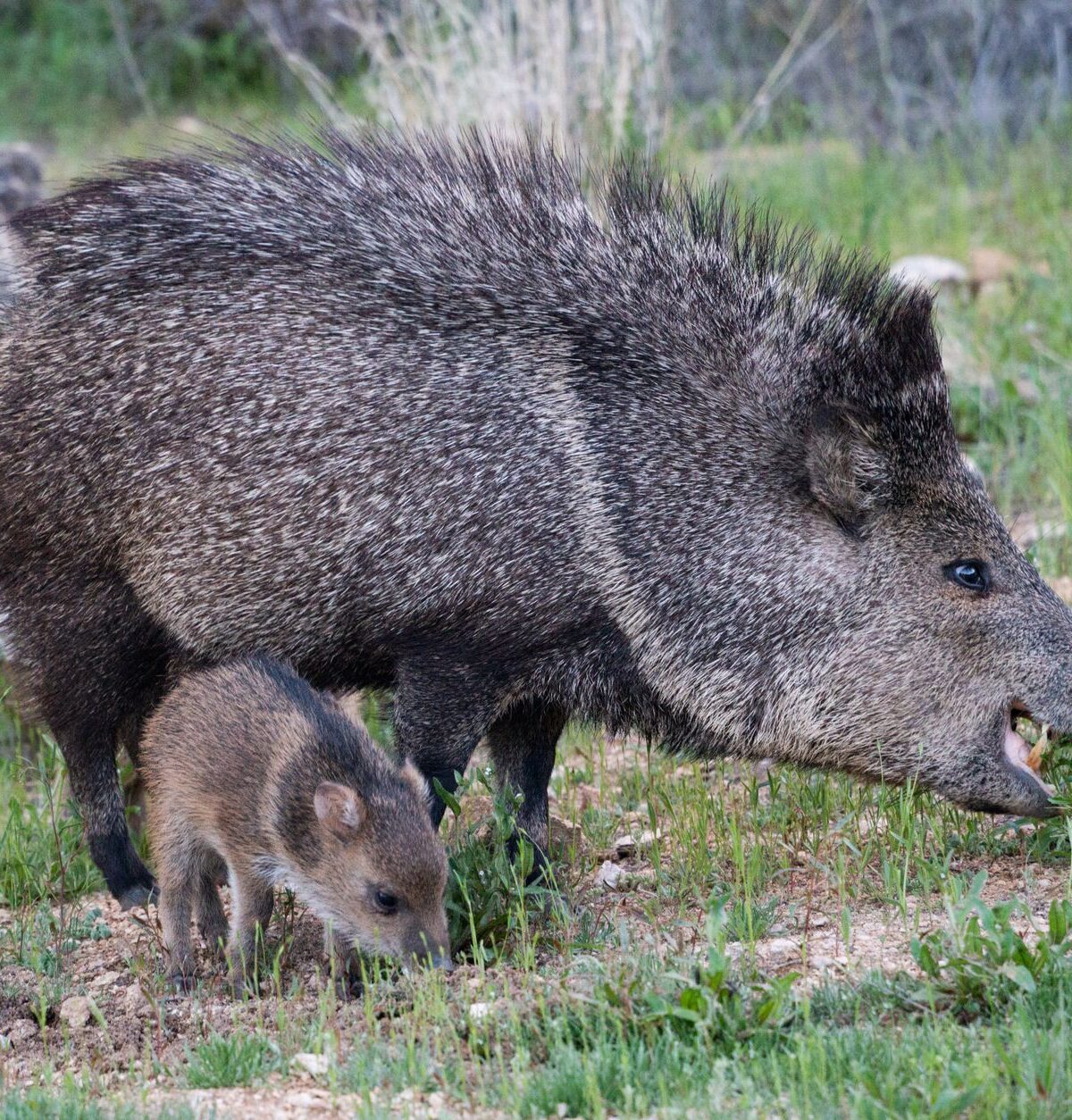
PECARI
DESCRIPTION
Pecari, commonly known as the collared peccary or javelina, is a medium-sized mammal resembling a wild pig. They have a stocky body, short legs, and a distinctive collar of white fur around their necks. Pecaris are social animals, often found in groups, and they play a significant role in their ecosystems as seed dispersers and foragers.
FUN FACTS
- Pecaris have a unique social structure and are known for their strong family bonds
- They often engage in communal grooming, which helps strengthen social ties within the group.|Despite their pig-like appearance, peccaries are more closely related to hippos and whales than to domestic pigs
- They have a specialized digestive system that allows them to efficiently process tough plant materials
QUICK INFO
Lifespan10-15 years in the wild, up to 20 in captivity
Average Weight20-40 kg
Average Length0.9-1.5 m
Diet TypeOmnivore
Social StructureGroup, typically consisting of 5-20 individuals that forage together.
Activity PatternDiurnal
Breeding SeasonYear-round, with peaks depending on the region
- Habitat
- Pecaris inhabit a range of environments, including forests, grasslands, and scrublands. They prefer areas with dense vegetation that provide cover and food sources.
- Biomes
- Tropical Rainforest, Savanna, Grassland
- Native Range
- Pecaris are native to the Americas, ranging from the southwestern United States to South America.
- Continent
- North America, South America
- Countries
- United States, Mexico, Brazil, Argentina, Peru
- Diet
- Pecaris are omnivorous, feeding on a variety of plant materials, fruits, roots, and small animals. They are known to forage for food in the underbrush and are particularly fond of cacti and other succulent plants.
- Diet Type
- Omnivore
- Favorite Food
- Fruits, roots, cacti
- Social Structure
- Group, typically consisting of 5-20 individuals that forage together.
- Activity Pattern
- Diurnal
- Group Size
- 5-20
- Territorial
- 0
 LC
LC
20-40 kg
Weight
0.9-1.5 m
Length
- Coloration
- Dark brown to grayish fur with a lighter collar of fur around the neck.
- Sexual Dimorphism
- Males are generally larger than females.
- Lifespan
- 10-15 years in the wild, up to 20 in captivity
- Gestation Period
- 150 days
- Offspring per Birth
- 1-3
- Sexual Maturity
- 1-2 years
- Breeding Season
- Year-round, with peaks depending on the region
LC
Least Concern
IUCN Red List Status
- Population Status
- Pecari populations are generally stable, but local declines can occur due to habitat loss.
- Wild Population Estimate
- Not precisely known, but populations are considered stable in many areas.
- Population Trend
- Stable
- Endangered
- 0
- Threats
- Main threats include habitat destruction and hunting. In some areas, they are hunted for their meat, which can impact local populations.
- Predators
- Coyotes, mountain lions, and large birds of prey are known to prey on peccaries.
- Defense Mechanisms
- Pecaris can defend themselves by running quickly and using their sharp tusks if threatened.
- Compatible Animals
- None
- Found in Zoos
- Common