


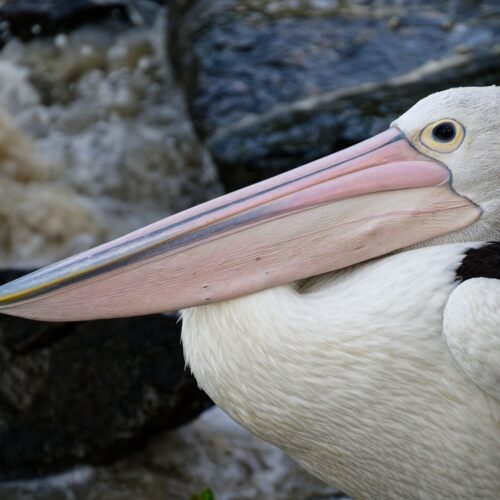
PELICAN
DESCRIPTION
Pelicans are large water birds known for their distinctive long bills and large throat pouches, which they use to catch fish. They have a wingspan that can reach up to 3.6 meters, making them one of the largest flying birds. Pelicans are social birds, often seen in groups, and they are known for their cooperative fishing techniques, where they work together to herd fish into shallow waters.
FUN FACTS
- Pelicans are known for their impressive fishing technique, where they can dive into the water from the air to catch fish
- Their throat pouch can hold up to three times more than their stomach, allowing them to catch and store multiple fish at once
- | The American white pelican is one of the few species that does not dive for fish; instead, it uses its bill to scoop fish from the water while swimming
- These birds can also be seen performing synchronized swimming displays during courtship, showcasing their social nature
QUICK INFO
Lifespan10-25 years in the wild, up to 30 years in captivi
Average Weight4-15 kg
Average Length1.2-1.8 m
Diet TypePiscivore
Social Structuregroup — they often nest and forage in colonies, which can include hundreds of individuals.
Activity PatternDiurnal
Breeding SeasonSpring (March-June)
- Habitat
- Pelicans are typically found in coastal and inland waters, including lakes, rivers, and marshes. They prefer areas with abundant fish populations and often nest in colonies on islands or in secluded areas.
- Biomes
- Wetlands, Coastal, Freshwater
- Native Range
- Pelicans are found on every continent except Antarctica, with different species inhabiting various regions.
- Continent
- North America, South America, Europe, Africa, Asia, Australia
- Countries
- United States, Canada, Mexico, Brazil, Australia, South Africa, India
- Diet
- Pelicans primarily eat fish, which they catch using their large bills and throat pouches. They may also consume small invertebrates and amphibians occasionally.
- Diet Type
- Piscivore
- Favorite Food
- fish
- Social Structure
- group — they often nest and forage in colonies, which can include hundreds of individuals.
- Activity Pattern
- Diurnal
- Group Size
- 10-100
- Territorial
- 0
 LC
LC
 CR
CR
 LC
LC
4-15 kg
Weight
1.2-1.8 m
Length
- Coloration
- Pelicans typically have white or light-colored plumage with darker wing tips and a distinctive bill color that varies by species.
- Sexual Dimorphism
- males are generally larger than females
- Lifespan
- 10-25 years in the wild, up to 30 years in captivi
- Offspring per Birth
- 1-3
- Sexual Maturity
- 3-5 years
- Breeding Season
- Spring (March-June)
LC
Least Concern
IUCN Red List Status
- Population Status
- Some species of pelicans are abundant, while others are threatened or endangered due to habitat loss.
- Wild Population Estimate
- 100,000-200,000
- Population Trend
- Stable
- Endangered
- 0
- Threats
- Pelicans face threats from habitat destruction, pollution, and climate change, which can impact their breeding and feeding grounds. Fishing nets and other human activities can also lead to accidental deaths.
- Predators
- eagles, hawks, raccoons, and large fish species can prey on pelican eggs and young.
- Defense Mechanisms
- Pelicans may use their size and group behavior to deter predators, and they can also be aggressive when defending their nests.
- Compatible Animals
- ducks, geese, swans
- Found in Zoos
- Common