


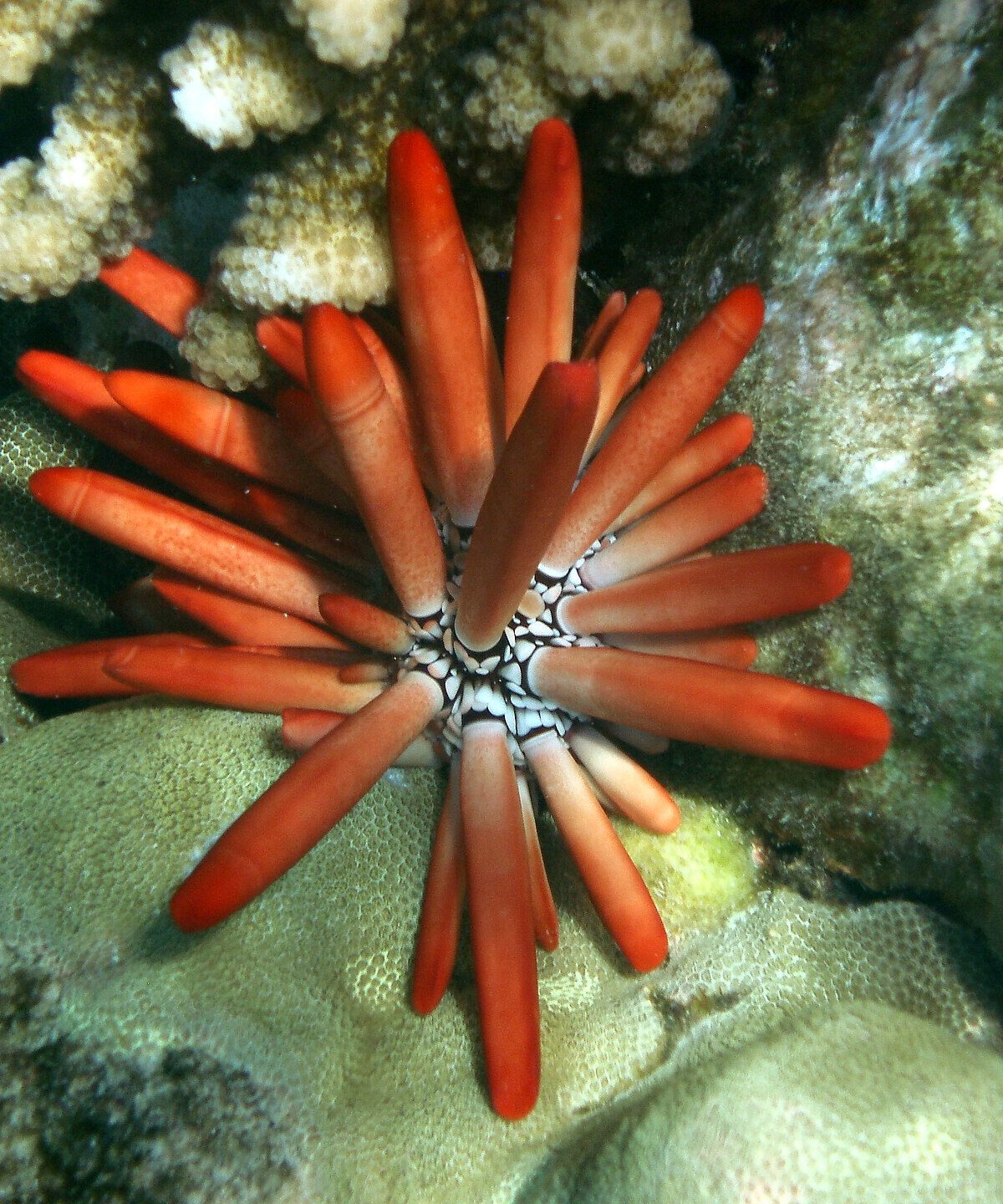
PENCIL URCHIN
DESCRIPTION
Pencil Urchin is a unique echinoderm known for its elongated, pencil-like spines that protrude from its body, providing both camouflage and protection from predators. These spines can vary in color, often appearing in shades of brown, green, or gray, which helps them blend into their rocky or coral reef habitats. Behaviorally, Pencil Urchins are primarily nocturnal, emerging at night to forage for food and avoid daytime predators, making them an interesting subject for study in marine ecology.
FUN FACTS
- Pencil Urchins are fascinating creatures that can regenerate lost spines, allowing them to recover from predation or injury
- Additionally, their spines can host small organisms like algae and barnacles, creating a mini-ecosystem on their bodies, which further aids in their camouflage and protection
QUICK INFO
Lifespanup to 10 years in the wild
Average Length10-20 cm
Diet TypeHerbivore
Social Structuresolitary, occasionally found in small groups
Activity PatternNocturnal
- Habitat
- Pencil Urchins are typically found in shallow marine environments, particularly in rocky substrates and coral reefs. They prefer areas with plenty of crevices to hide from predators and to access food sources.
- Biomes
- Coral Reef, Coastal
- Native Range
- Pencil Urchins are native to the Indo-Pacific region, including areas around the Great Barrier Reef and various tropical islands.
- Continent
- Asia, Australia, Africa
- Countries
- Australia, Indonesia, Philippines, Madagascar
- Diet
- Pencil Urchins primarily feed on algae and detritus, scraping food off surfaces with their specialized mouthparts. They play a crucial role in maintaining the health of their ecosystem by controlling algal growth.
- Diet Type
- Herbivore
- Favorite Food
- algae, detritus
- Social Structure
- solitary, occasionally found in small groups
- Activity Pattern
- Nocturnal
- Group Size
- 1-5
- Territorial
- 0
 VU
VU
 LC
LC
10-20 cm
Length
- Coloration
- brown, green, or gray with elongated spines
- Lifespan
- up to 10 years in the wild
- Sexual Maturity
- 2-3 years
LC
Least Concern
IUCN Red List Status
- Population Status
- Pencil Urchin populations are generally stable, but local declines can occur due to habitat destruction.
- Population Trend
- Stable
- Endangered
- 0
- Threats
- Main threats include habitat loss due to coral reef degradation and pollution. Additionally, they are vulnerable to over-collection for the aquarium trade.
- Predators
- sea stars, fish, and some crustaceans
- Defense Mechanisms
- Pencil Urchins rely on their long spines for protection against predators, which can deter potential threats.
- Found in Zoos
- Uncommon