


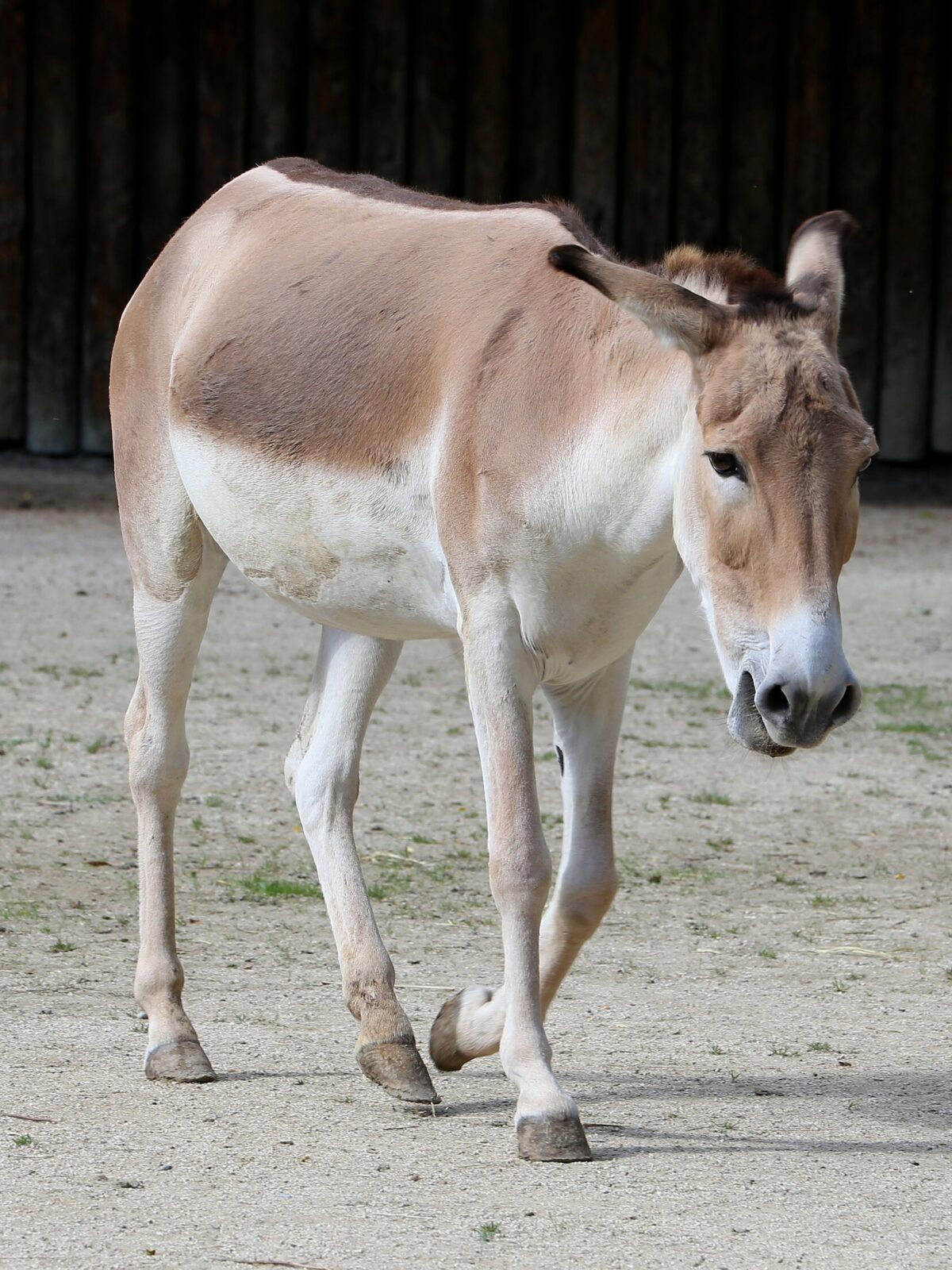
PERSIAN ONAGER
Equus hemionus onager
DESCRIPTION
Persian Onager (Equus hemionus onager) is commonly known as the Asiatic Wild Ass. This subspecies of the onager is characterized by its slender build, long legs, and a distinctive dark stripe running down its back. They are adapted to arid environments, exhibiting behaviors such as grazing on sparse vegetation and being highly social, often forming small groups in their natural habitat.
FUN FACTS
- The Persian Onager is one of the last remaining wild equids in the world, making its conservation critical for biodiversity
- They are known for their incredible endurance and can travel long distances in search of food and water, adapting well to their harsh environments.| Unlike domestic horses, Persian Onagers have a more primitive social structure and are less domesticated, which makes them fascinating subjects for studying wild equine behavior
QUICK INFO
Lifespan20-25 years in the wild, up to 30 in captivity
Average Weight200-250 kg
Average Length2.0-2.5 m
Diet TypeHerbivore
Social StructureThey are typically found in small groups or herds, often consisting of a few females and their young, with males being more solitary.
Activity PatternDiurnal
Breeding SeasonSpring (April-June)
- Habitat
- Persian Onagers inhabit arid and semi-arid regions, including deserts and steppes. They prefer open grasslands where they can find sufficient forage and space to roam.
- Biomes
- Desert, Grassland
- Native Range
- Historically found across the Iranian plateau, their range has significantly decreased due to habitat loss.
- Continent
- Asia
- Countries
- Iran, Iraq
- Diet
- Persian Onagers primarily graze on grasses, shrubs, and other herbaceous plants. They are well adapted to their dry habitats, allowing them to thrive on limited food resources.
- Diet Type
- Herbivore
- Favorite Food
- grasses, shrubs
- Social Structure
- They are typically found in small groups or herds, often consisting of a few females and their young, with males being more solitary.
- Activity Pattern
- Diurnal
- Group Size
- 2-10
- Territorial
- 0
 LC
LC
 VU
VU
200-250 kg
Weight
2.0-2.5 m
Length
1.2 m at shoulder
Height (Shoulder)
- Coloration
- Light brown to grayish coat with a darker stripe along the back.
- Sexual Dimorphism
- Males are generally larger than females.
- Lifespan
- 20-25 years in the wild, up to 30 in captivity
- Gestation Period
- 12 months
- Offspring per Birth
- 1
- Sexual Maturity
- 3-4 years
- Breeding Season
- Spring (April-June)
EN
Endangered
IUCN Red List Status
- Population Status
- The population of Persian Onagers is currently low and fragmented due to habitat loss and hunting.
- Wild Population Estimate
- Less than 1,000
- Population Trend
- Decreasing
- Endangered
- 1
- Threats
- Main threats include habitat destruction due to agriculture and urbanization, as well as poaching. These factors have led to a significant decline in their population.
- Conservation Program
- Conservation efforts include habitat protection and breeding programs in captivity.
- Predators
- Wolves, leopards, and humans are known predators of the Persian Onager.
- Defense Mechanisms
- They rely on their speed and agility to escape from predators, often fleeing at high speeds when threatened.
- Found in Zoos
- Uncommon