


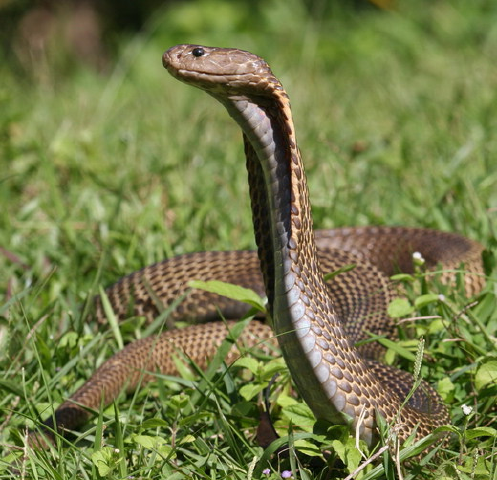
PHILIPPINE COBRA
Naja philippinensis
DESCRIPTION
Philippine Cobra (Naja philippinensis) is a highly venomous snake native to the Philippines, known for its distinctive hood and ability to raise its head off the ground when threatened. It typically exhibits a light brown to olive coloration with darker bands, which helps it blend into its natural habitat. This species is primarily found in lowland areas and is known for its aggressive behavior when cornered, making it one of the most dangerous snakes in its range.
FUN FACTS
- The Philippine Cobra is one of the few snake species capable of spitting venom, which can cause severe damage to the eyes and skin of potential threats
- Additionally, its venom is highly neurotoxic, affecting the nervous system and potentially leading to respiratory failure if untreated.| This species has a unique ability to raise its body off the ground and spread its hood, making it appear larger and more intimidating to predators
- Despite its fearsome reputation, the Philippine Cobra plays a crucial role in controlling rodent populations in its ecosystem
QUICK INFO
Lifespan10-15 years in the wild, up to 20 years in captivi
Average Weight1-2 kg
Average Length1.2-1.5 m
Diet TypeCarnivore
Social Structuresolitary, typically found alone except during mating season
Activity PatternDiurnal
Breeding SeasonSpring (March-May)
- Habitat
- The Philippine Cobra inhabits a variety of environments, including forests, grasslands, and agricultural areas. It is often found near water sources, which are crucial for its survival.
- Biomes
- Tropical Rainforest, Grassland
- Native Range
- The species is endemic to the Philippines, found on several islands including Luzon, Mindanao, and others.
- Continent
- Asia
- Countries
- Philippines
- Diet
- The Philippine Cobra primarily feeds on small mammals and other snakes. It uses its potent venom to immobilize its prey before consumption.
- Diet Type
- Carnivore
- Favorite Food
- small mammals, other snakes
- Social Structure
- solitary, typically found alone except during mating season
- Activity Pattern
- Diurnal
- Group Size
- 1
- Territorial
- 0
 VU
VU
1-2 kg
Weight
1.2-1.5 m
Length
- Coloration
- light brown to olive with darker bands
- Lifespan
- 10-15 years in the wild, up to 20 years in captivi
- Offspring per Birth
- 10-20
- Sexual Maturity
- 2-3 years
- Breeding Season
- Spring (March-May)
LC
Least Concern
IUCN Red List Status
- Population Status
- The population status is currently stable, but habitat destruction poses a potential threat.
- Wild Population Estimate
- unknown
- Population Trend
- Stable
- Endangered
- 0
- Threats
- Main threats include habitat loss due to deforestation and agricultural expansion. Additionally, they are sometimes killed out of fear or for their venom.
- Predators
- birds of prey, larger snakes, and mammals such as mongooses
- Defense Mechanisms
- The Philippine Cobra can spit venom accurately at a distance of up to 3 meters, which it uses to deter predators.
- Found in Zoos
- Uncommon