


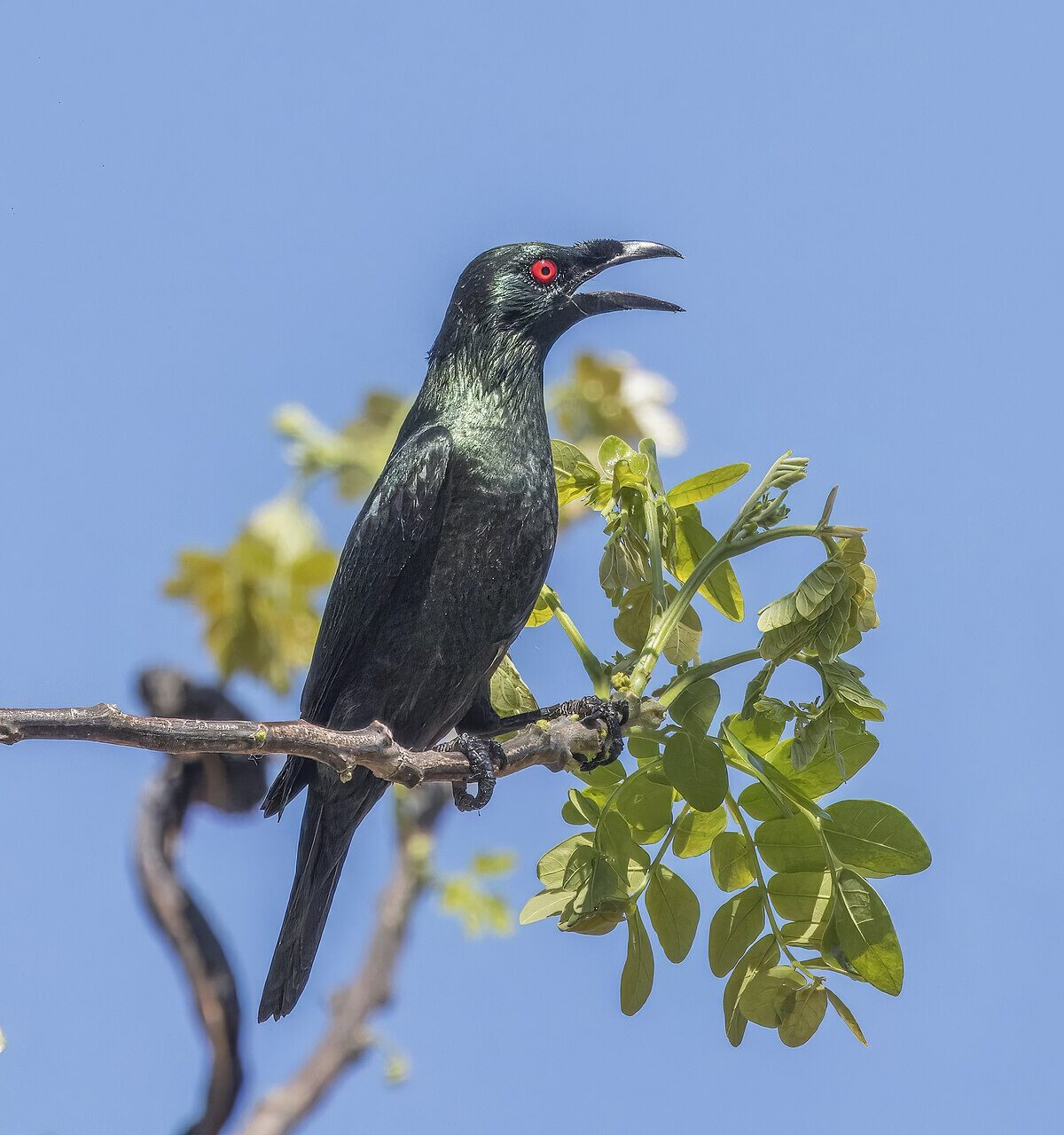
PHILIPPINE GLOSSY STARLING
Aplonis panayensis
DESCRIPTION
Philippine Glossy Starling (Aplonis panayensis) is a striking bird known for its iridescent green and blue plumage, which can appear almost metallic in sunlight. This species exhibits a sociable nature, often seen in flocks, and is known for its melodious calls that contribute to the vibrant soundscape of its habitat. It thrives in various environments, including urban areas, where it adapts well to human presence, often foraging for food scraps.
FUN FACTS
- The Philippine Glossy Starling is known for its remarkable vocal abilities, often mimicking sounds from its environment, including human-made noises
- This adaptability not only helps it thrive in urban settings but also makes it a favorite among birdwatchers and enthusiasts
- | In addition to its striking appearance, this species plays a crucial role in its ecosystem by aiding in seed dispersal, which helps maintain the health of its habitat
- Its foraging habits contribute to the growth of various plant species, showcasing the interconnectedness of wildlife and vegetation
QUICK INFO
LifespanUp to 10 years in the wild.
Average Weight80-120 g
Average Length25-30 cm
Diet TypeOmnivore
Social StructureThey are often found in groups, which can range from small family units to larger flocks.
Activity PatternDiurnal
Breeding SeasonYear-round, peaking during the rainy season.
- Habitat
- This species is commonly found in forests, mangroves, and urban areas, showcasing its adaptability to different environments. It prefers areas with abundant food sources and nesting sites.
- Biomes
- Tropical Rainforest, Urban
- Native Range
- The Philippine Glossy Starling is native to the Philippines and parts of Southeast Asia.
- Continent
- Asia
- Countries
- Philippines, Indonesia, Malaysia
- Diet
- The Philippine Glossy Starling primarily feeds on fruits, insects, and occasionally nectar. Its diet is diverse, allowing it to thrive in various habitats.
- Diet Type
- Omnivore
- Favorite Food
- Fruits, insects
- Social Structure
- They are often found in groups, which can range from small family units to larger flocks.
- Activity Pattern
- Diurnal
- Group Size
- 5-30
- Territorial
- 0
 LC
LC
 VU
VU
 LC
LC
80-120 g
Weight
25-30 cm
Length
- Coloration
- Iridescent green and blue with a darker head and wings.
- Sexual Dimorphism
- Males and females are similar in appearance, making it difficult to distinguish between the sexes.
- Lifespan
- Up to 10 years in the wild.
- Offspring per Birth
- 2-4 eggs
- Sexual Maturity
- 1-2 years
- Breeding Season
- Year-round, peaking during the rainy season.
LC
Least Concern
IUCN Red List Status
- Population Status
- The population is currently stable, with no immediate threats to its survival.
- Wild Population Estimate
- Unknown
- Population Trend
- Stable
- Endangered
- 0
- Threats
- Habitat loss due to deforestation and urbanization poses a threat to the Philippine Glossy Starling. However, it has shown resilience in adapting to urban environments.
- Predators
- Snakes, birds of prey, and domestic cats.
- Defense Mechanisms
- They often rely on their ability to fly quickly and their social behavior to evade predators.
- Compatible Animals
- Other starlings, small parrots
- Found in Zoos
- Common