


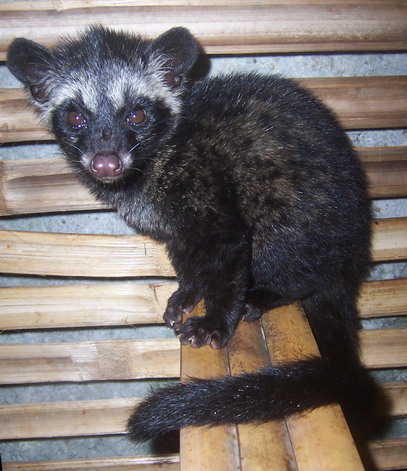
PHILIPPINE PALM CIVET
Paradoxurus philippinensis
DESCRIPTION
Also called the Philippine Civet, the Philippine Palm Civet (Paradoxurus philippinensis) is a small, nocturnal mammal native to the Philippines. It has a slender body, a long tail, and a distinctive coat that is typically grayish-brown with dark spots and stripes. This species is known for its arboreal lifestyle, often found in trees, and plays a significant role in its ecosystem as a seed disperser.
FUN FACTS
- Philippine Palm Civets are known for their unique digestive system, which allows them to process coffee cherries, leading to the production of the famous Kopi Luwak coffee
- This coffee is highly sought after and can be quite expensive due to the labor-intensive process of collecting the beans from the civet's feces
- | These civets have a remarkable ability to climb and navigate through trees, using their sharp claws and flexible limbs
- Their arboreal nature allows them to escape many ground-based predators and access a variety of food sources high in the canopy
QUICK INFO
Lifespan10-15 years in the wild, up to 20 in captivity
Average Weight3-5 kg
Average Length50-70 cm
Diet TypeOmnivore
Social Structuresolitary, occasionally seen in pairs during breeding
Activity PatternNocturnal
Breeding SeasonYear-round, peaks during wet season
- Habitat
- This species inhabits tropical forests, often favoring areas with dense vegetation. It is also found in secondary forests and agricultural areas where it can find food.
- Biomes
- Tropical Rainforest, Subtropical/Tropical Moist Forest
- Native Range
- The Philippine Palm Civet is endemic to the Philippines, found on several islands including Luzon, Mindanao, and Palawan.
- Continent
- Asia
- Countries
- Philippines
- Diet
- The Philippine Palm Civet primarily feeds on fruits, insects, and small vertebrates. Its diet is diverse, allowing it to adapt to various food sources in its habitat.
- Diet Type
- Omnivore
- Favorite Food
- fruits, insects
- Social Structure
- solitary, occasionally seen in pairs during breeding
- Activity Pattern
- Nocturnal
- Group Size
- 1-2
- Territorial
- 1
 VU
VU
 LC
LC
3-5 kg
Weight
50-70 cm
Length
- Coloration
- grayish-brown with dark spots and stripes
- Lifespan
- 10-15 years in the wild, up to 20 in captivity
- Gestation Period
- 60-70 days
- Offspring per Birth
- 1-4
- Sexual Maturity
- 1-2 years
- Breeding Season
- Year-round, peaks during wet season
LC
Least Concern
IUCN Red List Status
- Population Status
- The population is currently stable, but habitat loss poses a threat.
- Wild Population Estimate
- Unknown
- Population Trend
- Stable
- Endangered
- 0
- Threats
- Main threats include habitat destruction due to deforestation and hunting. These activities have led to a decline in their natural habitat and food sources.
- Predators
- Large birds of prey, snakes, and domestic dogs are known to prey on Philippine Palm Civets.
- Defense Mechanisms
- They can emit a strong-smelling secretion from their anal glands to deter predators.
- Found in Zoos
- Uncommon